Summer always exposes our habits.
In winter, ethics hide under layers. Boots conceal materials, coats disguise origins, and we can pretend not to think too much about what touches our skin. But summer is merciless. It asks your feet to breathe. It asks your wardrobe to shrink. It asks simplicity of you — and suddenly the question of what your sandals are made of becomes strangely intimate.
This year, I found myself staring at my shoe rack with a quiet sense of embarrassment. One pair of tired sandals that have seen too many sidewalks. One pair of open heels that are beautiful but impractical for daily wandering. And the flip flops? Gone. Vanished into that mysterious dimension where summer essentials disappear every year.
Technically, I am not supposed to be shopping much. I have imposed my own restrictions, small acts of resistance against the endless churn of consumption. But shoes, somehow, were exempt. And with temperatures rising and asphalt radiating heat like a warning, I allowed myself a question: if I am going to buy something, can I do it well?
Not trend-well. Not Instagram-well. Ethically well.
The vegan fashion landscape has changed dramatically over the past decade. There was a time when “vegan leather” meant shiny plastic that cracked within months and squeaked embarrassingly with every step. It felt like a compromise in both aesthetics and durability. Now, materials are evolving: cactus leather, apple leather, recycled fibers, plant-based alternatives that try — imperfectly but earnestly — to decouple style from animal exploitation.

But let’s be honest. Vegan does not automatically mean sustainable. A petroleum-based synthetic sandal is technically animal-free, yet still deeply entangled with fossil fuel extraction and microplastic pollution. So the search becomes layered: animal-free, yes — but also responsible, durable, thoughtfully produced.
Here are seven pairs that caught my attention this season. Not as a shopping list to blindly follow, but as a reflection of how far this space has come — and how carefully we must still walk.
1. Filia Up-Cycled Vegan Leather Slip-On Sandal – Collection & Co
There is something reassuring about upcycling. It acknowledges that waste already exists and asks: what now? The Filia slip-on sandal leans into that philosophy. Clean lines, minimal straps, the kind of silhouette that doesn’t scream for attention yet quietly anchors an outfit.
Upcycled vegan leather often means reworking existing materials rather than producing virgin synthetics. It’s not a perfect solution — it still relies on synthetic substrates — but it extends material life. And that extension matters. In a culture addicted to newness, choosing something made from what already exists feels almost subversive.
I like the simplicity of this design. It doesn’t demand a narrative; it allows you to bring your own.
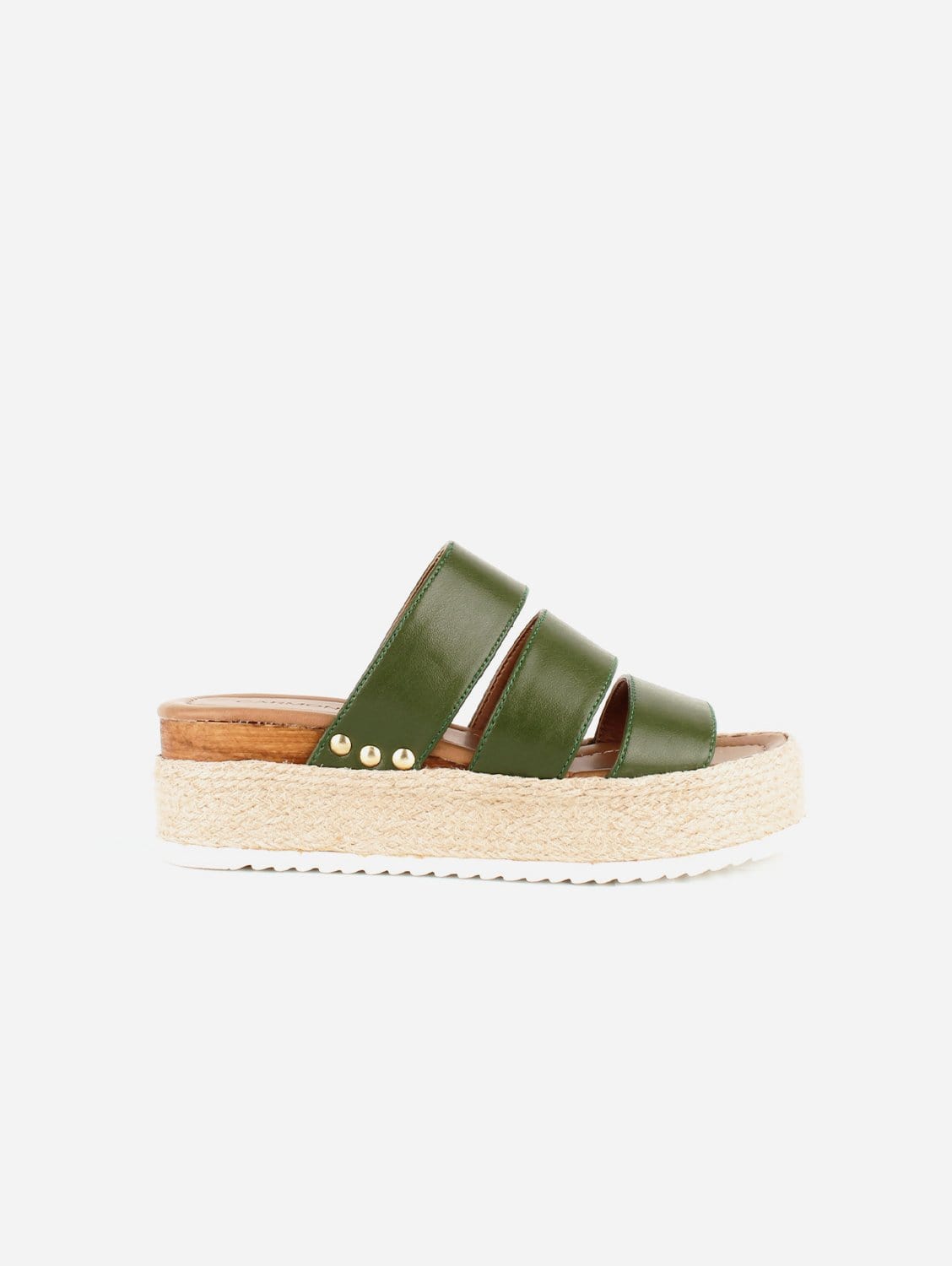
2. Karla Desserto® Cactus Leather Sandal – Carmona Collection
Cactus leather sounds like something invented for a futuristic runway, yet it grows quite literally in soil under the Mexican sun. Desserto®, the material used here, is derived from nopal cactus. It requires minimal water, grows abundantly, and is partially biodegradable.
There is poetry in wearing a desert plant on your feet during high summer. The material carries a sense of place — arid landscapes, resilience, slow growth. Compared to conventional leather, the environmental footprint is significantly lower. Compared to synthetic faux leather, it moves one step closer to a bio-based future.
And yet, even here, nuance is necessary. Most plant-based leathers still incorporate some synthetic components for durability. We are in transition, not arrival. But transitions are where change begins.
The Karla sandal balances structure with softness. It feels modern without being sterile. If I close my eyes, I can almost imagine the cactus fields that inspired it.
3. Elysa Vegan High Heel Sandals – Matt & Nat
High heels and sustainability have long had a complicated relationship. Heels symbolize glamour, ceremony, sometimes even discomfort in the name of beauty. To reimagine them through a vegan and more conscious lens feels like a cultural shift.
Matt & Nat has been working with vegan materials for years, gradually integrating recycled linings and more responsible manufacturing practices. The Elysa sandal, with its delicate straps and elevated silhouette, suggests that ethical fashion does not have to renounce elegance.
But here I pause. How often will I wear high heels? Will they gather dust, admired but unused? Sustainability is not only about materials — it is about frequency of wear. A beautifully made sandal that sits unworn is still a resource misused.
So the question becomes personal: does this pair fit my real life, or my aspirational one?

4. Octavia Recycled Vegan Suede Mule – MESA
Mules have a certain nonchalance. They slide on without ceremony. They belong to slow mornings, to markets, to late dinners where you kick them off under the table.
Recycled vegan suede suggests a second life for fibers that might otherwise end in landfill. Texturally, suede feels softer, more tactile than smooth faux leather. It invites touch.
I find myself drawn to pieces that feel lived-in even when new. Perhaps because I am trying to move away from the culture of pristine accumulation. Recycled materials carry a subtle humility. They admit their past.
5. Apple Leather Minimal Sandals – Various Emerging Brands
Apple leather, often made from waste generated by the juice industry, fascinates me. The idea that fruit pulp can be transformed into a leather-like material feels almost alchemical. It challenges our understanding of what “luxury” materials must be.
Minimal apple leather sandals often come in neutral tones — sand, olive, black — allowing the material to speak without distraction. They feel understated, almost architectural.
There is also something culturally significant about this shift. Historically, leather symbolized durability, status, craftsmanship. Replacing it with fruit waste redefines what we consider valuable. Waste becomes worthy. Discarded pulp becomes design.
6. Recycled Plastic Sport Sandals – Ethical Outdoor Brands
Not all summer days are café terraces and linen dresses. Some are hikes, beach walks, spontaneous swims. For those moments, sport sandals made from recycled plastics offer durability and water resistance.
Here again, we encounter paradox. Plastic, reclaimed from oceans or landfills, is given new form. It reduces demand for virgin material. Yet it remains plastic. Microfibers may still shed. Longevity becomes essential: the longer they last, the more justifiable their production.
I have learned to ask myself a simple question before buying anything synthetic: will I wear this enough to outweigh its environmental cost?
7. Handmade Vegan Sandals by Small Artisans
Beyond recognizable brands, there are smaller makers crafting vegan sandals in limited batches. Often using cork soles, plant-based straps, low-impact dyes, these pieces feel closer to traditional craftsmanship.
Supporting small-scale production shifts power away from mass manufacturing. It reconnects us with the hands behind the object. And culturally, that matters. Fast fashion thrives on anonymity. Slow fashion thrives on relationship.
When I imagine my summer wardrobe, I do not see seven new pairs lined up neatly. I see one carefully chosen addition — something that will accompany me not only this season, but the next, and the next.
Because here is the uncomfortable truth: the most sustainable sandal is the one already in your closet.
This does not mean we must never buy again. It means that every purchase carries weight. In a global system where footwear production often relies on exploited labor, toxic glues, and resource-intensive materials, choosing differently becomes both personal and political.
Footwear has always been symbolic. Shoes carry us across borders, through cities, into ceremonies. They are intimate objects, molded by our gait. To align them with our ethics feels like a small but meaningful act.
As I deliberate over my own choice, I feel the familiar tug between desire and discipline. I love beautiful things. I love the idea of cactus leather under a linen dress. I love the simplicity of a perfectly cut mule. But I also know that accumulation, even ethical accumulation, can quietly replicate the patterns I am trying to resist.
So I am taking my time.
I am reading about materials. I am checking production transparency. I am imagining the outfits I already own and whether a new pair truly adds versatility or simply novelty.
And maybe that is the real shift — not the cactus, not the apple pulp, not the recycled fibers — but the slowness. The pause before purchase. The willingness to sit with discomfort and ask: do I need this, or do I just want it because summer has arrived and advertising whispers that my feet deserve an upgrade?
They probably do deserve comfort. But comfort can be found in restraint as well.
If you are also standing in front of your shoe rack this season, feeling the heat rise from the pavement and the temptation of something new, perhaps ask yourself the same questions. Which materials align with your values? Which brands demonstrate transparency? Which designs will still feel like you next year?
There is no flawless option. Even plant-based leathers exist within industrial systems. Even recycled materials require energy. But there are better options, and then there are careless ones.
To choose consciously is not to be perfect. It is to remain attentive.
And maybe that is what summer, with its exposed ankles and open toes, ultimately teaches us: that lightness is not only about airy fabrics and bare skin. It is about walking through the world aware of the ground beneath you — and the impact of every step.