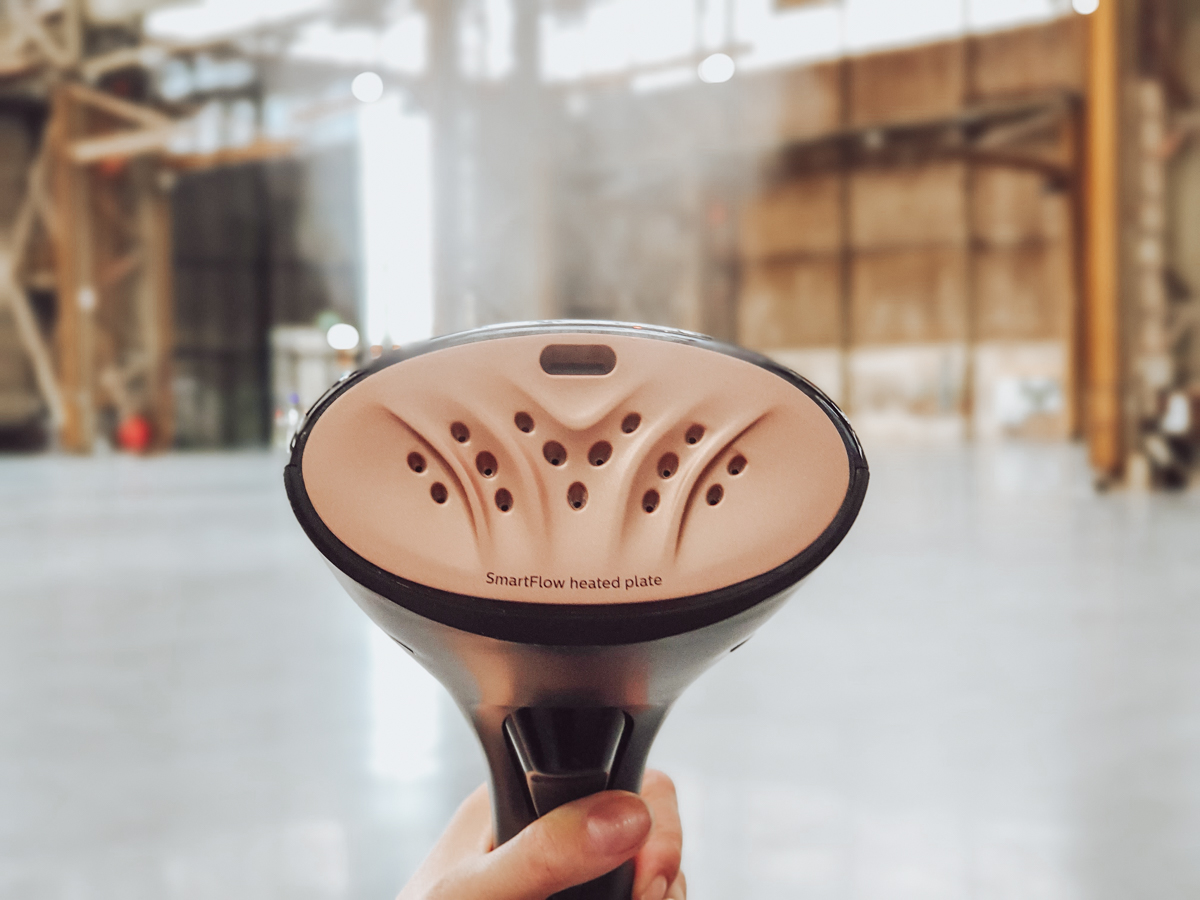
There are very few domestic activities I actively resent. Ironing is one of them.
Not in a dramatic way. More in the slow, passive-aggressive way you resent a piece of furniture that’s always in the wrong place. My ironing board lives in the attic, which already tells you everything you need to know. If a task requires climbing stairs with intention, it has lost before it even begins.
Ironing is also oddly high-risk for something so boring. Leaking irons. Burnt hems. Sharp creases appearing where no crease was ever invited. Sleeves that refuse to cooperate. That moment when you iron something “just a bit” and suddenly it looks aggressively pressed, like it’s trying too hard.
So yes, for years there was a whole section of my wardrobe that simply… didn’t get worn. Not because it wasn’t nice. Not because it didn’t fit. But because it wrinkled when you looked at it wrong. Those pieces quietly failed the morning practicality test and were sentenced to hanger purgatory.
And then—almost accidentally—I became a steaming person.
Not the spa kind. The garment kind.
What I didn’t expect is that steam wouldn’t just fix wrinkles. It would change my relationship with clothes in a way ironing never managed to do. Steam is gentler, lazier, more forgiving. It works with the fabric instead of forcing it into submission. And maybe that’s the real point.
So let’s talk about why steam deserves a permanent place in your clothing routine—and why it’s about much more than looking less crumpled.
1. Steam Is the Only Honest Way to Deal With Wrinkles
Wrinkles are not a moral failure. They’re evidence of movement, sitting, living, existing in gravity. Ironing treats wrinkles like a crime. Steam treats them like a mild misunderstanding.
When you steam a garment, you’re not flattening it. You’re relaxing the fibers. Heat and moisture gently encourage the fabric to remember its original shape—before you folded yourself into a café chair for three hours or stuffed your jacket into a tote bag.
This is especially important for fabrics that don’t want to be bossed around: wool, silk, viscose, linen blends, delicate synthetics that react badly to direct heat. An iron can scar these materials permanently. Steam just… persuades them.
There’s also something very satisfying about the physical act of steaming. You hang the garment. You hover. Gravity does half the work. It feels less like labour and more like assistance. As if you’re helping your clothes recover from a long day.
And crucially: no unintended creases. No sharp lines where none should exist. The garment stays itself—just calmer.
2. Steam Is Quietly Excellent at Hygiene (Without the Drama)
Clothes carry stories. Unfortunately, they also carry bacteria.
Not in a terrifying way, but in the normal, human way: sweat, skin cells, city air, deodorant residue, that faint restaurant smell you didn’t notice until the next morning. Most of us respond by washing things far more often than necessary.
Steam offers another option.
Hot steam kills a large portion of odor-causing bacteria. Not in a “hospital sterilization” way, but in a good-enough-for-real-life way. The kind that makes a worn sweater smell neutral again. The kind that refreshes a jacket that doesn’t actually need a full wash.
This matters because constant washing is brutal. Fibers break down. Colors fade. Shapes distort. Clothes age faster than they should.
Steam lets you press pause.
It’s especially useful for items that sit in the awkward space between clean and dirty: coats, blazers, scarves, knitwear, trousers worn for a few hours. Things you don’t want back in the closet as-is, but also don’t want to throw into the washing machine like a gym T-shirt.
Steam doesn’t erase the garment’s past. It just makes it presentable again.
3. Steaming Is an Act of Respect Toward Fabric
Most modern clothing is treated as disposable. Worn, washed, worn again, then quietly replaced when it loses its shape or charm. We blame “quality,” but often it’s our care routines that do the real damage.
Steam is slower. More deliberate. It requires you to look at the garment as an object worth tending to.
You notice how wool responds differently from cotton. How silk relaxes almost instantly. How synthetics sometimes need patience. You start learning your clothes—not just wearing them.
Historically, steam was always part of garment care. Tailors, costume departments, ateliers—they steam because it preserves structure. It respects seams. It keeps garments closer to their original intention.
When you steam instead of aggressively ironing or overwashing, you’re extending the life of your clothes in small, cumulative ways. Fewer broken fibers. Less stress on seams. Better drape over time.
It’s not romantic, exactly. But it is considered.
4. Steam Makes You Wear More of What You Already Own
This one surprised me.
After I started steaming regularly, I realized I was suddenly wearing pieces that had been ignored for years. That blouse I loved but “never had time” to iron. That dress that always looked messy straight off the hanger. Those trousers that wrinkled if you breathed near them.
Steam removed the final excuse.
Because steaming is fast. Five minutes fast. Bathroom-fast. “I can do this while my coffee brews” fast. No ironing board. No setup ritual. No sense of commitment.
This changes your wardrobe math.
Instead of thinking in terms of what’s wearable right now, you start thinking in terms of what do I actually want to wear. Your clothes stop competing with your patience.
And when you wear more of what you already own, something subtle happens: you want less. Not in a preachy, minimalist way—but in a satisfied way. You stop chasing replacements for things that were never broken.
Steam doesn’t add new clothes to your life. It gives you back the ones you forgot you had.
5. Steaming Is a Small Rebellion Against Overwashing
Washing machines are efficient, aggressive, and completely indifferent to your favorite sweater.
Every wash is mechanical stress. Water, detergent, spinning, friction. Even “gentle” cycles are not particularly gentle over time. Add tumble drying to the mix and you have a perfect recipe for garment burnout.
Steaming offers an alternative rhythm.
Instead of defaulting to “wear once, wash,” you start asking better questions. Does this actually need washing? Or does it need airing, resting, steaming?
Designers who care about longevity—especially those working with wool, tailoring, or high-quality materials—have been saying this for years. Less washing. More care.
Steam fits into that philosophy perfectly. It freshens without stripping. It cleans without erasing. It allows clothes to age with dignity rather than exhaustion.
This isn’t about purity or perfection. It’s about reducing unnecessary violence toward fabric.
A Note on Convenience (Because It Matters)
There’s a reason steamers quietly convert people.
They live where you need them. Bathroom. Bedroom. Near the door. They don’t demand ceremony. They don’t punish procrastination. They work even when you’re half awake and running late.
And psychologically, that matters.
Ironing feels like a project. Steaming feels like maintenance. One is something you plan. The other is something you casually do.
Clothing care that integrates into real life actually gets done.
Steam as a Way of Paying Attention
At its best, steaming is not about perfection. It’s about attentiveness.
You notice how a collar falls once it’s relaxed. How a sleeve regains its shape. How a garment looks more like itself afterward. Steam doesn’t impose control—it restores balance.
In a culture obsessed with speed, replacement, and surface-level newness, this kind of care feels quietly radical. You’re choosing maintenance over consumption. Attention over disposal.
And yes, your clothes look better. But more importantly, they last longer. They feel nicer to wear. They reward the small effort you give them.
Which, honestly, is more than ironing ever did.
Steam isn’t glamorous. It doesn’t demand loyalty. It just works. And sometimes, that’s exactly what a wardrobe—and a person—needs.