I did not expect a sewing machine to confront me with my character flaws.
I enrolled in sewing classes during a strange stretch of suspended time — that peculiar pandemic season when days felt both endless and fragile. While the world negotiated infection curves and sourdough starters, I found myself hunched over fabric, squinting at seam allowances like they contained secret instructions for adulthood.
I had wanted to sew for years. The desire lingered like an unfinished sentence. My mother used to make our clothes when I was little — dresses for me and my sisters, skirts that swirled, blouses with tiny buttons I did not yet know how to fasten. Back then, sewing was practical. Clothes were expensive. Money was careful. Skill was necessity.
Then came fast fashion. T-shirts cheaper than thread. Dresses that cost less than an afternoon of labor. My mother stopped sewing our wardrobes because it made no economic sense anymore. Time grew scarce; convenience grew abundant.
And with that shift, an entire generation — mine — grew up detached from the anatomy of clothing. We learned brands before we learned seams. We recognized trends but not tension. We could swipe a card but not thread a needle.
Trend forecaster Lidewij Edelkoort once wrote about what she called “The Age of the Amateur,” predicting a return to craft born out of human need and meaning. At the time, it sounded poetic. Slightly utopian.
Now, sitting at my machine, unpicking my own crooked stitches for the third time, it feels less like theory and more like inevitability.
Sewing has taught me many small technical things — how to read a pattern, how to press a seam open, how to accept that fabric has its own logic. But more than that, it has taught me three lessons about life that no productivity podcast ever managed to articulate.
And none of them came quickly.
1. Anything Worth Wearing — or Becoming — Takes Time
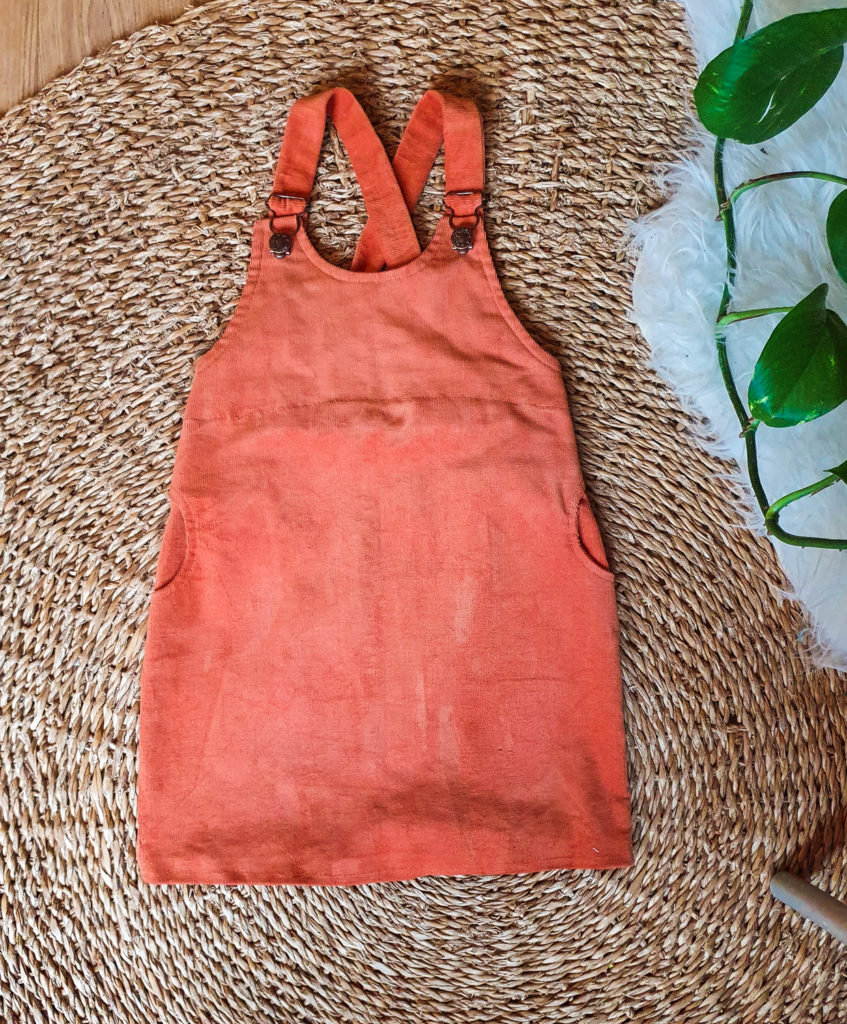
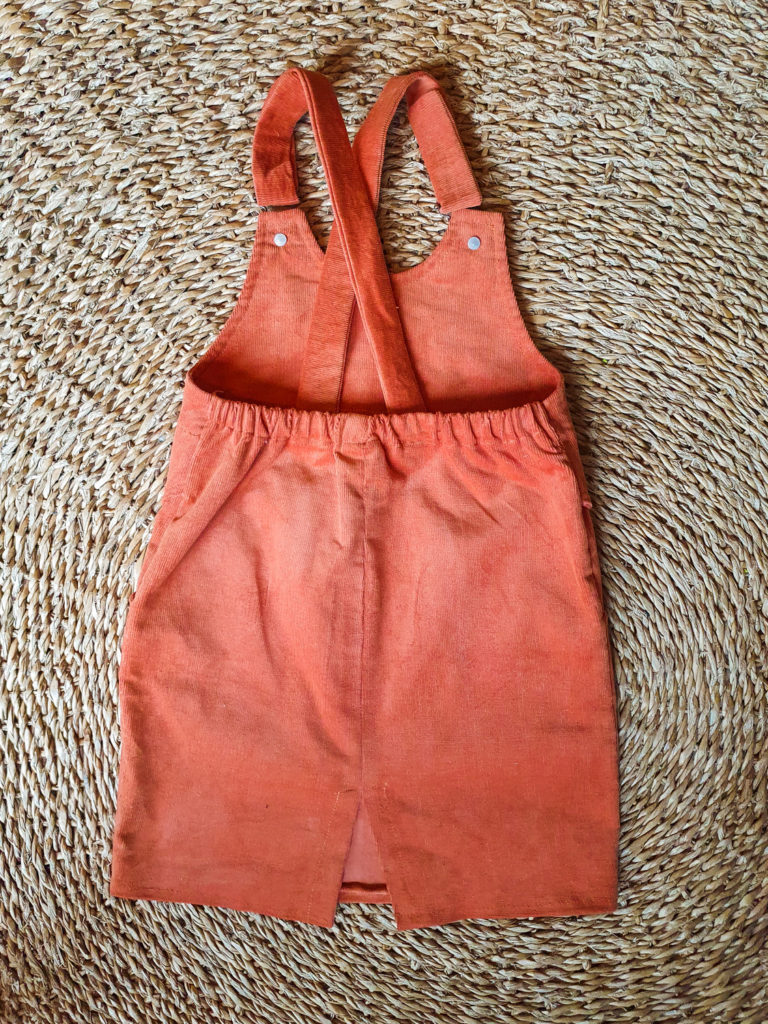
The first garment I completed was a pinafore dress for my daughter.
It took weeks.
Not because the design was complicated, but because I was slow. I measured twice, then again. I pinned obsessively. I unpicked. I pressed. I hesitated before cutting into the fabric as if it were sacred.
In our culture, slowness feels almost irresponsible. We are used to immediate availability. Food delivered in under an hour. Movies streamed instantly. Entire wardrobes arriving at our doorstep within days.
Sewing interrupts that rhythm.
You cannot rush fabric without consequences. If you skip pinning because you feel impatient, the pieces shift. If you refuse to press seams because it feels tedious, the garment never falls correctly. The time you think you save returns as distortion.
We have normalized speed as virtue.
But sewing reveals that speed is often vanity.
There is a quiet dignity in taking the time something requires. Not more. Not less.
The Industrial Revolution reshaped our relationship to production. Handmade became inefficient; factory-made became standard. Efficiency became moralized. Faster equaled better. More equaled progress.
Yet when I sit with a pattern spread across the table, I feel a different economy at work. One that measures value in attention rather than output.
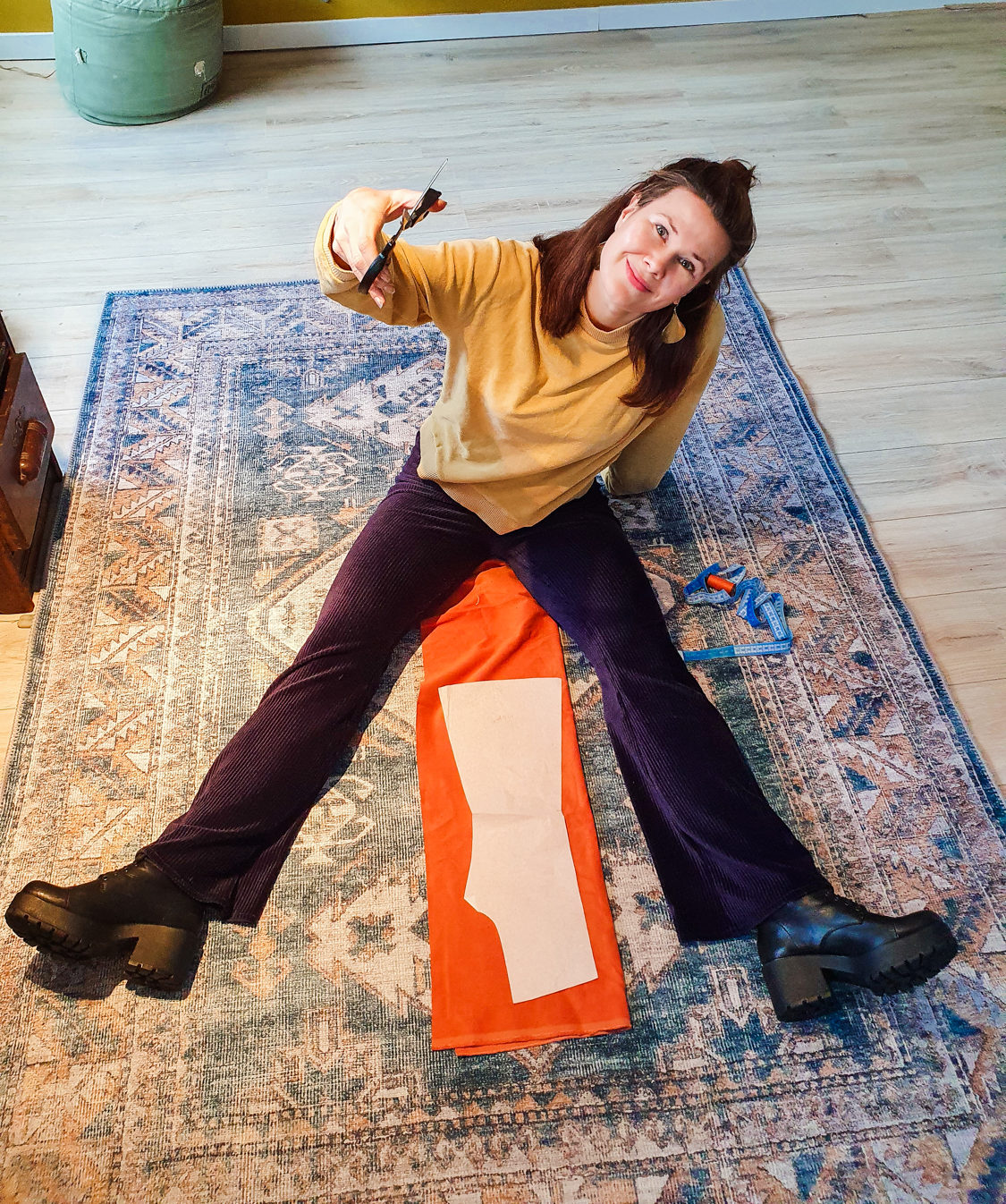
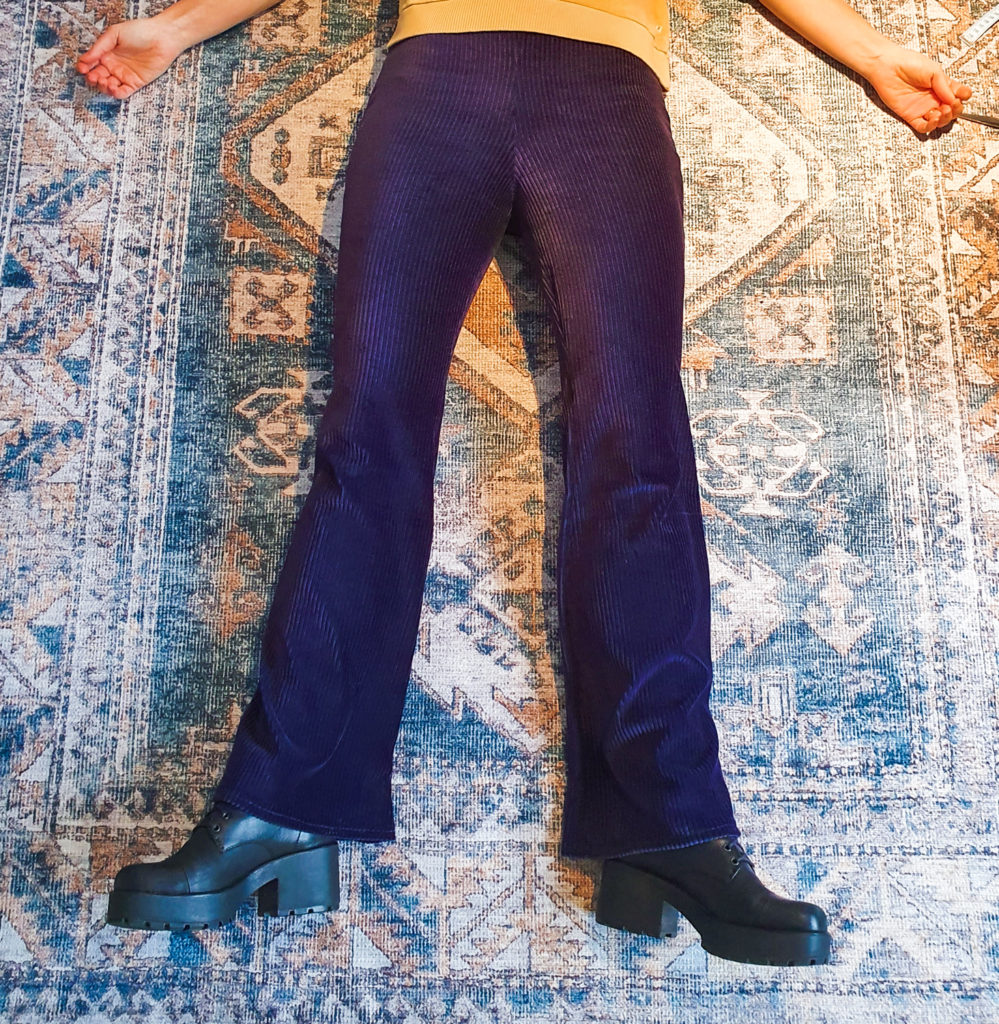
To sew a pair of flared trousers for myself — carefully cutting along the grain, adjusting the fit, pressing every seam — is to experience the material cost of clothing in real time.
No algorithm mediates that experience.
It becomes impossible to see garments as disposable after you have spent ten concentrated hours constructing one.
And perhaps this is the deeper lesson: anything that fits well — whether a garment, a relationship, or a life — requires deliberate construction.
We admire the finished silhouette. We rarely witness the invisible labor inside.
Sewing refuses invisibility.
2. Shortcuts Always Announce Themselves
There are countless tutorials promising a pair of trousers in under an hour. “No pattern needed!” “Just trace your favorite pants!” “Skip pressing!”
I understand the temptation.
There is something intoxicating about the idea of bypassing process. Why not lay an existing pair of trousers on fabric and cut around them? Why bother marking seam allowances precisely? Why pause to press every seam when you could move straight to the next step?
The answer arrives later.
A crooked hem. Twisted legs. A waistband that refuses to sit flat.
In sewing, shortcuts are rarely subtle. They show. They distort the final shape.
And unlike digital errors, they are not easily undone. Fabric remembers.
Life operates similarly.
We can skip uncomfortable conversations, avoid preparation, bypass foundational work. It may feel efficient in the moment. But the structural weaknesses reveal themselves eventually — in strained relationships, half-formed ideas, projects that collapse under pressure.
Craft traditions historically valued apprenticeship for a reason. Skills were passed down slowly, patiently. Mastery required repetition and humility.
My generation has been raised on optimization hacks. Productivity shortcuts. Life-hack culture.
Sewing does not care about hacks.
It demands respect for sequence.
First measure. Then cut. Then pin. Then stitch. Then press.
If you invert that order, chaos follows.
There is something grounding in this strictness. A reminder that process is not bureaucracy; it is architecture.
When I rush because I am tired or distracted, the machine seems to amplify my impatience. Threads tangle. Fabric bunches. Mistakes multiply.
The irony is that correcting those mistakes takes longer than doing it properly the first time.
How often does that translate beyond the sewing table?
We live in a culture that encourages leapfrogging steps — in careers, in relationships, even in self-development. We curate outcomes without honoring the work beneath them.
Sewing exposes that illusion.
The seam will tell the truth.
3. Rest Is Structural, Not Indulgent
I did not expect sewing to teach me about rest.
But it has.
There is a distinct moment when my concentration begins to thin. My shoulders tense. My mind drifts. I think I can push through — just one more seam, just one more line of stitching.
That is precisely when I make irreversible mistakes.
A sleeve sewn inside out. A neckline cut too deep. A careless snip that cannot be undone.
And then comes the ritual of unpicking.
If you have never unpicked stitches, it is a humbling exercise. You sit there with a seam ripper, carefully undoing the very thing you just built. It feels like walking backward through your own impatience.
Sewing makes fatigue visible.
In many professions, exhaustion can be masked temporarily. You can answer emails on autopilot. You can sit in meetings while mentally elsewhere. The errors may surface later.
With sewing, your tiredness translates immediately into crooked lines.
Your body participates in the outcome.
This has changed how I think about rest.
Rest is not indulgence. It is structural maintenance.
If I step away from the machine, drink tea, stretch, return with a clearer mind, the quality of my work shifts dramatically. The stitches straighten. The rhythm returns.
In a culture that glorifies hustle, this feels almost rebellious.
We have inherited a Protestant work ethic that equates virtue with productivity. To pause feels lazy. To stop before finishing feels weak.
But fabric does not respond to guilt.
It responds to precision and care.
Sewing has taught me that my brain and hands are finite instruments. They require intervals. Ignoring that truth does not make me more capable. It makes me sloppy.
And sloppiness has consequences.
The Return of the Amateur
When I think about Edelkoort’s idea of “The Age of the Amateur,” I no longer interpret it as nostalgia for domestic crafts. I see it as cultural correction.
We outsourced making to factories and, in the process, outsourced understanding. We lost intimacy with how objects come into being.
Amateur does not mean incompetent. It means someone who does something for the love of it.
The Latin root, amare — to love.
There is something radical in choosing to make slowly in a world engineered for consumption.
When I finished my first dress and held it up — seams slightly imperfect, hem perhaps not mathematically straight — I felt a pride disproportionate to the object itself.
I had created something tangible.
Not optimized. Not mass-produced. But real.
I showed it to colleagues, friends, family. Perhaps excessively. But I wanted witnesses to the labor, not just the outcome.
Because sewing is not just about fabric. It is about reclaiming authorship over small parts of your life.
Craft as Counterculture
Historically, craft has oscillated between necessity and luxury. In times of scarcity, it sustains survival. In times of abundance, it becomes hobby or art.
But perhaps now it is something else: counterculture.
To choose craft in an age of instant gratification is to resist passive consumption. It is to insist that your hands matter.
When I sew flared trousers for myself and a matching smaller version for my daughter, I feel continuity — not just between generations, but between effort and result.
My mother sewed because she had to. I sew because I want to.
And yet, beneath that difference lies a shared understanding: making changes the maker.
You begin to see clothing differently. You notice seams in shop windows. You recognize when hems are rushed. You calculate hours in price tags.
Ignorance dissolves.
And with it, a certain innocence about consumption.
The Needle as Mirror
Sewing is unforgiving but honest.
It mirrors your temperament. Your patience. Your discipline. Your willingness to correct yourself.
It asks: Will you slow down? Will you follow steps? Will you rest when needed?
It does not reward arrogance.
There is no applause when you skip pressing a seam — only a warped silhouette later.
There is no badge for finishing fastest — only the quiet satisfaction of finishing well.
I began sewing because I wanted to create clothes.
I continue because it recalibrates me.
In a world that constantly accelerates, the rhythm of needle and thread insists on presence.
Stitch by stitch.
Not because slowness is trendy.
But because it is true.