I need to confess something before we go any further: TikTok intimidates me.
Not in a polite, “I’m not sure I understand this platform” way. In a full-body, slightly overstimulated, why are there so many moving images and why are they shouting at me kind of way. Opening the app feels like being dropped into a digital battlefield where content flies at you from all directions. Blink and you’ve missed three trends, two dances, and someone reorganizing their pantry.
I installed it for one reason only: my niece. She sends me videos of herself dancing with an expression of such unfiltered joy that I’d download any app to witness it. That was the gateway. The innocent beginning.
What I did not expect was to stumble into a tiny, obsessive, wildly creative fashion underworld.
Not luxury fashion. Not runway recaps. Not aspirational influencer closets the size of my living room.
I’m talking about fifteen-second acts of transformation. Girls (and a few boys) turning the most uninspiring garments into something genuinely clever. Scarves into tops. Blouses into dresses. Ill-fitting frocks rescued from the brink of donation.
And here’s the thing: in a culture drowning in fast fashion, these hacks feel almost subversive.
We’ve been trained to believe that style equals acquisition. TikTok, of all places — the temple of speed and distraction — is quietly hosting a movement about reworking what you already own.
I did the scrolling so you don’t have to. And yes, some of these are actually brilliant.
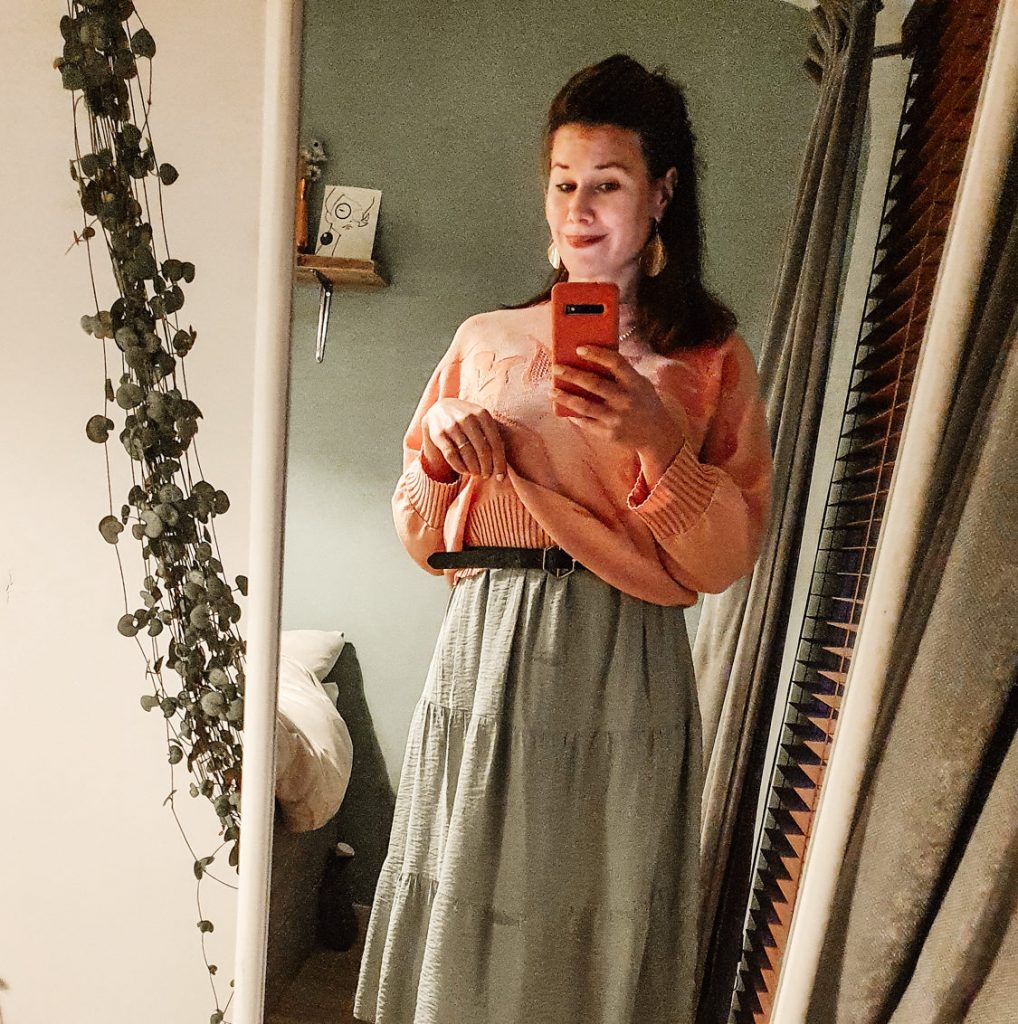
The Scarf Sorcerers: A Square of Fabric, Fifty Lives
I used to think of scarves as polite accessories. Something you throw on when you’re cold. Or when you’re trying to look like you read French novels.
Then I watched a woman turn a single square scarf into a halter top, then a skirt, then a structured little handbag — all in under a minute.
It felt like witnessing fabric alchemy.
There’s something deeply satisfying about seeing one object refuse its assigned identity. A scarf is supposed to be decorative, secondary. But in these videos, it becomes structural. Foundational.
Historically, scarves have always been more versatile than we give them credit for. In different cultures, they’ve functioned as head coverings, belts, baby carriers, protection from sun and sand. We reduced them to aesthetic garnish somewhere along the way.
Watching these creators reassert the scarf’s utility feels like a quiet reclamation.
I tried one of the simpler versions: folding a larger silk scarf diagonally and tying it into a backless summer top. I layered it over a thin white tee because I am not, in fact, twenty-two. It worked. Not in a “I’m about to walk a runway” way, but in a “why have I never done this before?” way.
The genius lies not in the complexity. It lies in the reframing.
A square of fabric is never just a square of fabric.
The Vintage Blouse Transformer: Rewriting Proportion
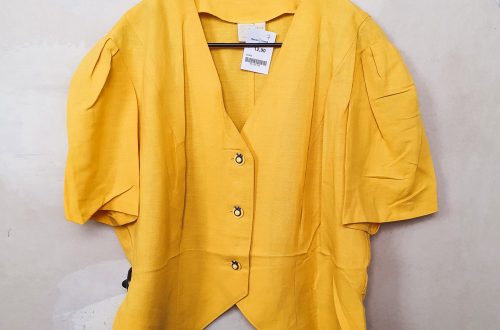
There’s a particular genre of TikTok stylist who specializes in vintage blouses. The kind with slightly dramatic sleeves and questionable buttons. The type you buy because it feels romantic on the hanger, then never wear because you look like a substitute art teacher from 1987.
And then — in fifteen seconds — she tucks, folds, knots, and suddenly it’s sculptural.
What I love about these transformations isn’t the speed. It’s the understanding of proportion.
Fashion, when stripped of marketing language, is geometry. Volume versus restraint. Width against length. Structure softened by drape.
One creator showed how to turn an oversized blouse into something fitted without tailoring. She crossed the fabric at the waist, tucked it under the bra line, and let the excess billow intentionally. The result felt less accidental, more architectural.
It reminded me how often we abandon pieces simply because we don’t know how to negotiate with them.
We’ve lost the patience for experimentation. If something doesn’t “work” immediately, it’s exiled. But style is often about dialogue — between body and cloth, between expectation and adjustment.
I went into my own wardrobe and found a blouse I hadn’t worn in years. Too big. Too dramatic. Too something. I tried one of the wrapping techniques.
Suddenly, it wasn’t too anything. It was interesting.
There is power in learning to manipulate silhouette without cutting into it. It keeps the garment intact. It keeps possibility alive.
The Crop Hack: For Those of Us Who Need Slow Motion
Now, let’s talk about cropping — without scissors.
Some TikTok fashion videos move so fast I feel ancient. I replay them five times and still can’t decode the magic trick. But then there are the slow ones. Bless the slow ones.
The “crop without cutting” hack is deceptively simple. You tuck the hem of a longer top into itself, secure it subtly (sometimes with a hair tie or strategic folding), and suddenly you have a cropped silhouette without committing to permanent alteration.
It sounds basic. It is basic. But it changes the way proportions interact.
Cropping shifts visual weight upward. It elongates the leg line. It modernizes an otherwise dated piece.
In the early 2000s, we cut everything. Jeans. Tees. Sweatshirts. The violence we inflicted on cotton.
This version feels gentler. Reversible. It acknowledges that bodies change, trends shift, and regret is real.
I tried it on an old oversized sweatshirt. The difference was startling. Less slouchy college student. More intentional layering piece.
What fascinates me is how these hacks democratize styling knowledge. What used to require a stylist or tailor is now accessible through a 30-second video.
Of course, this accessibility exists inside a platform designed to keep you scrolling. The irony is not lost on me.
But the knowledge itself? Valuable.
The Strap Fairy: Engineering for Real Bodies
One of the most unexpectedly practical hacks came from someone who used to work in lingerie retail. And you can tell.
Straps. The eternal nemesis.
There’s a particular frustration in finding the perfect dress only to realize your bra straps are staging a rebellion. We’ve normalized discomfort as the price of looking “put together.”
This creator showed simple adjustments — crossing straps differently, looping them through garment seams, using hidden anchors — to make everything sit where it should.
It’s not glamorous content. It’s engineering.
And fashion has always been engineering disguised as fantasy.
What struck me most was the quiet competence. She wasn’t performing trendiness. She was solving a problem. Sharing knowledge accumulated through years of fitting real bodies.
In an industry that often caters to an imaginary ideal, these hacks feel like small acts of realism.
Style should not require suffering. It should require understanding.
Rescuing the Ill-Fitting Dress: Perseverance Over Replacement
Perhaps my favorite genre of TikTok fashion hack is the “I refused to give up on this dress” narrative.
We are so quick to discard. Something pulls slightly at the waist? Donate. Doesn’t fit perfectly anymore? Replace.
One creator took a dress that had become too loose and instead of tossing it, she added subtle internal adjustments — hidden elastic, clever knotting, layering techniques — and brought it back to life.
There’s something profoundly satisfying about watching a garment get a second chance.
In the 19th century, clothing was routinely altered and re-altered. Fabric was expensive. Labor was intimate. Garments evolved with their owners.
Fast fashion severed that relationship. Clothes became disposable. The emotional attachment weakened.
These TikTok hacks — chaotic, playful, imperfect — are reconnecting us to an older logic. One where you work with what you have. Where ingenuity replaces impulse buying.
And yes, it’s happening on an app fueled by algorithms and advertising.
Cultural change rarely arrives in pure form.
Why This Matters (More Than It Seems)
It would be easy to dismiss fashion TikTok as trivial. Fifteen seconds of fabric gymnastics in an endless stream of noise.
But beneath the speed lies something interesting.
We are witnessing a generation that grew up inside overconsumption now learning to remix instead of replace. They are fluent in trends, yes. But they are also fluent in transformation.
In a time when the fashion industry is under scrutiny for its environmental footprint, these micro-lessons feel culturally relevant. They encourage longevity. Adaptation. Play.
They also reintroduce joy.
There’s a childlike satisfaction in discovering a new way to wear something old. It feels like solving a puzzle. Like bending the rules slightly in your favor.
And perhaps that’s what draws me back, despite my lingering TikTok anxiety.
Not the trends. Not the dances. Not even the speed.
But the creativity.
The small, scrappy, slightly chaotic creativity of people who look at a dull garment and refuse to accept its dullness as fate.
I still approach the app cautiously. I still feel like I need protective gear before opening it. But now, when the algorithm serves me a fashion hack, I pause.
Because sometimes — buried between dance challenges and beauty filters — there’s a genuinely golden idea.
Not an invitation to buy more.
An invitation to look differently at what’s already hanging in your closet.
And in a world constantly urging us to consume, that shift in perspective might be the most valuable hack of all.