For the past few weeks, I have had exactly two personalities.
Version one lives in sweatpants. Hair in a knot. Face unbothered. The kind of softness that stretches from morning coffee straight into late afternoon without a single outfit decision in between.
Version two behaves as if there is a party happening somewhere — even if that party is just me, the kitchen, and a playlist from 2007. She dives into her wardrobe. She reaches for colour. Texture. A silhouette that moves when she walks down the hallway. She applies lipstick to sit at the dining table.
There is very little in between.
And I have noticed something uncomfortable: the sweatpants version of me is not necessarily the calmer one. She is simply less visible.
We often talk about comfort as withdrawal. As retreat. As fabric that asks nothing of us.
But lately I have begun to suspect that comfort can also be activation.
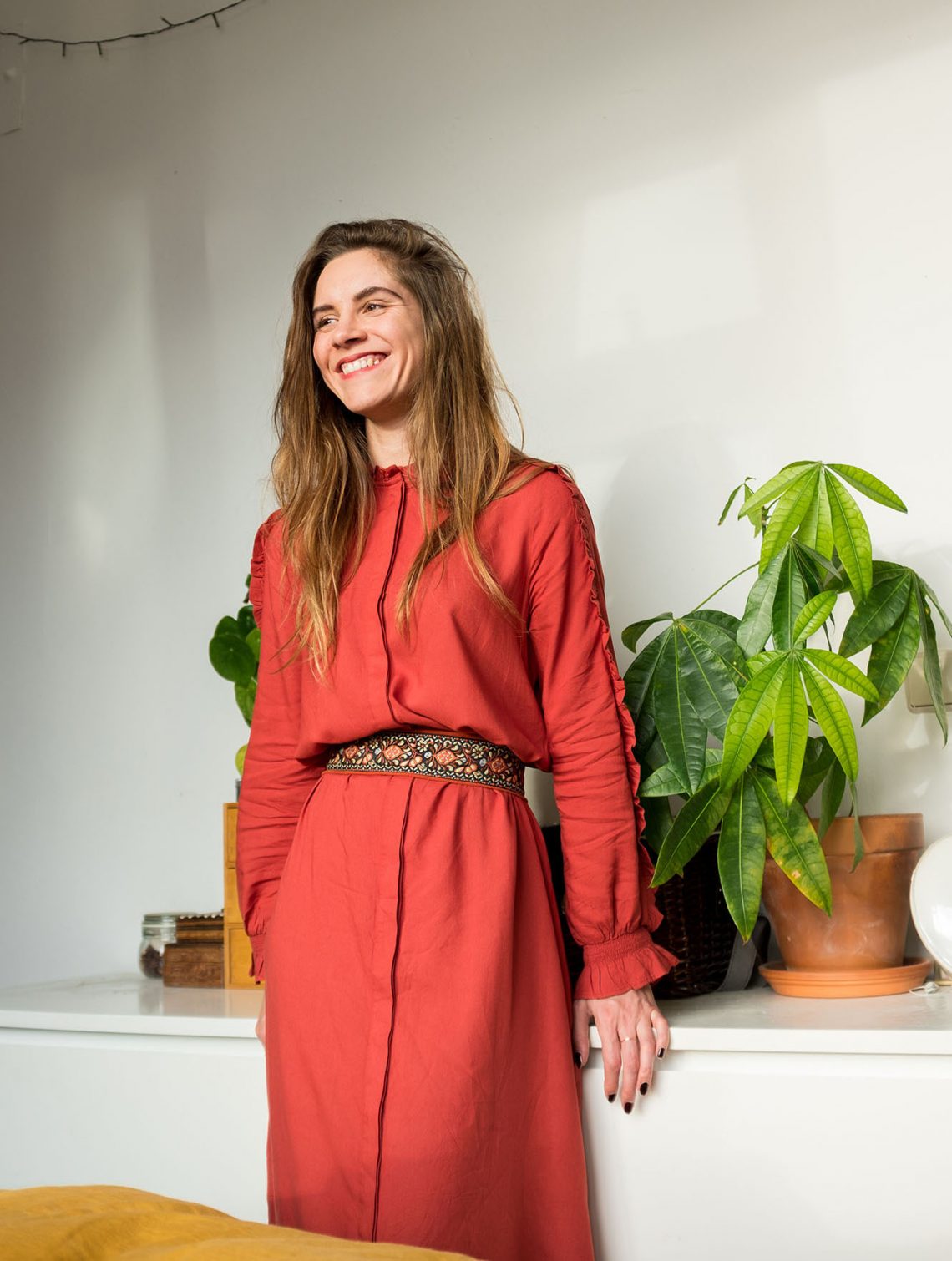
And that is where this J-LAB3L dress enters the story.
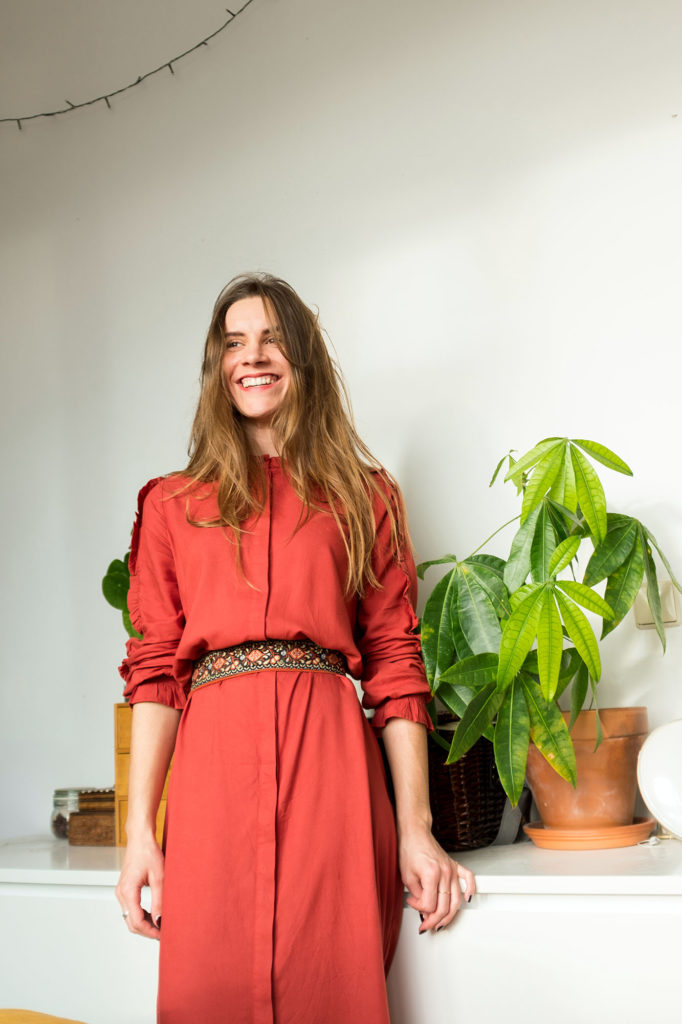
Dressing Up Without Anywhere to Go
There is something almost rebellious about dressing up when there is no obvious occasion.
Lockdowns, restrictions, collective uncertainty — they have reshaped our relationship with clothing. When the outside world shrinks, the wardrobe risks shrinking with it.
Why wear something special if no one sees it?
That question reveals how deeply we have tied clothing to spectatorship. To validation. To public performance.
But what if dressing up is less about being seen and more about seeing yourself differently?
The first time I wore this J-LAB3L dress at home, I felt slightly ridiculous. It was a Tuesday. I had nowhere urgent to be. The rational choice would have been leggings.
Instead, I chose a dress with presence. Soft fabric. A colour that lifts rather than fades. A cut that shapes without constraining.
Within minutes, my posture changed.
This sounds dramatic. It isn’t.
It’s subtle. A straightening of the back. A different way of moving through the room. The psychological shift of having made an effort — not for an audience, but for myself.
Marie Kondo would call it “sparking joy.”
But joy, in this context, is not giggling euphoria. It is steadiness.
The Fabric of Mood
Clothing psychologists have a term for this phenomenon: “enclothed cognition.” The idea that what we wear influences how we think and behave.
Put on a lab coat and people perform better in tasks associated with precision. Wear athletic clothing and you may feel more inclined toward activity.
What, then, does a well-made, consciously produced dress do?
For me, it signals intention.
The fabric of this J-LAB3L piece is soft but structured. It holds shape without stiffness. It is comfortable enough to rival loungewear — and that is crucial. Because the myth that “dressing up” requires discomfort is outdated and, frankly, patriarchal.
Historically, women’s fashion has demanded endurance. Corsets. Restrictive tailoring. Shoes that punish.
The modern reinterpretation of elegance should not require suffering.
This dress doesn’t.
It allows braless mornings and still feels polished. It permits sitting cross-legged on the couch and then answering the door without panic.
It collapses the false binary between comfort and beauty.
Who Is J-LAB3L?
Behind the garment are two women: Janneke Honings and Judith van der Wolde. A small, conscious fashion label based in the Netherlands.
They love fashion, but — and this is the key — they love the planet more.
That phrase could easily become cliché. Sustainability language is often diluted through repetition.
But when you examine the structure rather than the slogan, something steadier appears.
Ethical production. Organic and sustainable materials. Fair working conditions across the supply chain.
No grandiose promises of perfection. No greenwashing theatrics. Just a consistent attempt to take responsibility within a flawed system.
Small labels like J-LAB3L operate in a difficult space. They compete with multinational corporations that can undercut prices through scale and exploitation. They must educate consumers while remaining aesthetically compelling.
They walk a tightrope between ethics and desirability.
And that tightrope matters.
Because sustainable fashion cannot survive on moral obligation alone. It must also be beautiful.
Wearing What You Stand For
I often ask myself a question that feels both naïve and essential: What kind of world do you want to live in?
It is an overwhelming question if you consider geopolitics, climate data, economic inequality.
But it becomes surprisingly manageable when you narrow it to daily choices.
Where do I buy my clothing?
What materials touch my skin?
Which businesses do I support?
Each purchase is a micro-vote.
This dress is not revolutionary in isolation. It will not single-handedly restructure the fashion industry. But it represents alignment.
When I wear it, I am not just enjoying colour and fabric. I am participating — however modestly — in a system that values fairness over speed.
And that awareness changes the emotional texture of getting dressed.
The Cultural Moment of Conscious Dressing
We are living through what sociologists might call a crisis of trust.
Trust in institutions. In corporations. In supply chains that stretch invisibly across continents.
The Rana Plaza collapse in 2013 exposed the brutal underside of fast fashion to a global audience. Since then, the term “ethical fashion” has migrated from niche blogs into mainstream discourse.
Yet the industry remains fundamentally unchanged in many respects. Ultra-fast fashion has accelerated. New platforms gamify consumption. Micro-trends explode and evaporate within weeks.
Against that backdrop, choosing a small, fair label feels almost countercultural.
Not in a loud, protest-sign way. But in a quiet recalibration.
You slow down.
You research.
You wait.
You invest.
There is discipline in that.
And discipline, I have learned, can be empowering rather than restrictive.
Joy as Resistance
It may sound indulgent to talk about joy during uncertain times.
But joy is not escapism. It is resilience.
When the world feels unstable, small rituals gain importance. Making good coffee. Lighting a candle. Choosing an outfit with intention.
Wearing this J-LAB3L dress on an ordinary weekday is a small act of defiance against inertia.
It says: I will not dissolve into greyness.
I will not let comfort mean disappearance.
There is something historically resonant in this.
During wartime Britain, women were encouraged to maintain elegance despite rationing. In the 1940s, lipstick sales reportedly increased during economic downturns — a phenomenon later dubbed the “lipstick effect.” Even in scarcity, people seek small luxuries.
Not because they are frivolous.
But because they reaffirm identity.
Clothing has always played this role.
The Myth of Effortless Casual
Modern culture often glorifies “not trying too hard.”
We admire the woman who looks effortlessly put together, as if style simply happened to her.
But effortlessness is often curated. It is invisible labour.
When I put on this dress, I am trying. But the effort is not exhausting. It is intentional.
There is a difference.
Trying in this context means acknowledging that how I present myself influences how I feel. It means refusing the narrative that self-expression is vanity.
If anything, indifference can be its own form of conformity.
Choosing colour, silhouette, fabric — that is engagement.
The Body in Consciously Made Clothing
There is also something intimate about wearing clothing whose production story you know.
When I slip into this dress, I am aware — faintly but persistently — that it was made under fair conditions. That someone was paid properly. That the materials were chosen with care.
This awareness does not weigh heavily. It steadies.
Fast fashion often produces cognitive dissonance. We sense the improbably low price. We suspect the hidden cost. But we look away because convenience seduces us.
Conscious fashion removes some of that tension.
It does not solve global injustice. But it narrows the gap between values and actions.
And that alignment feels physically lighter.
Beyond Aesthetics
Yes, the dress is beautiful.
Yes, the colour lifts my mood.
Yes, the cut flatters without constraining.
But if that were all, it would simply be another wardrobe favourite.
What elevates it is context.
It represents a different model of production. A slower rhythm. A refusal to separate fashion from ethics.
When I look at it hanging in my closet, I do not see trend. I see continuity.
And continuity is comforting.
Creating the World You Want
There is a sentence that has been echoing in my mind lately:
Create the world you want to live in.
It sounds ambitious. Overwhelming even.
But creation rarely happens in grand gestures. It happens in accumulation. In daily repetitions.
In choosing the small label over the global giant.
In dressing up when you feel like retreating.
In aligning fabric with philosophy.
This J-LAB3L dress will not change the world.
But when I put it on, it changes my stance within it.
And sometimes that is enough.
Because getting dressed in the morning is never just about fabric. It is about orientation. Toward yourself. Toward others. Toward the future you are quietly voting for.
So yes, some days I still live in sweatpants.
But on the days I choose this dress, I feel a shift — subtle, steady, real.
And in times that feel unsteady, that quiet shift is gold.