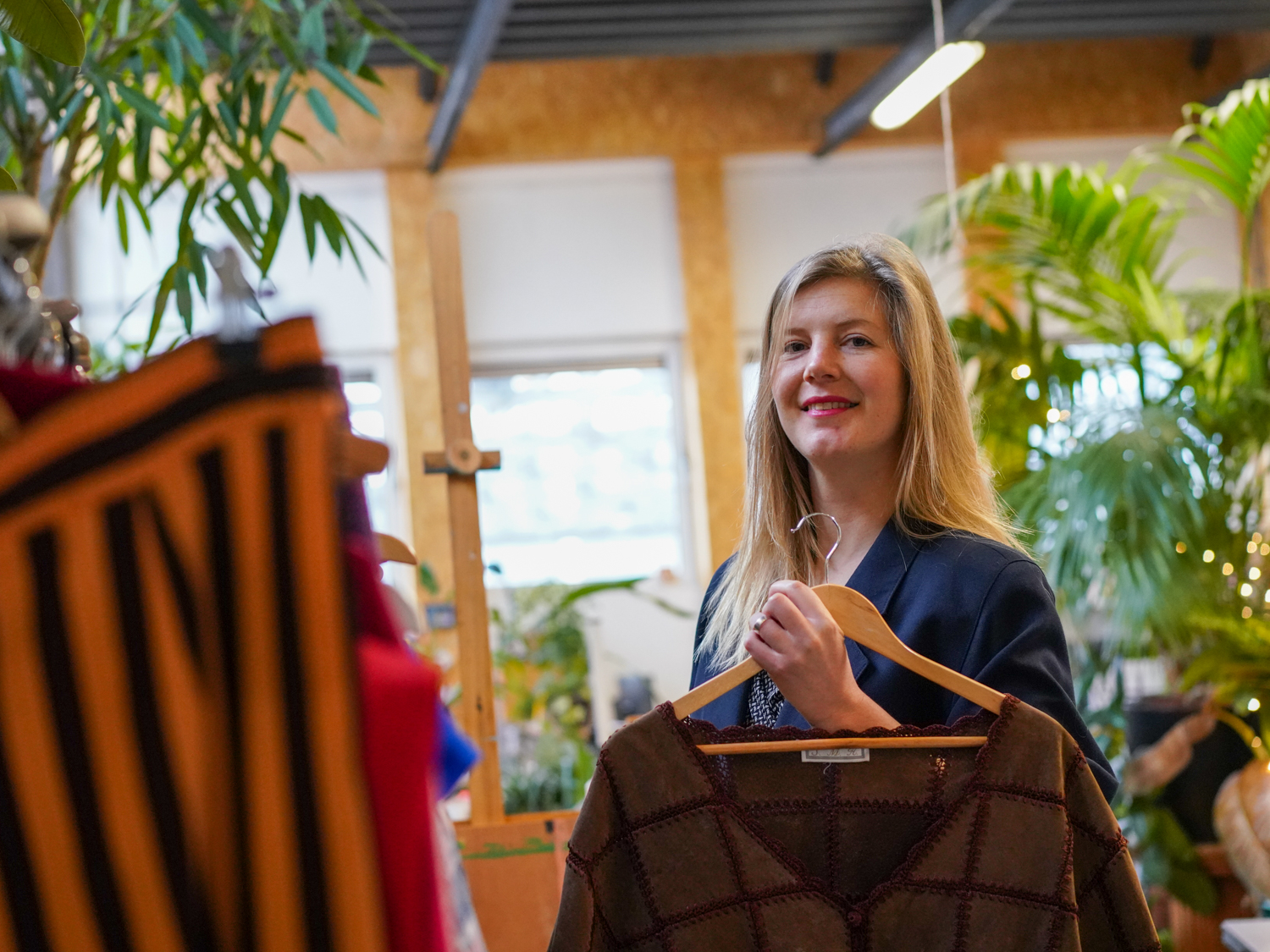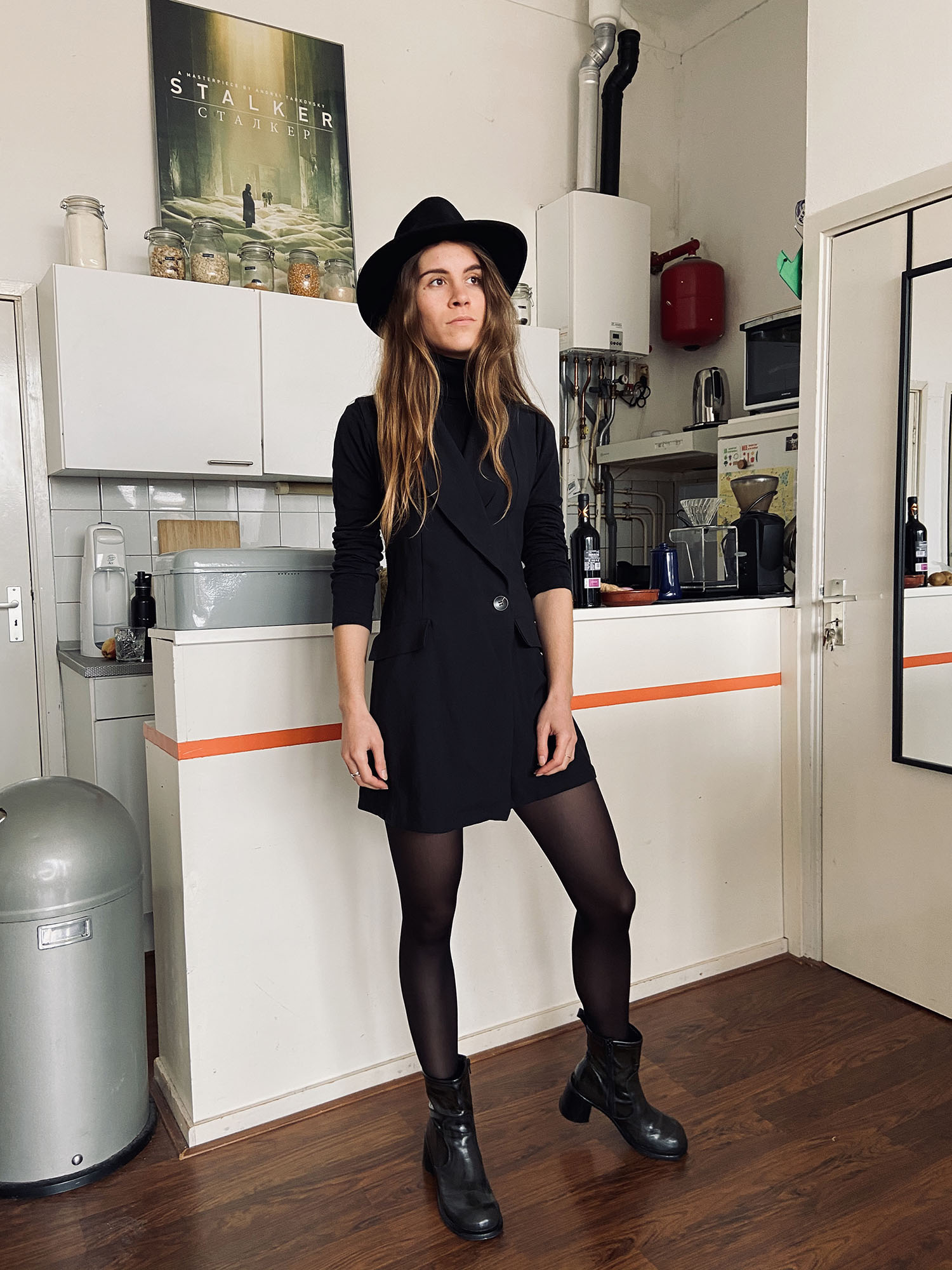
I like thrift stores because they don’t flatter you.
They don’t try to seduce you with lighting or mirrors angled at forty-five degrees. They don’t tell you what season it is or what you should be wearing right now. There is no soundtrack designed to keep you moving and no carefully curated wall that whispers “this will look good on Instagram.”
A thrift store is blunt. Chaotic. Democratic to the point of rudeness.
Everything is there at once: the beautiful, the tragic, the deeply confusing. Clothes without context. Trends without explanation. Someone else’s past hanging quietly on a metal rail.
And that’s exactly why it works.
Because thrifting isn’t shopping in the traditional sense. It’s closer to reading a second-hand book with notes in the margins. You don’t just choose an object—you interpret it. You decide whether it still has a future, and if that future includes you.
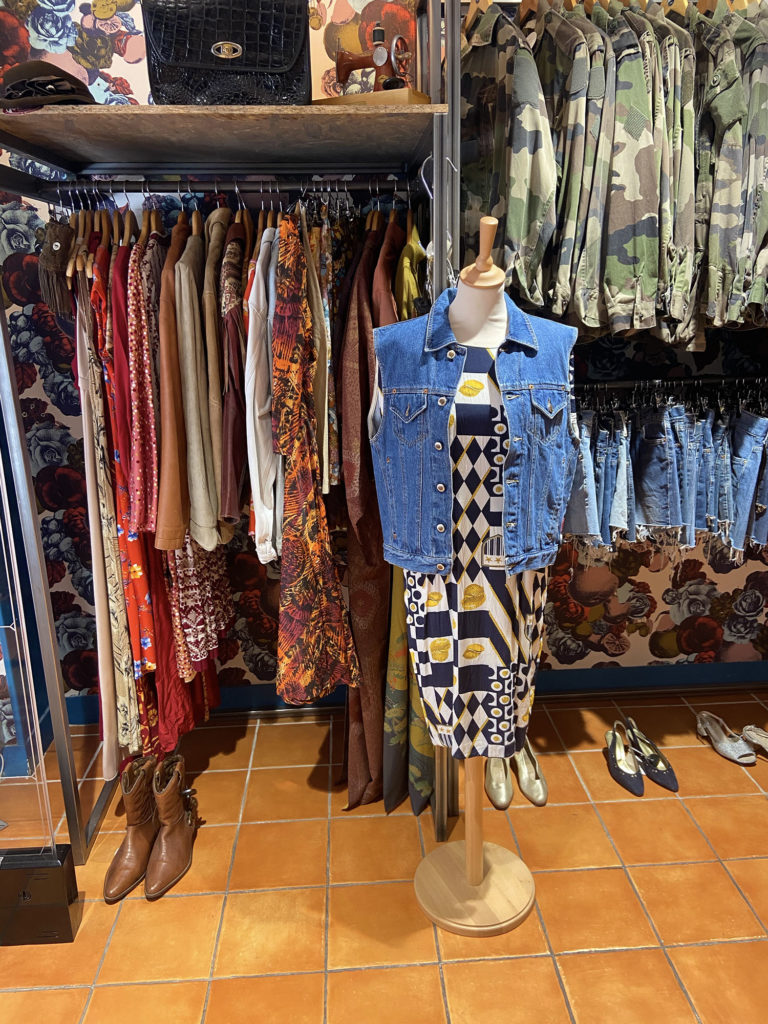
Becoming a thrift hero has very little to do with luck. It’s not about “having an eye” in the mystical sense people like to pretend exists. It’s about attention, restraint, and a certain tolerance for discomfort. The good stuff doesn’t announce itself. It waits.
First: Accept That Thrift Stores Don’t Owe You Anything
This is important.
If you walk into a thrift store expecting efficiency, you’ll be disappointed. If you expect instant gratification, you’ll leave empty-handed and irritated. Thrift stores do not function like regular shops because they are not built around demand. They’re built around residue.
What’s there is what survived someone else’s life.
This means some days you’ll find nothing. Other days you’ll find something so perfect it feels almost staged. Both outcomes are normal. Neither is personal.
Once you stop treating thrifting like a transactional errand and start treating it like a practice, everything shifts. You slow down. You observe more. You become selective instead of reactive.
Heroes are not the ones who buy the most. They’re the ones who leave without buying anything and don’t feel defeated by it.
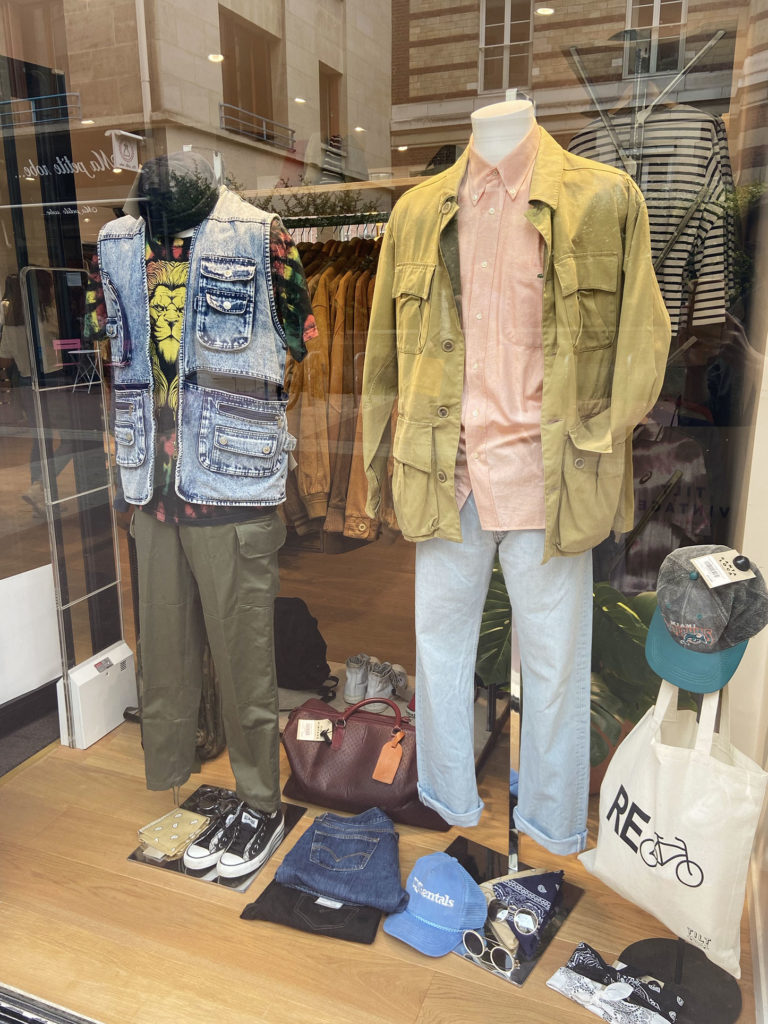
Preparation Is Not Boring—It’s a Form of Respect
Before you even step inside, you need one thing: clarity.
Not a rigid shopping list carved in stone, but a loose internal compass. Thrift stores are overwhelming by design. Rows and rows of garments stripped of hierarchy. Without intention, you’ll drown in options and surface with a polyester regret you didn’t need.
Ask yourself simple, unromantic questions:
- What am I actually missing in my wardrobe?
- What problem am I trying to solve?
- What would genuinely make getting dressed easier?
If you need trousers, look for trousers. Not “something cool.” Cool is how you end up with a sequined vest you will never wear but somehow feel attached to.
Knowing your style helps—but not in the Pinterest-definition sense. Style here means behavioral truth. What do you reach for on tired mornings? What do you wear when no one is watching? Which items have survived multiple years and still feel like you?
Pull five favorite pieces from your closet and really look at them. Fabric. Shape. Color. Weight. Those are your clues. Thrift heroes don’t chase novelty; they recognize patterns in their own preferences and work with them.
Color Knowledge Is Emotional, Not Technical
There are color tests. There are seasonal palettes. There are people who can tell you precisely which shade of blue will make your eyes sparkle.
All of that is fine. None of it matters as much as this: do you like the color?
Thrift stores will challenge you here. Colors look different under bad lighting. Some shades feel ugly on the hanger but come alive on the body. Others look promising and then quietly drain you.
Pay attention to how a color makes you feel. Energized? Comfortable? Slightly braver than usual? Or oddly invisible?
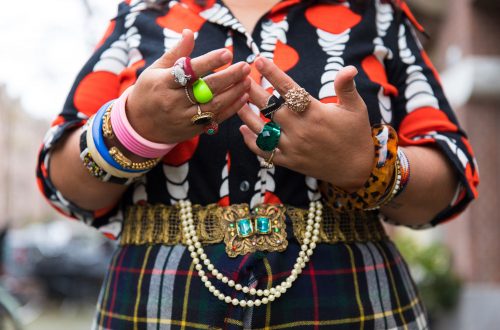
Heroes don’t buy colors they admire in theory. They buy colors they want to inhabit.
Strategy Inside the Chaos
Once you enter, resist the urge to scan everything at once. That’s panic behavior.
Start with your list. Or your category. Or your color family. Narrow your field of vision. This isn’t about missing out—it’s about conserving attention. Attention is your most valuable currency in a thrift store.
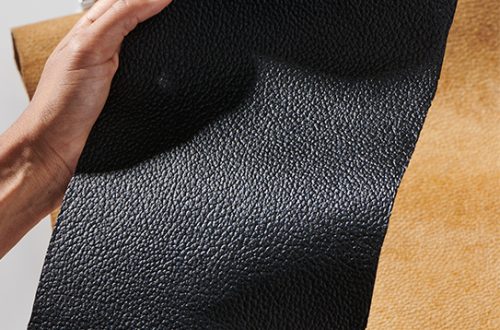
When something catches your eye, pick it up. Feel it. Weight matters. Fabric tells the truth faster than aesthetics ever will. Labels help, but your hands already know if something is cheap in spirit, not just price.
Natural fibers age better. They respond to wear, repair, and time. Synthetics can be fine, but you should know why you’re choosing them—not just fall for the shape.
And always check for damage. Not with fear, but with curiosity. A missing button is not a flaw; it’s a negotiation. A broken zipper might be a deal-breaker—or a tailor visit. Thrift heroes can tell the difference.
Fit Is a Conversation, Not a Verdict
Most people reject thrifted clothes because they don’t fit immediately.
This is a mistake.
Thrift stores operate outside the fantasy of standardized bodies. Clothes come from real people with real proportions. This is not a failure of the garment. It’s an invitation to think beyond the fitting room mirror.
Ask better questions:
- Does it fit in the shoulders?
- Is the fabric worth altering?
- Would one small change unlock its potential?
Tailoring is not cheating. Repair is not settling. Some of the most personal clothes are the ones that needed adjustment. They feel earned.
That said—know your limits. If something requires imagining an entirely different garment, let it go. Thrift heroism is not martyrdom.
The Difference Between Unique and Unwearable
Thrift stores are full of items that are “interesting.” Very few of them are actually wearable.
The hero skill is knowing the difference.
An item can be ugly and brilliant at the same time—but only if it integrates into your real life. Ask yourself where you would wear it. With what. In which version of yourself.
If the answer requires a fictional lifestyle you do not live, put it back.
Uniqueness is not volume. It’s precision.
Thrifting as Cultural Literacy
There’s something quietly educational about thrifting. You start recognizing decades by silhouette. Materials by touch. Construction by instinct. You see how clothing used to be made—and how much effort went into things now treated as disposable.
You also see cycles. Trends that return with new names. Shapes that disappear and resurface. It gives you distance from fashion’s urgency. When you’ve held a 1980s blazer that could survive an apocalypse, it’s hard to panic about what’s “in” this season.
Thrift heroes are not anti-fashion. They’re just harder to impress.
Leaving Empty-Handed Is a Win
This might be the hardest lesson.
You are not required to buy something just because you showed up. Thrift stores reward patience. The ability to walk away keeps your standards sharp.
Every time you leave without buying, you reinforce trust in your own judgment. You’re not there to consume—you’re there to select.
That mindset changes everything.
The Real Hero Move
Being a thrift hero isn’t about bragging that your outfit cost twelve euros. It’s about rewriting your relationship with clothes.
You stop seeing garments as disposable solutions and start seeing them as collaborators. Objects with history, potential, and limits. You take responsibility—not in a heavy way, but in a conscious one.
You repair. You adapt. You keep things longer than expected.
And one day someone asks where your coat is from. You pause, smile, and realize the answer isn’t a store—it’s a story.
That’s the moment the thrift store has officially accepted you.