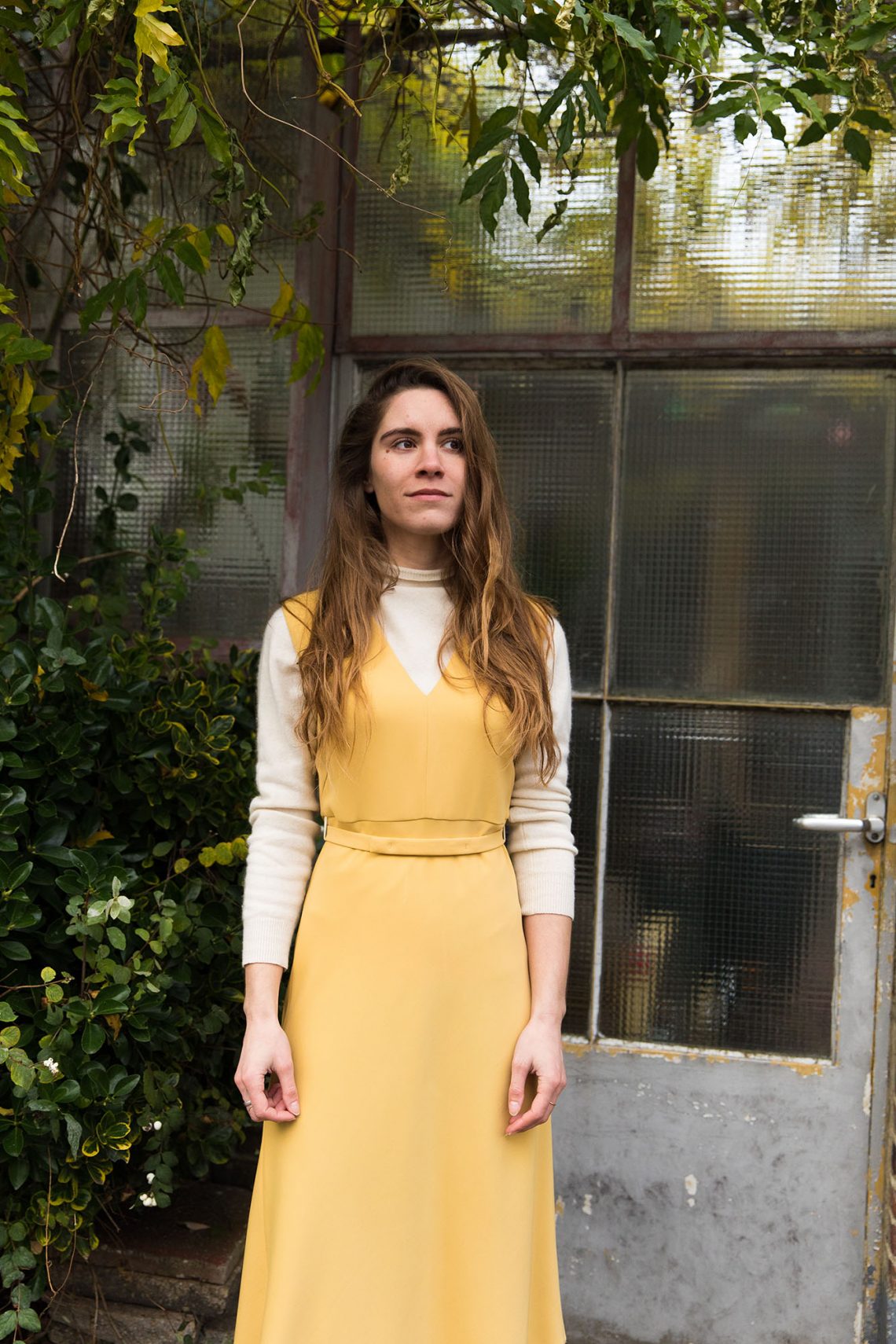
There’s something slightly theatrical about Christmas dressing. Even if you’re staying home. Even if your “party” is a laptop balanced on a stack of cookbooks. Even if the only audience is your cat and the reflection in the oven door.
We reach for sparkle instinctively, as if light could compensate for the darkness of December. As if velvet could soften the year we’ve had. As if a good outfit might anchor us in something solid and celebratory.
But here’s the uncomfortable truth: most of us already own what we need.
The idea that a festive outfit requires a new purchase is a relatively modern one. It belongs to the same era that turned every season into a marketing opportunity and every holiday into a photo backdrop. It’s not ancient. It’s not sacred. It’s not even particularly creative. It’s just habit.
And habits can be unlearned.
I used to think Christmas dressing meant “something special.” Which, in practice, meant something new. A dress I hadn’t worn yet. Shoes that hadn’t stepped outside. The quiet thrill of a price tag removed minutes before leaving the house.
But over the past few years, something shifted. Maybe it was fatigue. Maybe it was watching my wardrobe grow while my sense of personal style shrank. Maybe it was the subtle shame of owning so much and still feeling like I had “nothing to wear.”
Whatever it was, I started doing something radical: I shopped my own closet.
And not in a Pinterest way. Not in a “10 capsule wardrobe hacks” way. In a slow, slightly chaotic, deeply personal way. Pulling things out. Trying combinations I’d never tried. Layering summer over winter. Turning skirts into dresses. Wearing scarves in my hair instead of around my neck. Allowing myself to play.
That’s where the magic lives. Not in the checkout line. In the rearrangement.
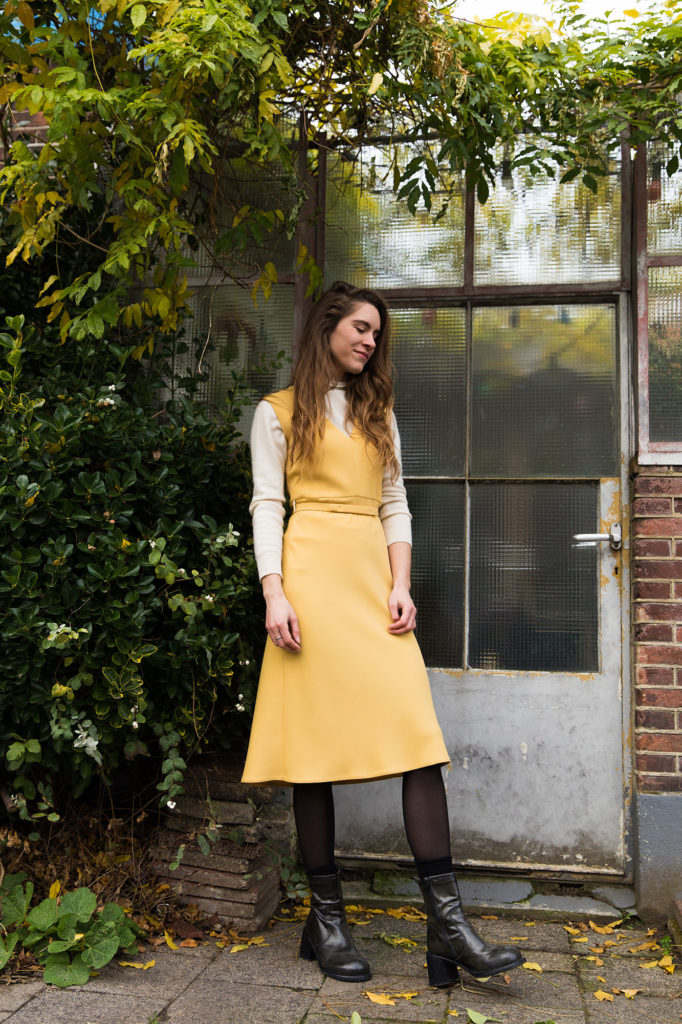
Start With What Already Feels Like You
Before you even think about “Christmas,” think about yourself.
What do you always reach for when you want to feel grounded? Is it a soft knit? A tailored blazer? A certain pair of boots that somehow make you stand taller?
Festive doesn’t have to mean sequins. It can mean amplifying what already works.
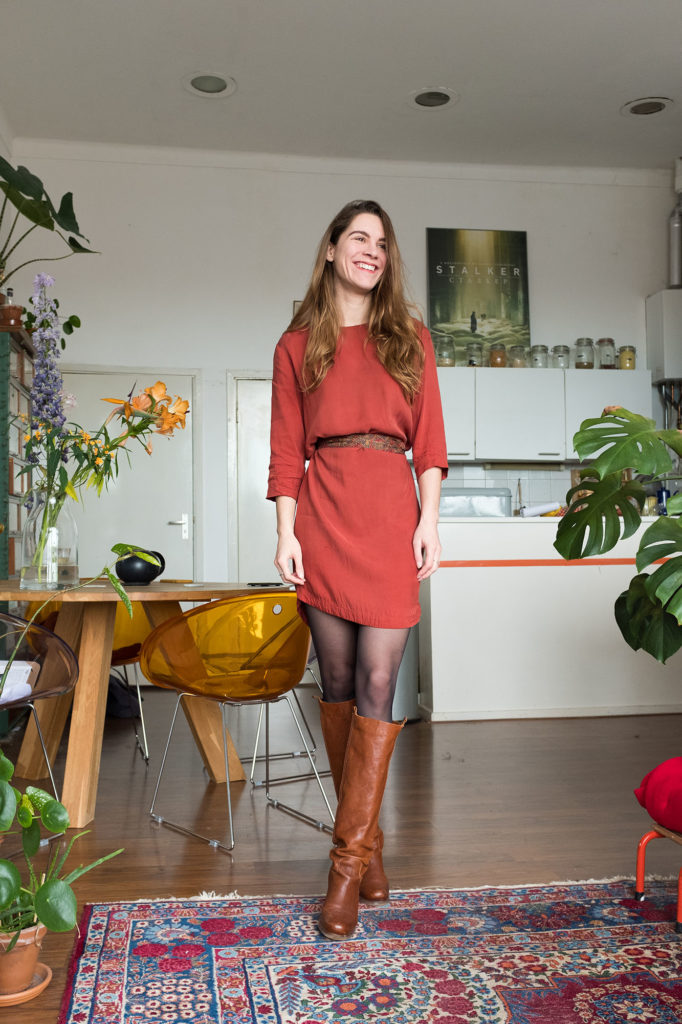
I have a dress I bought years ago for a summer wedding. It’s minimal, slightly 70s, in a deep rust tone that somehow feels warm even on a hanger. I used to think of it as “that wedding dress.” Context-specific. Occasion-locked.
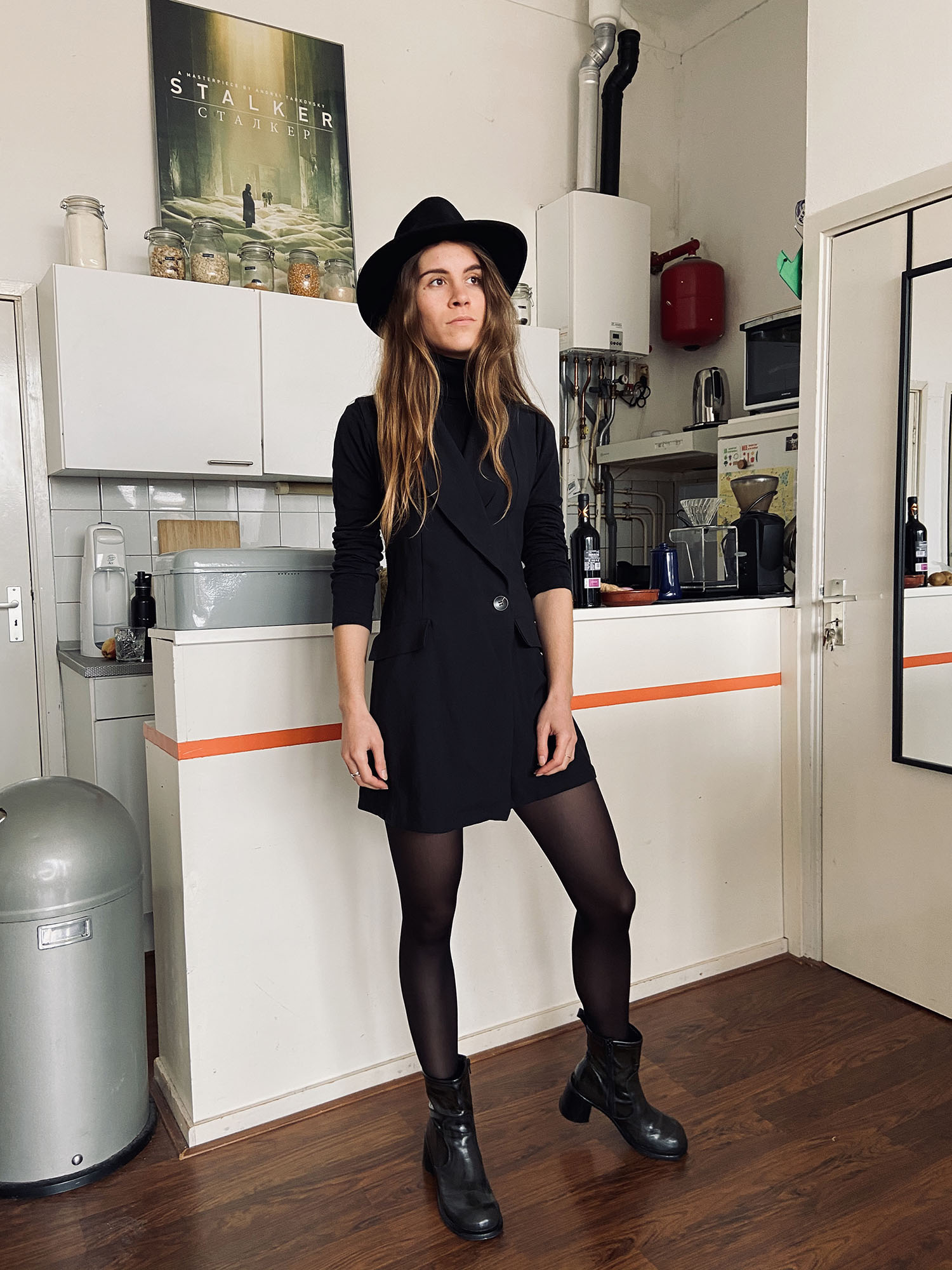
Then one winter evening, almost absentmindedly, I layered it over a thin wool turtleneck. Added opaque tights. Vintage boots. Suddenly it wasn’t a wedding dress. It was a winter piece. It felt intentional, almost cinematic. Like something you’d wear while stirring mulled wine in a kitchen lit by fairy lights.
Nothing new was purchased. The shift was conceptual.
We tend to categorize our clothes too rigidly. Summer versus winter. Casual versus festive. Work versus home. But those categories are cultural constructs as much as practical ones. Fashion history is full of garments that traveled across contexts—workwear becoming couture, sportswear becoming eveningwear.
Your wardrobe is more fluid than you think.
Texture Is More Powerful Than Novelty
When people imagine a “Christmas outfit,” they often imagine color first. Red. Gold. Emerald. But texture does far more heavy lifting than color ever could.
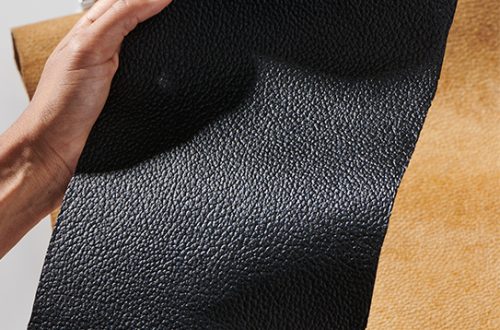
A leather-feel skirt paired with a soft viscose top creates tension. A silky scarf against chunky knit. Matte wool next to something slightly shiny. These contrasts catch light differently. They create depth.
And depth reads as intention.
I once combined a deep red skirt I’d almost forgotten about with a simple, slightly oversized turtleneck. On paper, it sounded dull. In reality, the skirt’s subtle sheen against the softness of the knit felt festive without trying too hard. I added a silk scarf—not around my neck, but tied loosely in my hair. Suddenly the whole look shifted. A bit more playful. A bit more deliberate.
There’s a long tradition of using texture to signify celebration. Velvet for winter rituals. Satin for ceremonies. Metallic threads woven into otherwise ordinary fabric. These weren’t always about excess; they were about tactility. About marking time through touch.
When you’re building a Christmas outfit from your own wardrobe, focus less on “Do I own something festive?” and more on “What combinations feel rich?”
Richness doesn’t require newness.
Layering Is an Act of Imagination
Layering is where creativity becomes visible.
A matching set you usually wear in autumn can transform entirely with the addition of a fine turtleneck underneath. A summer slip dress becomes evening-appropriate with structured outerwear and bold boots. A blouse worn open over a dress creates dimension where there was none.
Layering is also a kind of rebellion against the single-use mindset. It refuses the idea that garments have fixed roles.
Historically, layering was necessity. People owned fewer clothes. They adapted them. Adjusted for temperature, for occasion, for changing bodies. The modern obsession with perfectly curated, hyper-specific outfits—“this dress is for holiday parties only”—is less about style and more about consumer pacing.
When you layer, you slow that pacing down.
And there’s something satisfying about that. About looking in the mirror and thinking, “I would never have tried this before.” It’s a small act of authorship. Of reasserting that you, not a trend forecast, decide what works.
The Emotional Layer Matters Most
Here’s the part we rarely talk about: clothes hold memory.
That skirt you wore on a first date. The blouse you bought secondhand and still remember discovering on a crowded rack. The boots that carried you through a winter when everything felt uncertain.
Wearing something for Christmas isn’t just about how it looks. It’s about what it carries.
I own an old vintage set I found years ago in a shop where I used to work. I remember staring at it on the hanger, unsure whether it was brilliant or absurd. The fabric slightly shiny. The colors bold. I tried it on, laughed, then kept it.
It has survived several wardrobe purges.
On its own, it doesn’t scream “winter.” But layered with a thin knit underneath, maybe paired with heavier shoes, it becomes unexpectedly festive. More importantly, it makes me happy. And that happiness is visible.
We underestimate how much feeling influences style. The right outfit doesn’t just fit your body; it fits your mood, your history, your sense of self in that particular moment.
Christmas—whatever that means for you this year—can be emotionally complicated. Joyful and lonely. Intimate and strange. Dressing from your own wardrobe can become a grounding ritual. A way of reconnecting with continuity when the world feels fragmented.
Constraints Make You More Creative
There’s a psychological trick embedded in this whole exercise.
When you remove the option to buy something new, your brain shifts gears. It stops scanning for solutions externally and starts recombining what’s available.
Designers know this. Some of the most innovative collections emerge under constraint—limited fabric, limited time, limited resources. Constraints force depth.
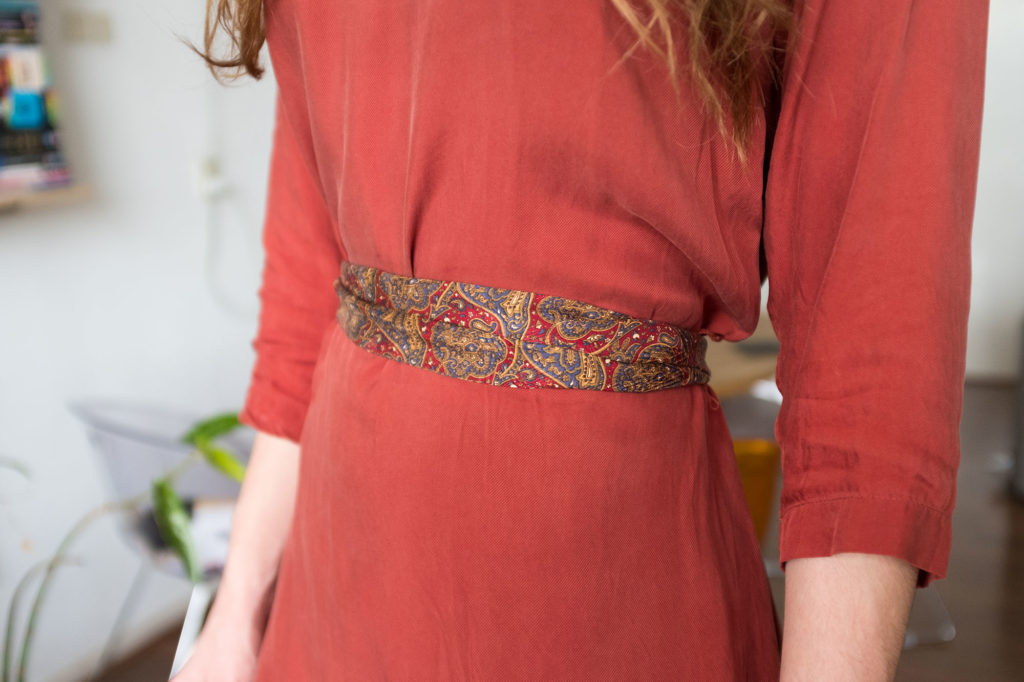
Try this: choose three pieces you haven’t worn in a year. Lay them out. Ask yourself how each could be styled differently. Could that blouse be worn backward? Could that dress become a skirt under a sweater? Could that scarf transform into a belt?
It might feel slightly ridiculous at first. Good. That’s the edge of creativity.
We’ve been trained to equate consumption with transformation. New year, new outfit. New season, new you. But personal style isn’t built on constant acquisition. It’s built on repetition, reinterpretation, refinement.
Christmas is a perfect laboratory for this. The stakes are low. The lighting is forgiving. The mood is already heightened.
Celebration Is a State of Mind
Ultimately, the most festive element of any outfit is intention.
You can wear the simplest black dress and make it feel like an occasion by adding one thoughtful detail—a brooch you never use, a bold lip, a pair of earrings that catch the light. You can turn an everyday knit into something celebratory by pairing it with your best shoes instead of your usual ones.
It’s less about impressing others and more about marking the moment.
There’s something quietly radical about celebrating without consuming. About saying, “What I have is enough.” In a culture that thrives on perpetual dissatisfaction, that’s not a small statement.
And here’s the irony: when you stop chasing the perfect new Christmas outfit, you often end up looking more like yourself. Less costumed. Less pressured. More at ease.
Which, in the end, is far more attractive than any sequined dress could ever be.
So this year, before you click “add to cart,” open your wardrobe. Really open it. Touch the fabrics. Try combinations that feel slightly unexpected. Let memory guide you. Let texture lead you. Let constraint sharpen your creativity.
The perfect Christmas outfit might already be hanging there, quietly waiting for you to see it differently.
And maybe that’s the real gift.