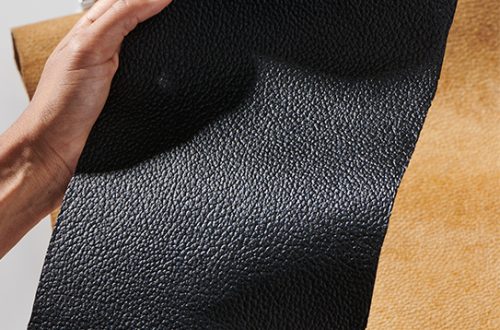
There was a time when I thought winter without wool was simply… unrealistic.
No chunky knits.
No soft scarves.
No thick cardigans cocooning you like a portable shelter.
Wool, we’re told, is nature’s miracle fiber. Warm even when wet. Breathable. Durable. Timeless.
And yet.
The more I learned about industrial wool production — the scale of it, the transport, the chemical treatments, the sheer commodification of animals — the more that miracle started to feel complicated.
This isn’t about demonizing sheep. It’s about scale. About what happens when something once local becomes global. When pastoral imagery becomes an industry. When “natural” becomes shorthand for “harmless,” and we stop asking questions.
But here’s the thing: rejecting wool doesn’t mean resigning yourself to polyester purgatory.
Because swapping out animal fiber only to wrap yourself in oil-derived plastic isn’t a solution. It’s just a lateral move in the wrong direction.
I don’t want sweaty synthetics that spark in the dark and cling to my skin. I want warmth that breathes. Texture that lives. Fabrics that feel like winter, not petroleum.
So I went looking.
And what I found is that the future of knitwear might be rooted — quite literally — in plants.
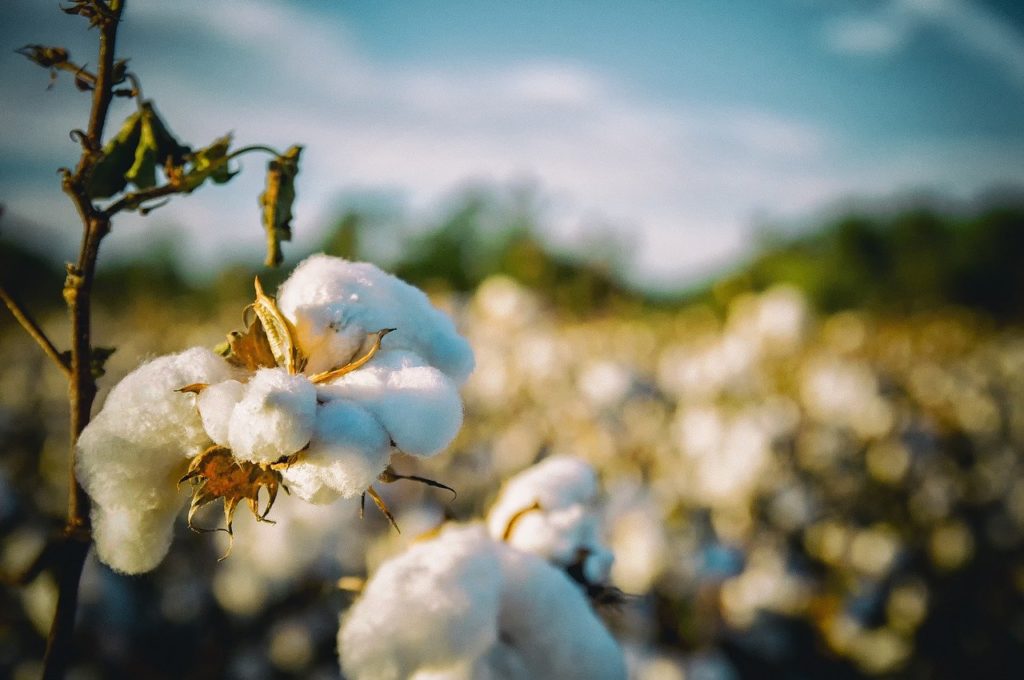
1. Organic Cotton: The Honest Workhorse
Let’s start with the obvious.
Cotton isn’t as warm as wool. It never pretended to be. But organic cotton knitwear has a quiet, grounded appeal that I’ve come to respect.
It’s breathable. It’s familiar. It doesn’t itch. And in a chunky knit or brushed fleece construction, it can hold its own in autumn and mild winters — especially layered.
The important word here is organic.
Conventional cotton is notoriously thirsty and chemically intensive. Pesticides, fertilizers, soil depletion — the environmental toll is well documented. Organic cotton eliminates synthetic pesticides and toxic fertilizers, which reduces harm to ecosystems and to the farmers growing it.
But even organic cotton needs water. A lot of it.
Which is why, for me, second-hand cotton or recycled cotton yarn feels like the smarter play. The fiber already exists. The impact has already happened. Extending its life is simply responsible.
There’s something beautifully democratic about cotton. It doesn’t perform luxury. It performs reliability.
And in winter, reliability layered properly can be surprisingly powerful.
2. Hemp: The Underestimated Rebel
Hemp has always had a slightly rebellious reputation — culturally charged, politically misunderstood. But as a textile fiber, it’s almost embarrassingly impressive.
It grows quickly. Requires little to no pesticides. Thrives with minimal water compared to cotton. It restores soil rather than depleting it.
And structurally? Hemp fibers are strong. Up to eight times stronger than cotton.
What surprises people is how soft it can become. Early hemp textiles had a coarse, utilitarian feel. But modern processing techniques have transformed it. Blended with organic cotton or treated mechanically, hemp knits can feel warm and pleasantly textured.
It’s breathable. It regulates temperature. It ages well.
There’s something poetic about wearing a fiber that improves soil health while you wear it through winter.
A quiet, earthy defiance against fast, disposable fashion.
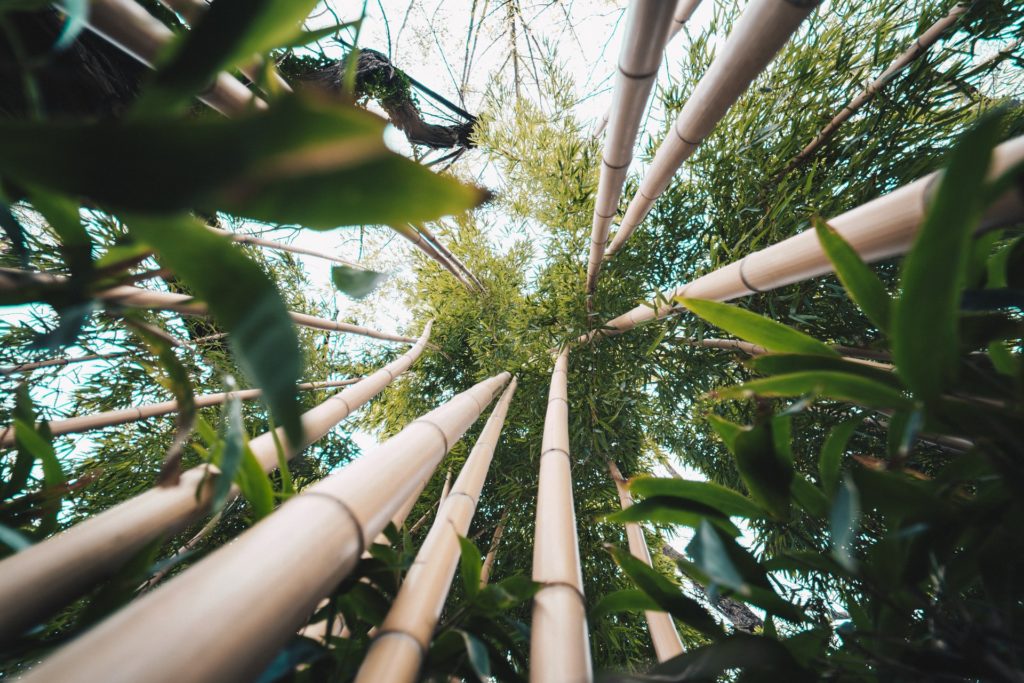
3. Bamboo: Soft, But Complicated
Bamboo entered the fashion world like a sustainability darling.
Fast-growing. Self-regenerating. Requires no pesticides. Antibacterial. Soft as silk. Moisture-wicking. Warm.
It sounded too good to question.
But here’s where nuance enters.
Bamboo the plant is remarkable. Bamboo the textile often undergoes heavy chemical processing to transform rigid plant material into soft viscose fibers. The sustainability of bamboo fabric depends heavily on how it’s processed and where.
Closed-loop systems, where solvents are captured and reused, are vastly better than open chemical processes. Certification matters. Transparency matters.
Most bamboo is grown in China, and supply chain visibility isn’t always clear. Just because a plant doesn’t need pesticides doesn’t mean none are used. Scale changes behavior.
And yet — when responsibly produced — bamboo fabric can be incredibly comfortable. It drapes beautifully. It regulates moisture. It feels indulgently soft against the skin.
Bamboo teaches us something important: sustainability isn’t about the plant alone. It’s about the system.
4. Woocoa: The Lab-Imagined Future
This one feels almost like science fiction.
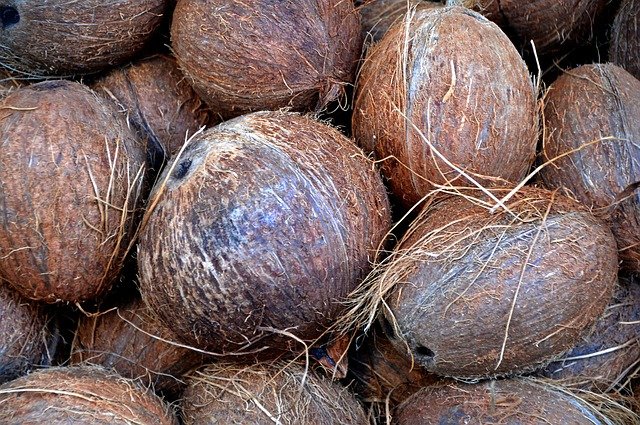
Woocoa is a plant-based alternative to wool developed by students in Colombia. It’s made from hemp and coconut fibers, treated with enzymes extracted from oyster mushrooms. These enzymes break down lignin — the compound that makes plant fibers rigid — resulting in a softer, wool-like yarn.
No sheep. No petroleum. Just plant fibers and fungal enzymes collaborating.
It won awards. It made headlines.
And then — like many innovations — it stalled at the scale-up phase.
This is the paradox of sustainable innovation. The lab can imagine it. The prototype can prove it. But scaling ethically and affordably into global markets is a different challenge entirely.
Still, the existence of Woocoa matters.
It signals a cultural shift. A willingness to rethink “natural” not as animal-derived by default, but as plant-evolved, lab-assisted, bio-designed.
It’s not on the market yet. But it represents possibility.
And fashion desperately needs imagination.
5. Soy Fiber: The Vegetable Cashmere
If you’ve heard of soy in fashion, you might have dismissed it as a gimmick.
But soy fiber — sometimes called “vegetable cashmere” — is derived from the byproducts of soybean food production. It’s essentially waste transformed into wearable softness.
The fiber is smooth, breathable, and surprisingly warm. It blends well with other natural fibers and has a subtle sheen that gives knitwear a refined finish.
There’s something satisfying about this circularity. Tofu waste becoming sweaters. Agriculture’s leftovers becoming comfort.
Of course, soy cultivation globally is tied to deforestation and monoculture issues — particularly when driven by animal feed production. But when soy fiber uses waste from existing food systems, it shifts the narrative slightly toward resource efficiency.
Soy knitwear feels almost poetic in its contradiction: a humble bean transformed into something luxuriously soft.
6. TENCEL™ (Lyocell): The Engineered Classic
If I had to choose one fiber that consistently impresses me, it’s TENCEL™.
Made from wood cellulose — often eucalyptus — it’s technically a form of rayon. But what differentiates it is the production process.
TENCEL™ uses a closed-loop system, meaning water and solvents are recycled and reused rather than dumped into ecosystems. The trees used are typically grown on land unsuitable for food crops and require less irrigation.
The result? A fabric that’s soft, durable, moisture-wicking, and resistant to wrinkles.
While not as insulating as thick wool, TENCEL™ blends beautifully into knitwear, especially layered pieces. It regulates temperature effectively and feels cool against the skin — making it ideal for transitional seasons.
It represents a different kind of innovation: not radical, but refined. A system improved rather than reinvented.
Wool’s Cultural Weight
We can’t talk about wool alternatives without acknowledging wool’s historical significance.
Wool built economies. Medieval Europe thrived on wool trade. Entire towns were structured around sheep farming and textile guilds. Wool garments protected generations before synthetic insulation existed.
It carries nostalgia. Craft heritage. Hand-knitted sweaters passed down through families.
That cultural memory is powerful.
But history isn’t static.
Just because something sustained us for centuries doesn’t mean industrial-scale versions of it are beyond critique.
We no longer romanticize coal because it fueled the industrial revolution. We recognize its costs.
Similarly, wool today operates within globalized supply chains, chemical treatments, and mechanized shearing at a scale unimaginable in pre-industrial times.
The question isn’t whether wool once served humanity well.
The question is whether alternatives can now serve us better.
Warmth Is Architectural
One thing wool advocates often argue — correctly — is that wool insulates exceptionally well.
But warmth isn’t just about fiber.
It’s about structure.
Layering traps air. Air is insulation. A hemp-cotton blend sweater layered over a TENCEL™ base layer, under a wind-resistant coat, can rival a single thick wool garment.
We’ve forgotten how to layer because central heating and synthetic fleece made us lazy.
But historically, warmth was built in layers. Linen undergarments. Wool overshirts. Cloaks. Air pockets.
You can construct warmth without relying on one miracle fiber.
The Real Sustainable Choice
There’s one truth that quietly undercuts every fiber discussion:
The most sustainable garment is the one that already exists.
Second-hand wool? Still better than brand-new plant-based fabric produced at scale.
Vintage cotton? Excellent.
Inherited sweater? Irreplaceable.
Fiber debates matter. But consumption volume matters more.
If you’re replacing your entire wardrobe every season — even with hemp and TENCEL™ — the environmental math won’t favor you.
Sustainability isn’t a material. It’s a behavior.
Where I’ve Landed
I don’t own zero wool. But I buy far less than I used to.
When I choose alternatives, I look for:
- Transparent production processes
- Certified organic fibers
- Blends that enhance durability
- Second-hand options first
And I layer intentionally.
There is something liberating about realizing that warmth doesn’t belong exclusively to sheep.
It belongs to design. To engineering. To imagination.
And maybe that’s the deeper shift.
Moving from inherited habits to conscious choices.
From assumption to inquiry.
From tradition to evolution.
Winter will always come.
The question is what we choose to wrap ourselves in when it does.
Sheep are not the only architects of comfort.
The forest. The field. The lab. The fungus. The forgotten agricultural byproduct — they’re all quietly weaving the next chapter.
And if you build your layers wisely, you won’t miss the wool nearly as much as you think.