Last summer I found myself longing for clothing that would not ask too much of me.
Not in the dramatic sense. I wasn’t shedding an identity or reinventing a wardrobe. I was simply tired of negotiating with fabrics. Tired of dresses that looked charming on hangers but wilted by noon. Tired of garments that demanded dry cleaning, strategic underlayers, or a certain posture to look “right.”
I wanted dresses I could live in.
The kind you reach for half-asleep on a warm morning and never regret by lunchtime. The kind that can accompany you to the market, to a late coffee, to a long dinner, without ever feeling like costume.
Airy. Forgiving. Thoughtfully designed.
And so I did what we all do in moments of quiet wardrobe despair: I opened my laptop.
A modest Google search — nothing revolutionary — led me to Love and Confuse, a family-run brand specializing in linen clothing. Dresses, trousers, tops. Clean silhouettes. Soft colors. Pieces photographed in a way that felt unforced — no theatrical wind machines, no hyper-styled chaos. Just fabric, light, and movement.
There was something disarming about it.
The Appeal of Linen (Or: Why We Keep Returning to the Same Fabric)
Linen is one of those materials that appears, disappears, and reappears throughout fashion history like a calm, reliable friend.
Before cotton industrialized wardrobes and polyester accelerated them, linen clothed civilizations. Ancient Egyptians wrapped themselves in it. Medieval Europe built entire local economies around flax cultivation. In summer portraits across centuries, you’ll find it — pale, breathable, luminous.
It has always signified something subtle: practicality without austerity.
The sustainability discourse around linen is often cited — and for good reason. Flax requires comparatively little water. It thrives in cooler climates. Untreated linen is biodegradable. It is strong, naturally moth-resistant, and with every wash it becomes softer rather than weaker. Unlike many fabrics, it improves through use.
This idea feels almost radical in a culture of planned obsolescence.
We are used to things deteriorating quickly. Linen resists that narrative.
And perhaps that’s why it appeals so strongly now. In an age of disposability, durability reads as luxury.
A Brand That Slows Itself Down
Love and Confuse operates on a made-to-order model.
At first glance, that detail might seem logistical — a production choice, a supply-chain decision. But the more I thought about it, the more philosophical it felt.
Made-to-order prevents overproduction. It avoids racks of unsold inventory destined for landfill or incineration. It demands patience — from both maker and buyer.
You select your piece. You choose your color. They sew it for you.
There is an intimacy in that exchange.
It also disrupts the dopamine cycle we have grown accustomed to. Fast fashion promises immediacy: click, ship, arrive, wear, repeat. Love and Confuse quietly says: wait.
In my case, waiting meant over two months.
There were delays. Covid complications. DHL mishaps. Production bottlenecks. Emails that explained, apologetically, that rushing garments results in visible haste — seams sewn under pressure, details compromised.
One message stood out to me:
“We’ve tried rushing with production, but I literally can see when a garment was sewn under pressure and I really don’t like it.”
There is something profoundly human in that sentence.
In an industry where speed is worshipped, someone admitting they can see haste in the stitches feels almost subversive.
I could have cancelled my order. They made that clear. There was no coercion, no guilt.
I didn’t.
Because I was curious about what patience might yield.
Choosing Color in a World of Defaults
Another small luxury Love and Confuse offers: choice.
Their pieces can be ordered in a wide range of colors. Not just safe neutrals, but nuanced tones — apple blossom, muted sage, deep charcoal, warm terracotta.
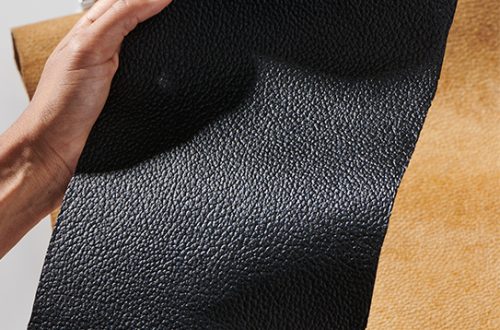
With each order, they usually include fabric swatches so you can see the full palette in person. (Mine were temporarily out of stock; I am still waiting. The suspense is oddly delightful.)
This flexibility transforms the buying process into something collaborative. You are not merely selecting a pre-determined aesthetic; you are shaping it.
Historically, clothing was far more personal. Garments were commissioned, altered, passed down. Color choices reflected available dyes, regional traditions, economic status.
Mass production flattened that individuality.
Made-to-order, in its small way, restores it.
The Arrival: Weight and Softness
When the package finally arrived, it did not feel triumphant. It felt calm.
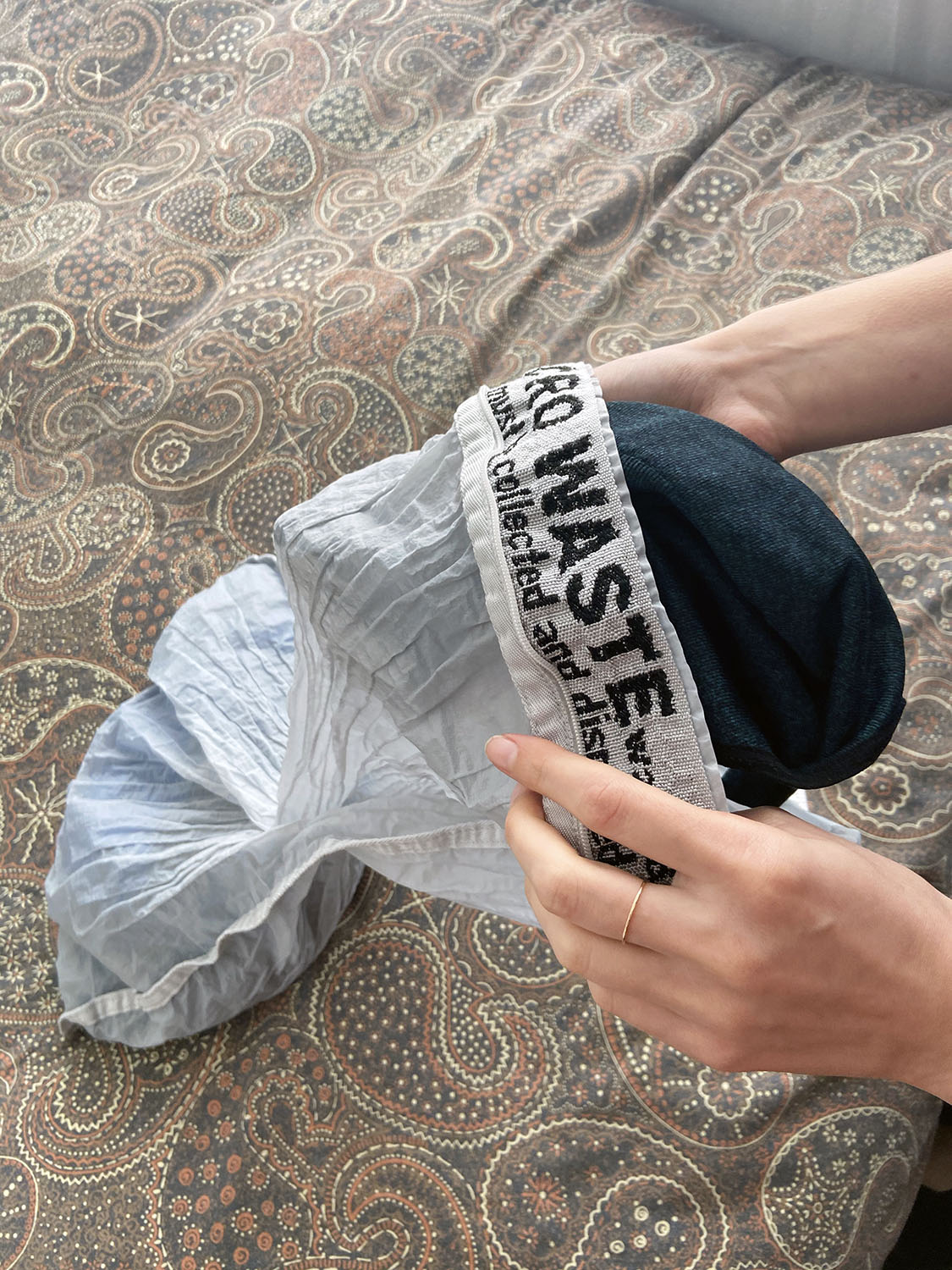
Eco-friendly packaging. No excessive branding. No glossy inserts insisting I share my purchase on social media.
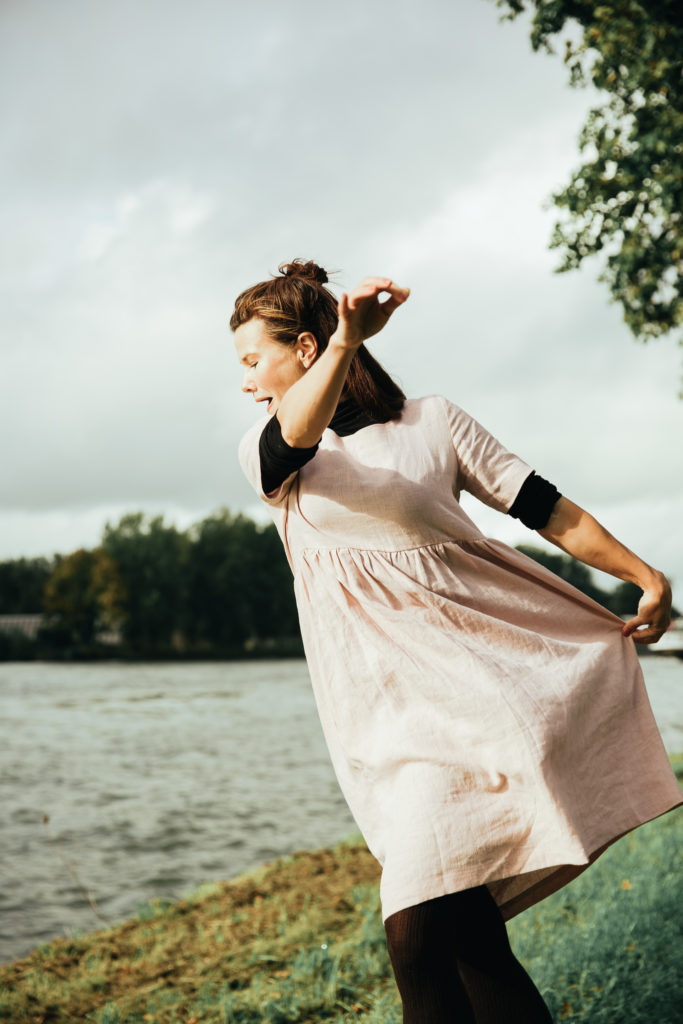
Inside: the Matilda Casual Dress in apple blossom and the Fressia Summer Dress in black.
I lifted them from the box and noticed immediately what photographs cannot fully convey: weight.
Good linen has presence.
It is airy, yes, but not flimsy. There is density in the weave. A quiet gravity. The fabric falls rather than floats artificially.
Against the skin, it felt cool. Substantial without heaviness.
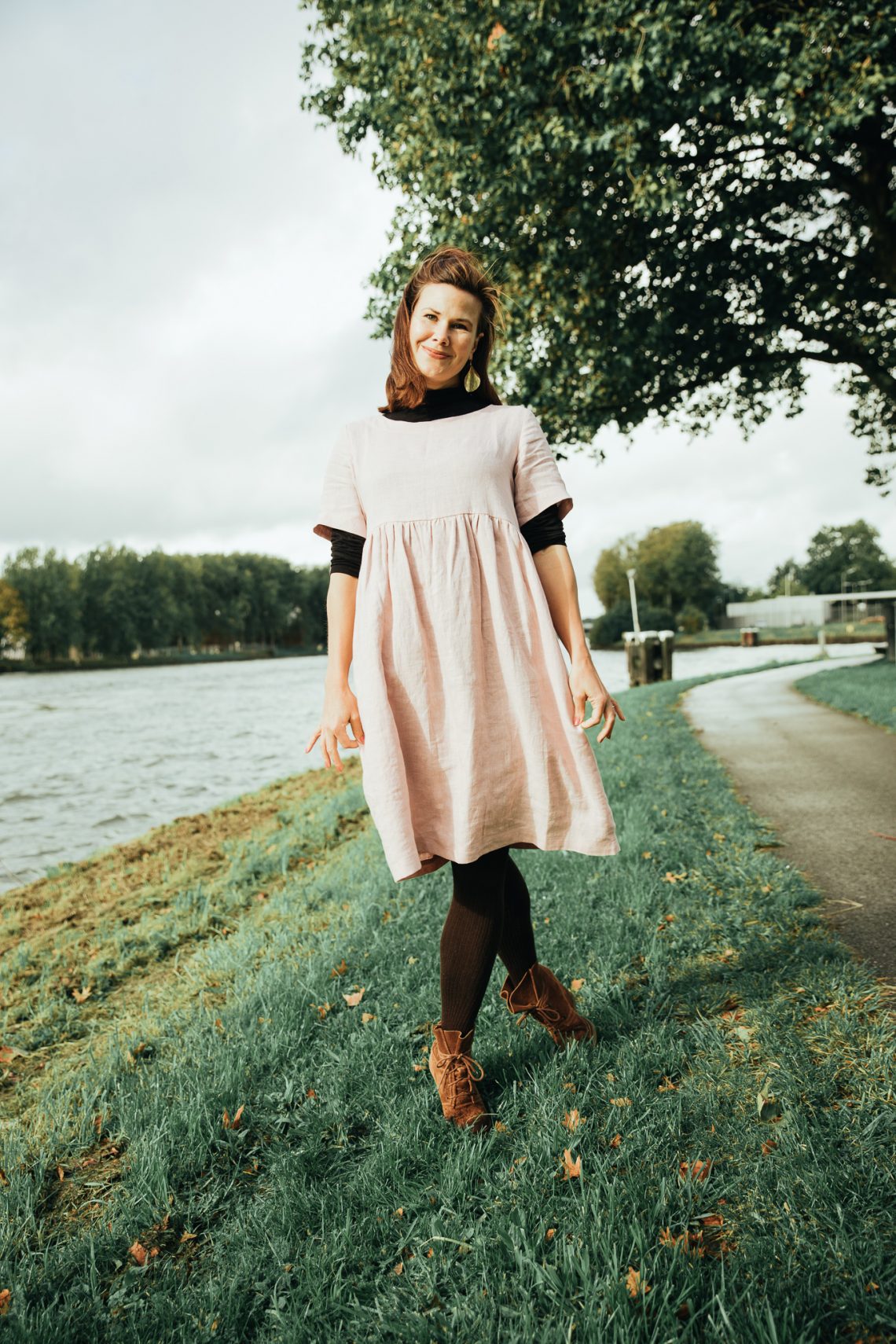
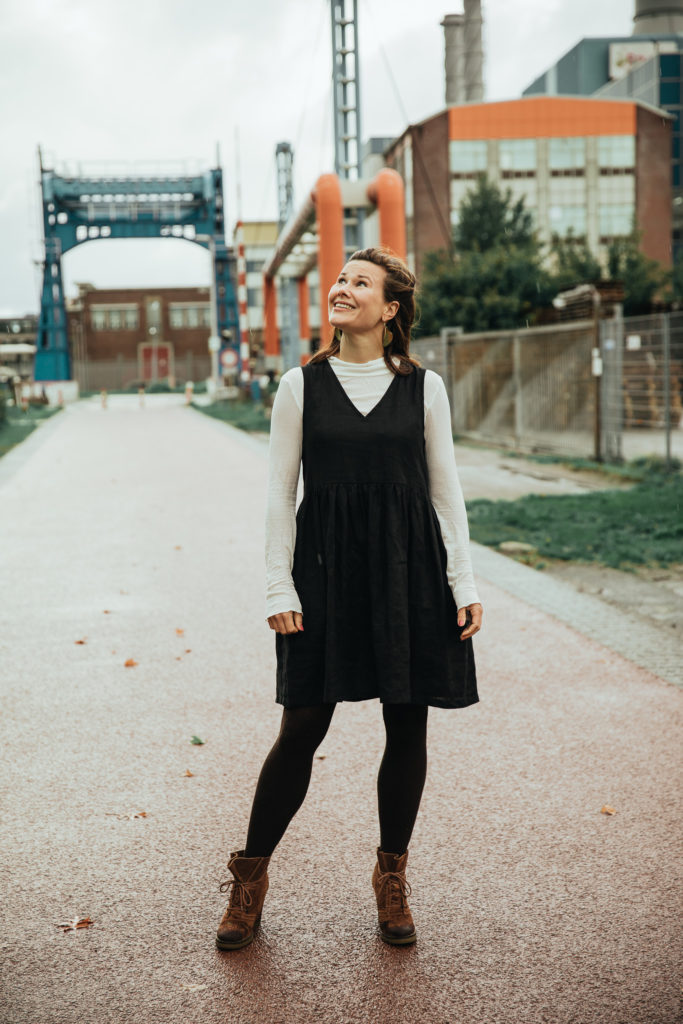
The Matilda, in its soft pink hue, carried a romantic undertone without sentimentality. The black Fressia felt almost architectural — clean lines, gentle drape, an understated elegance.
Both had pockets.
This detail deserves its own paragraph because pockets in dresses are not trivial. They are functional affirmations. They say: you are allowed to move freely. To carry keys, a phone, a small stone your child insists is important.
Pockets democratize dresses.
The Body in Linen
There is a particular way linen interacts with the body.
It does not cling aggressively. It does not sculpt. It acknowledges form without obsessing over it.
In a fashion landscape that oscillates between hyper-tailored minimalism and body-con intensity, linen occupies a third space: relaxed structure.
Wearing these dresses, I felt neither overly exposed nor hidden. The fabric skimmed. It allowed air to circulate. It moved when I walked, not in dramatic waves but in subtle shifts.
Over time, linen creases. That is part of its nature.
Wrinkles in linen are not failures. They are evidence.
Evidence that you sat down. That you bent over. That you lived inside the garment.
There is something quietly feminist in accepting those creases rather than battling them.
On Price and Value
Prices for Love and Confuse pieces range roughly between €55 and €100, with free international shipping.
In contemporary fashion terms, this sits in an interesting middle ground. Not ultra-cheap. Not luxury-tier.
But when measured against material quality, ethical production, customization, and longevity, it feels remarkably reasonable.
We have grown accustomed to distorted pricing. A €20 dress appears “affordable” until you calculate the hidden costs — environmental degradation, underpaid labor, synthetic fibers shedding microplastics.
Conversely, we are told that sustainability must cost hundreds to be credible.
Love and Confuse complicates that binary.
It suggests that thoughtful design, ethical intention, and accessible pricing can coexist — if expectations around speed are recalibrated.
The Romance of Slowness
Waiting two months for clothing is not convenient.
It requires planning. It resists impulse.
But there was something unexpectedly grounding about knowing my dresses were being sewn somewhere by actual hands, not emerging from a faceless production line optimized for velocity.
In the twentieth century, industrialization severed our emotional connection to manufacturing. We consume objects without imagining their origin.
Made-to-order clothing reintroduces a faint awareness of labor.
Not in a guilt-inducing way. In a relational one.
Someone cut this fabric. Someone stitched these seams. Someone decided that rushing would compromise integrity.
In a culture saturated with urgency, that restraint feels radical.
Linen as Cultural Memory
There is also a deeper resonance to linen’s resurgence.
In many European cultures, linen has roots in domestic history. Tablecloths, sheets, summer dresses. It carries associations of countryside air, of laundry drying in open fields, of generational continuity.
In Eastern Europe especially, linen production was historically local and communal. Flax cultivation structured agricultural rhythms.
Wearing linen today — especially linen that is well-designed rather than rustic caricature — feels like a bridge between past and present.
Not nostalgia.
Continuity.
The Aesthetic of Effortless Care
What struck me most about Love and Confuse’s designs was their refusal to dramatize simplicity.
The silhouettes are clean but not severe. Romantic but not precious. Comfortable without sliding into shapelessness.
“Effortless” is a word overused in fashion writing. But here it feels earned.
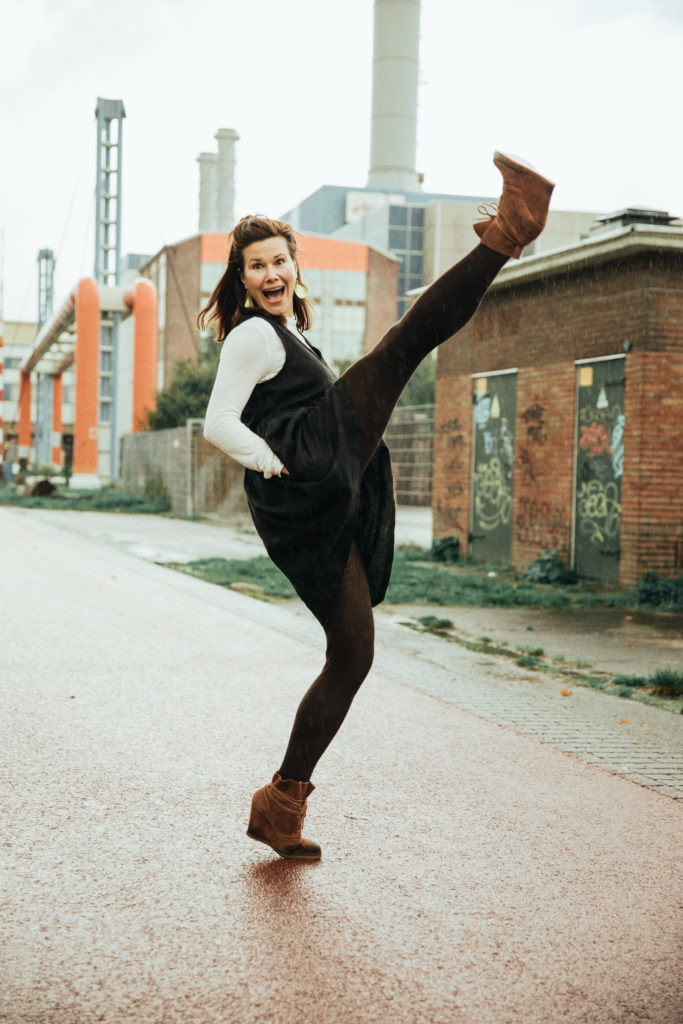
The dresses do not demand elaborate styling. They tolerate flat sandals and structured boots equally well. They accept layering — a cardigan, a light jacket — without losing identity.
They are not trend-driven. There are no exaggerated cut-outs or micro-seasonal details.
They are, in the truest sense, timeless.
Timelessness is often misunderstood as neutrality. Beige minimalism. Design stripped of personality.
But timelessness can also mean coherence — proportions that feel balanced, fabrics that age gracefully, colors that don’t expire with algorithmic cycles.
The Downside (If You Can Call It That)
Yes, you wait.
Yes, logistics can falter.
If you need a dress for next weekend’s event, this is not your solution.
But perhaps the real question is: why do we so often need things immediately?
Fast fashion has conditioned us to conflate desire with urgency. We see something; we acquire it; we move on.
Love and Confuse interrupts that reflex.
It asks: are you willing to wait for something made carefully?
And in that pause, something shifts.
Desire becomes deliberate.
Wearing Them Now
Months later, I still reach for those dresses.
The apple blossom Matilda on warmer days when I want softness without fragility. The black Fressia when I crave simplicity with quiet authority.
They have softened further with washing. The creases fall more naturally. The fabric has begun to mold, subtly, to my habits.
I do not treat them delicately. I wear them to markets, to dinners, to slow afternoons in the park.
They are not “special occasion” pieces.
They are life pieces.
And perhaps that is the highest compliment.
What It Means to Be Well-Designed
Good design is not spectacle.
It is proportion. Material honesty. Thoughtful restraint.
Love and Confuse does not shout its ethics. It does not overwhelm with storytelling. It simply produces garments that feel considered.
In a world obsessed with novelty, that feels almost radical.
Timeless clothing is not about resisting change. It is about resisting disposability.
And linen — breathable, biodegradable, increasingly soft with time — embodies that resistance beautifully.
If last summer I was searching for dresses I could live in without looking sloppy, this summer I find myself living in them without thinking about them at all.
Which, in the end, might be the purest form of luxury.