There is a particular kind of summer day when stepping outside feels like opening an oven mid-bake. The air doesn’t move. The pavement radiates. Even your thoughts seem slower, slightly glazed.
On those days, style becomes less about aesthetics and more about survival.
And yet — I refuse to surrender to limp tank tops and synthetic despair.
Heat reveals things. It exposes poor tailoring, questionable fiber choices, and the quiet lies we tell ourselves about “breathable blends.” It also reveals something else: how deeply modern fashion has drifted from climate logic.
We have access to centuries of textile intelligence — desert robes engineered for airflow, Mediterranean linens that evolved with humidity, tropical cotton weaves designed long before air-conditioning — and yet somehow we end up sweating in polyester.
This is not just inconvenient. It is historically absurd.
So let me tell you what I actually wear when the sun is merciless — and why fabric matters more than trend ever will.
Linen: The Wrinkle That Liberates
I resisted linen for years.
It wrinkles, they said. It creases if you so much as sit down. It looks “messy.”
And then one July afternoon, after peeling off a clingy synthetic blouse in quiet irritation, I put on a linen shirt and understood something fundamental.
Linen does not cling.
It does not trap.
It does not argue with your skin.
Flax fibers — from which linen is made — are hollow. They allow air to circulate naturally. Moisture evaporates quickly. The fabric moves with the breeze rather than sealing you inside a humid microclimate.
Yes, it wrinkles.
But the wrinkle is not a flaw. It is evidence of life. Of movement. Of gravity.
In Renaissance paintings, linen undergarments were prized for hygiene and coolness. In Mediterranean villages, linen dresses were never pressed into sterile perfection. They lived. They folded into the body’s rhythm.
The modern obsession with crispness is often aesthetic anxiety disguised as polish.
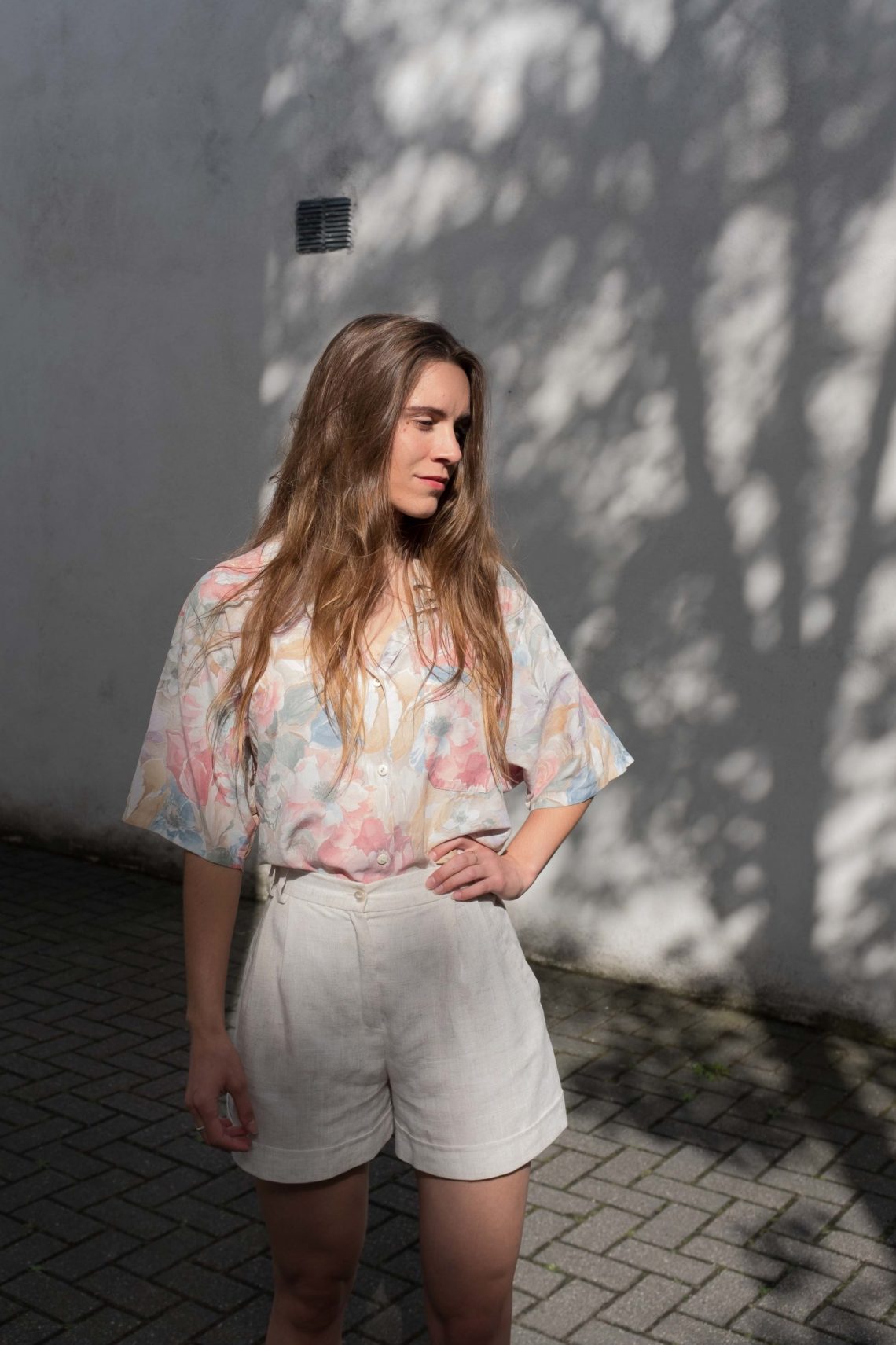
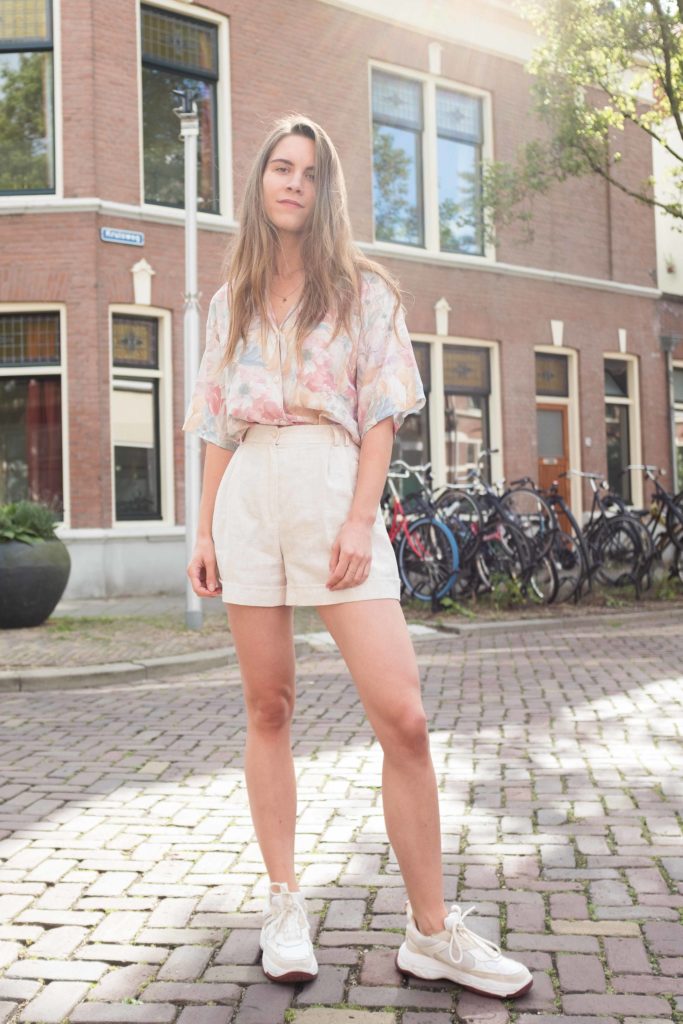
When I wear linen now — an oversized white shirt, a sand-colored dress that floats rather than hugs — I feel aligned with climate rather than fighting it.
Heat is not the enemy. Constriction is.
Cotton, But Make It Honest
Cotton is often treated as the default. The safe choice. The background fabric of existence.
But not all cotton behaves the same.
There is the dense, heavily treated cotton that feels thick and slow in humidity. And then there is airy cotton voile, crisp poplin, gauzy muslin — weaves that allow breath to pass through like conversation through an open window.
The difference lies in construction, not marketing.
When I travel to warmer climates, I notice how traditional garments rely on loose cotton layers rather than tight silhouettes. In India, in North Africa, in Southern Europe — airflow is architectural.
We, meanwhile, tend to equate summer with less fabric. Shorter hems. Smaller straps. Less coverage.
But less fabric does not always mean cooler. Sometimes it means more direct sun exposure, more sweat against bare skin.
A long cotton dress, slightly oversized, creates its own breeze as you walk. It shades the body. It allows sweat to evaporate discreetly.
The paradox of heat dressing is that modesty often cools more effectively than exposure.
And this is where cultural memory becomes useful. Clothing evolved in response to climate long before it responded to Instagram.
The Quiet Superiority of Silk
Silk in summer sounds counterintuitive. We associate it with evening, with polish, with delicacy.
But silk — real silk, not synthetic imitations — is remarkably thermoregulating.
It adapts.
It insulates in cool weather and releases heat when temperatures rise. It absorbs moisture without feeling damp. It glides rather than sticks.
I own a loose silk blouse in a pale, almost washed-out blue. On humid days, when cotton feels heavy and linen too textured, silk becomes my compromise between structure and fluidity.
There is also something psychologically cooling about silk. The way it reflects light. The way it moves.
In many Asian climates, silk has long been worn in warm conditions precisely because of its adaptability. It is not fragile; it is intelligent.
But here is the caveat: silk demands care. It is not fast-fashion friendly. It resists the disposable rhythm of modern wardrobes.
Perhaps that is part of its elegance.
Tencel and the New Generation of Plant Fibers
We cannot discuss summer fabrics without acknowledging innovation.
Tencel (lyocell), derived from wood pulp, has quietly become one of my favorite warm-weather materials. It feels almost like a hybrid between cotton and silk — soft, breathable, fluid.
Unlike conventional viscose, its production process is more controlled, with solvents recycled in closed-loop systems. It is not perfect. No fabric is. But it represents an attempt to reconcile comfort with environmental responsibility.
And this matters.
Synthetic fabrics — polyester, nylon, acrylic — dominate because they are cheap, durable, and profitable. But they are petroleum-based. They trap heat. They release microplastics with every wash.
When you wear polyester in the sun, you are essentially wrapping yourself in refined oil.
It is no wonder your skin protests.
Natural and semi-synthetic plant fibers breathe because they come from organisms that once breathed.
There is something poetic — and practical — in that continuity.
Color as Temperature Control
Let’s talk about color.
Dark fabrics absorb heat. Light fabrics reflect it. This is basic physics, and yet we ignore it in the name of aesthetic consistency.
I love black. I wear black. But on a merciless August afternoon, black becomes a liability.
White, cream, pale blue, washed sage — these shades do not merely look summery. They behave differently.
In Mediterranean towns, whitewashed walls exist for a reason. They repel sunlight. They soften glare.
When I choose a pale linen dress over a black one in extreme heat, it is not a trend decision. It is a thermal one.
And still, I do not abandon depth entirely. Texture compensates where color retreats. A light fabric with subtle weave interest prevents the outfit from feeling flat.
Cooling does not require visual boredom.
The Architecture of Oversize
We have been conditioned to believe that fitted equals flattering.
But in heat, fitted equals suffocating.
An oversized shirt, slightly structured at the shoulders, creates space between skin and fabric. That space becomes ventilation.
Airflow is invisible tailoring.
Traditional garments in hot climates — kaftans, djellabas, tunics — understand this intuitively. They drape rather than sculpt.
When I wear wide-leg linen trousers with a loose cotton blouse, I feel less styled and more composed. The silhouette moves independently from the body, creating dynamic air channels as I walk.
This is not laziness. It is design.
And interestingly, oversized silhouettes carry a certain intellectual ease. They signal comfort with presence rather than performance.
Tight clothing in heat often feels like insistence. Loose clothing feels like confidence.
The Hat as Infrastructure
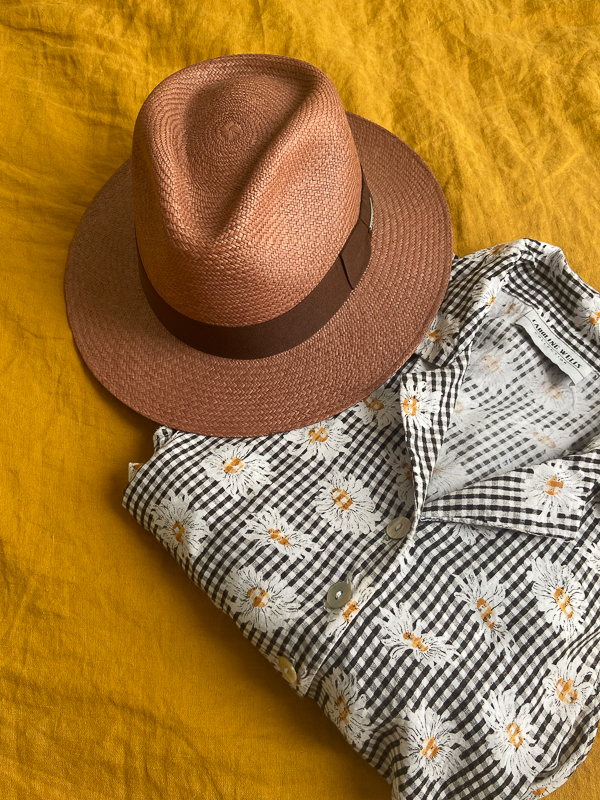
My most loyal summer companion is a straw hat.
Not decorative. Structural.
Straw — particularly tightly woven natural straw — shades the face, cools the scalp, and protects without trapping heat.
Historically, straw hats were agricultural tools before they were fashion statements. Function preceded romance.
When I place mine on my head before stepping into harsh sun, I feel an immediate shift. My shoulders relax. My pace slows.
Accessories in summer are not embellishments. They are survival devices.
A wide brim changes the geometry of light on your skin. It reduces squinting. It prevents that subtle exhaustion that comes from constant glare.
Sometimes elegance is simply preparedness.
The Myth of “Sweat-Proof”
Modern marketing loves the phrase “sweat-proof.”
As if sweat were the enemy.
Sweat is regulation. It is cooling. It is biological intelligence.
The goal is not to eliminate sweat but to allow it to evaporate efficiently.
Breathable fabrics facilitate this process. Synthetic, tight, non-porous fabrics obstruct it.
When you fight sweat with impermeable layers, you create discomfort.
When you collaborate with your body — choosing fibers that support evaporation — heat becomes manageable.
There is something culturally revealing about our obsession with appearing untouched by climate. As if perspiration were a moral failure.
Heat is not a flaw. It is context.
Dress for context.
Personal Formulas for Brutal Days
When the forecast predicts relentless sun, I default to one of these combinations:
- An oversized white linen shirt, sleeves rolled, paired with wide cotton trousers and leather sandals.
- A long, loose cotton dress in pale sage, structured enough at the neckline to avoid shapelessness, worn with a straw hat.
- Silk blouse tucked lightly into linen shorts — breathable top, breathable bottom, nothing clinging.
Notice the pattern: natural fibers, light colors, space between fabric and skin.
Nothing revolutionary. Just intentional.
The real innovation is not in chasing futuristic cooling technology but in rediscovering textile logic that predates air-conditioning.
Climate, Consumption, and Responsibility
There is also an environmental layer here.
Choosing natural fibers is not purely about comfort. It is about reducing reliance on petroleum-based textiles. It is about understanding the afterlife of clothing — what happens when it is washed, discarded, decomposed.
Every synthetic garment releases microfibers into waterways. They accumulate in oceans, in fish, in us.
Heat dressing, therefore, becomes quietly political.
When you choose linen over polyester, you are making a small but meaningful alignment with material reality.
Not perfection. Not purity. But direction.
And direction matters.
The Emotional Temperature of Fabric
Beyond physics, fabric has mood.
Linen feels honest.
Cotton feels grounded.
Silk feels composed.
Tencel feels fluid.
On scorching days, I do not want to feel armored. I want to feel breathable — physically and emotionally.
Heavy synthetics create tension. They cling, trap, insist.
Natural fibers soften the day.
Clothing cannot change the temperature outside. But it can alter your internal response to it.
And that is enough.
Summer will always test us.
It strips away layers — literal and metaphorical. It exposes shortcuts in construction and laziness in choice.
But it also invites simplicity.
Choose fabrics that breathe.
Choose silhouettes that allow air to move.
Choose colors that collaborate with sunlight rather than absorbing it.
The goal is not to defeat the heat.
The goal is to move through it — composed, intelligent, slightly wind-kissed — without feeling like you are wrapped in plastic.
When you dress in harmony with climate, summer stops feeling like an adversary.
It becomes texture.