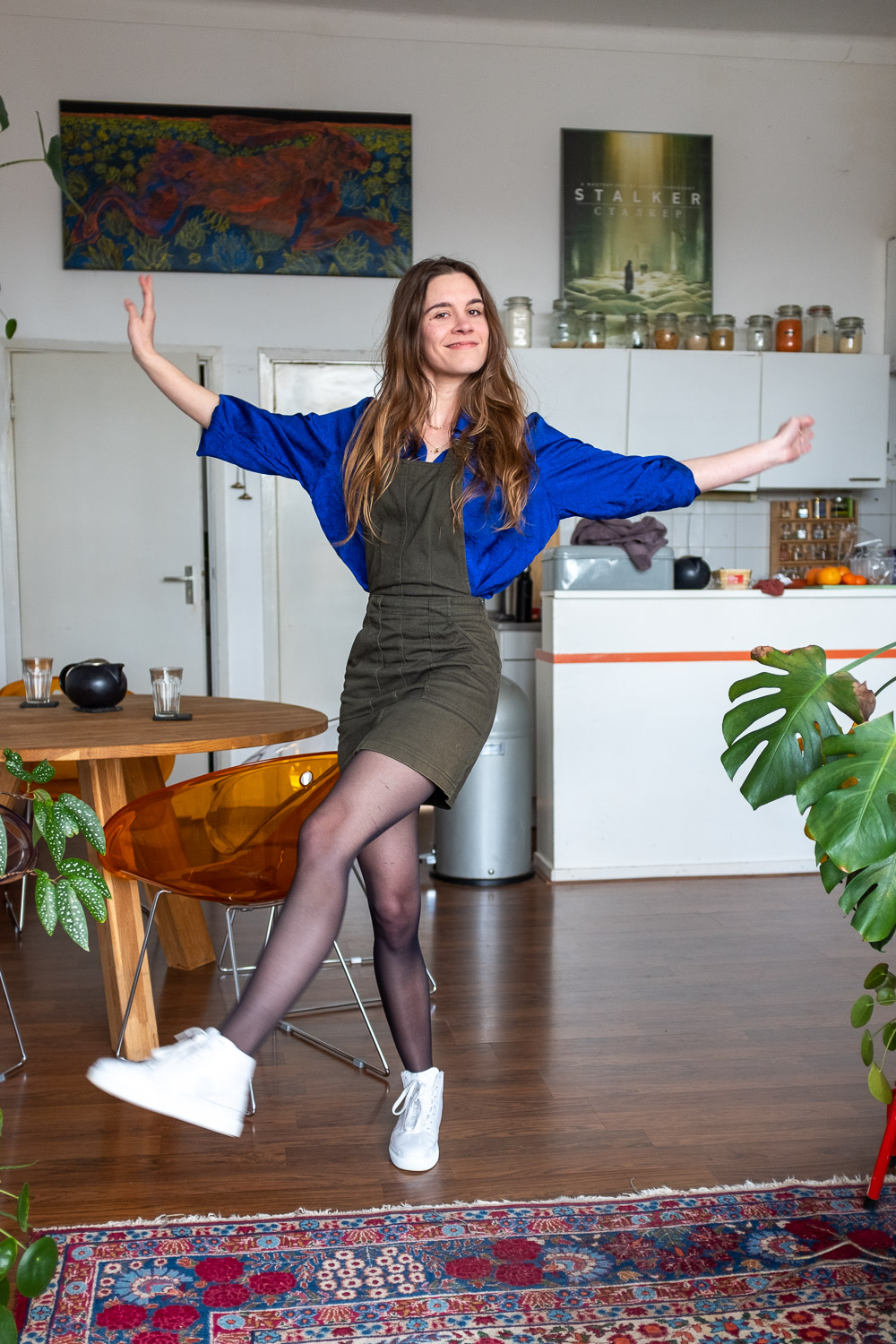
Halfway through my self-imposed no-buy season, I discovered something mildly embarrassing about myself.
It wasn’t that I missed shopping. I expected that. It wasn’t even the occasional weakness (hello, dangerously perfect 70s dress that I will heroically never own). It was this: on certain mornings, standing in front of a wardrobe that contains well over a hundred pieces, I would sigh and whisper, I have nothing to wear.
Nothing. To. Wear.
The sentence felt theatrical even as I said it. Still, the feeling was real.
We like to imagine that wanting new clothes is about aesthetics. Taste evolves. Seasons change. Trends whisper. But often, the craving for “something new” is less about fabric and more about narrative. We want a new version of ourselves. A new mood. A fresh entrance into the day.
A no-buy challenge removes the easy solution. It closes the door marked Add to Cart. And when that door shuts, you are left alone with your wardrobe—and yourself.
Which is how I ended up inviting a friend over to rummage through my closet like an archaeologist of forgotten identities.
There is something intimate about letting another person enter your wardrobe. Clothes carry memory. The red dress you wore to that wedding. The blouse you bought second-hand because it felt like it had already lived a life. The denim shirt that belongs to your summer self and refuses to function in winter.
When I stepped into her closet weeks earlier, I had felt bold and inventive. It is easy to see possibilities in someone else’s clothes. You are detached from their history. You don’t hear the internal monologue that says, “This doesn’t suit me,” or “I only wear this with that.”
But when she stood in my room, sliding hangers back and forth with curiosity instead of judgment, something shifted. She didn’t see limitation. She saw combinations.
And that was humbling.
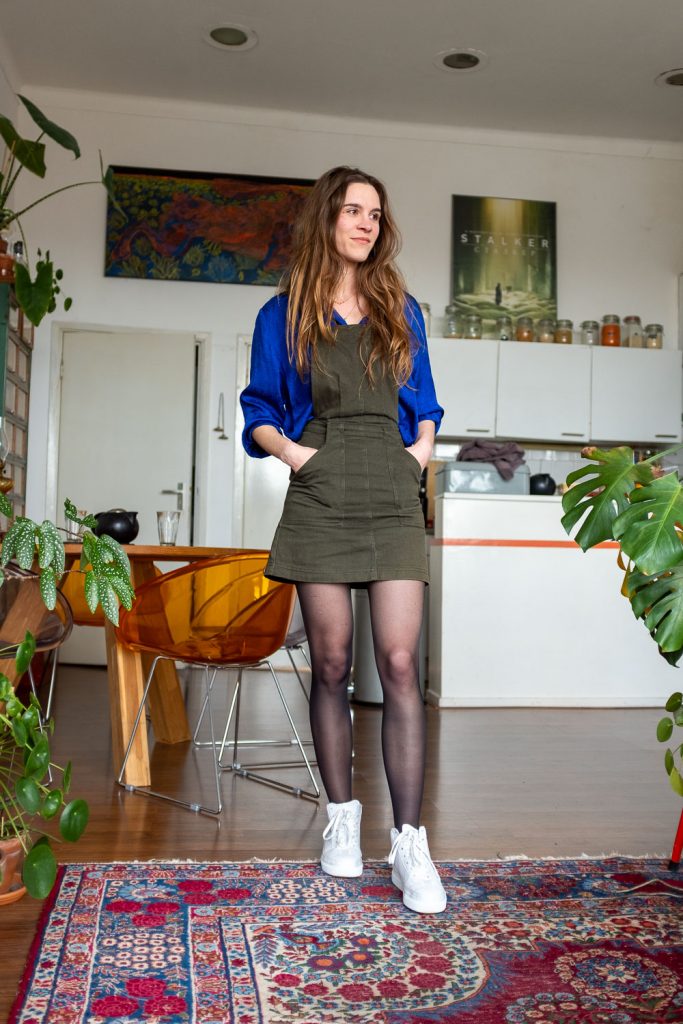
Take the pinafore dress I adore. I have worn it endlessly—with soft pastels, gentle contrasts, predictable harmonies. Pink. Yellow. A safe red-orange. It felt “me.” Which really meant: it felt familiar.
She reached straight for a luminous blue silk blouse. A bold, almost audacious blue. I would never have paired them. I have always believed that this shade of blue doesn’t flatter me, as though colors carry moral authority.
Yet when she tucked the oversized blouse in, adjusting it so it fell just right, the mirror told a different story. The green and blue together felt alive. Less sweet. More grounded. Suddenly the dress wasn’t the same dress. It had a new temperament.
What changed? Not the garments. Only the context.
This is the quiet truth of shopping your own closet: you are not acquiring new items; you are renegotiating relationships.
We often treat clothes as static objects. But they behave more like sentences. The meaning changes depending on what comes before and after. A red dress on its own is romantic. A red dress layered over a mustard shirt becomes defiant, almost ironic. Add boots, and it leans into practicality. Add delicate shoes, and it drifts toward nostalgia.
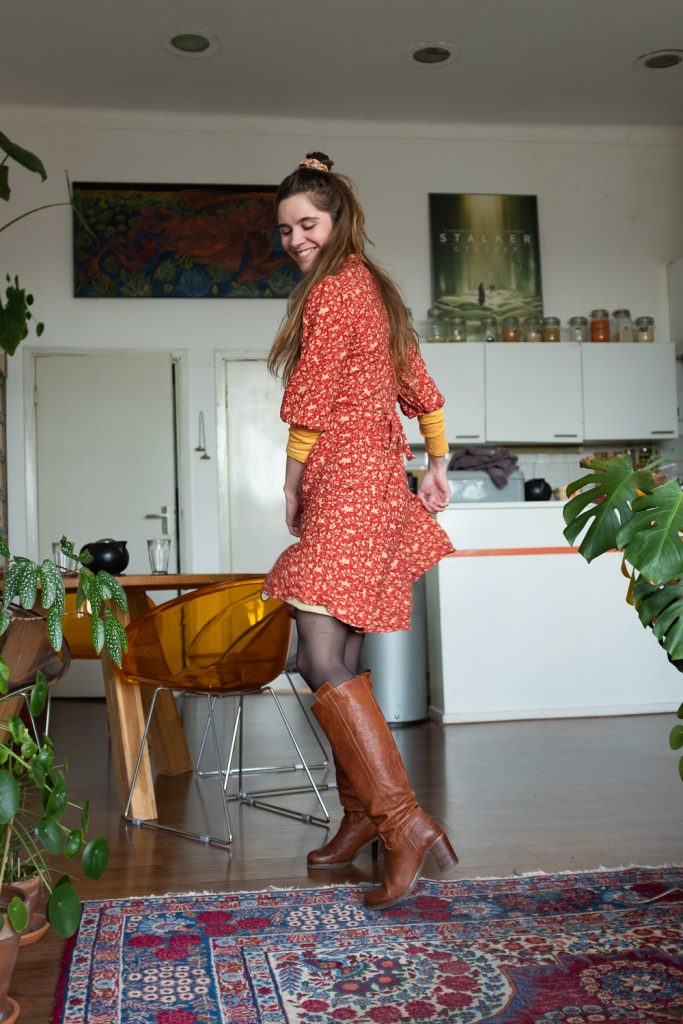
One of my most treasured pieces is a handmade vintage red dress, patterned with tiny horses. It has three-quarter sleeves and the kind of structure that belongs to another era. I have always worn it as it is—untouched, complete, like a finished painting.
She suggested slipping a yellow shirt underneath.
At first I resisted internally. The dress felt sacred in its simplicity. But once layered, it transformed. Suddenly it worked for colder days. It gained versatility without losing its charm. Instead of preserving it for “perfect” spring afternoons, I could integrate it into real life.
There is something almost philosophical about this.
We tend to freeze certain items in time. This is my “summer blouse.” That is my “special occasion dress.” As though garments, like people, cannot evolve. But when you allow them to shift seasons, to be layered, reinterpreted, slightly contradicted, they become less precious and more alive.
And perhaps that is the deeper discomfort of a no-buy challenge: it forces creativity instead of consumption.
Consumption is quick. Creative reinterpretation is slower. It asks you to look longer. To try combinations that might fail. To question your own assumptions about what “suits” you.
I realized I had quietly built rules around myself.
I don’t wear that blue alone.
I only button that denim shirt in summer.
This skirt goes with that sweater. Always.
Rules create efficiency. They also create boredom.
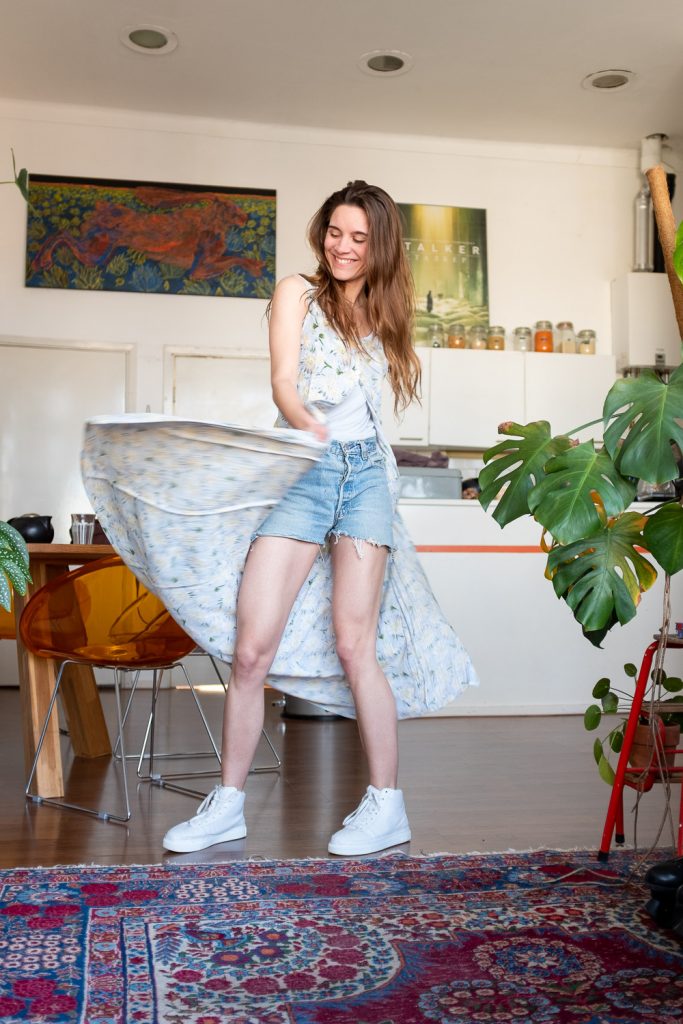
The Levi’s denim blouse hanging in my closet is a perfect example. In warm weather, it’s effortless. Buttoned up, paired with a skirt, sleeves rolled just so—it becomes a staple. But when the air turns cold, it retreats. I look at it and feel confused. It waits for summer like a seasonal character in a novel.
She layered it over a turtleneck.
It seems obvious now. But obviousness often arrives only after someone else points at it. The denim gained structure. The silhouette shifted. Paired with unexpected trousers, it felt almost playful—like something I would wear to watch a football match wrapped in national pride, yet styled with intention.
Not every combination felt instantly right. Some felt slightly outside my comfort zone. But even that discomfort was instructive. It showed me how narrow my self-image had become.
When we say, “I have nothing to wear,” what we often mean is, “I cannot see myself clearly today.”
Shopping—especially in its contemporary, frictionless form—has trained us to outsource that uncertainty. Feeling uninspired? Buy something. Feeling dull? Add color. Feeling invisible? Acquire a statement piece.
But standing in front of 120 garments and claiming emptiness reveals a different issue: the problem is not absence. It is imagination.
This does not mean we should never buy anything again. Clothing is culture. It evolves. It connects us to craftsmanship, to communities, to aesthetics we admire. But the reflex to solve emotional restlessness with new fabric is worth interrogating.
In my no-buy months, I noticed a quiet calm emerging. Not immediately. At first there was agitation. The itch to scroll. The temptation of uniqueness. The fantasy that somewhere out there exists the perfect piece that will finally complete the puzzle.
But slowly, the calm replaced the craving.
When you stop looking outward, you begin to look inward. You start noticing the outrageous abundance already hanging in your room. You start asking different questions:
Why do I believe this color doesn’t suit me?
Why do I reserve this dress for imaginary occasions?
Why do I dismiss combinations before trying them on?
A wardrobe is not merely a storage unit. It is a record of who you have been. The student version. The romantic version. The practical version. The experimental one who bought something daring once and then retreated.
Shopping your own closet becomes a kind of dialogue across time.
The oversized silk blouse that once intimidated me? It was bought because I loved its drama. Somewhere along the way, I shrank from it. By pairing it differently, I reclaimed that earlier boldness.
The vintage dress layered for winter? It reminded me that beauty does not have to wait for perfect weather.
The denim shirt over a turtleneck? It collapsed the boundary between seasons.
There is also a broader cultural tension here. We live in an era of relentless novelty. Micro-trends bloom and wither within weeks. Algorithms feed us aesthetics faster than we can metabolize them. In that environment, wearing the same garments repeatedly can feel almost rebellious.
To say, “I already have enough,” is quietly radical.
But more radical still is to say, “I can make something new out of what I already own.”
That is not minimalism as aesthetic purity. It is creativity as practice.
When my friend left that day, my wardrobe looked the same. No new hangers. No shopping bags. Yet it felt expanded. As if hidden corridors had opened between pieces that had been strangers before.
The phrase “nothing to wear” lost some of its drama.
Now, when I catch myself thinking it, I pause. Instead of opening a browser tab, I open my mind a little wider. What if this blouse were tucked differently? What if that dress layered over trousers? What if the item I’ve ignored is simply waiting for a new companion?
The challenge is not technical. It is psychological.
It requires humility—to admit that your previous combinations were not definitive. It requires patience—to try on outfits without the immediate dopamine of purchase. And it requires a certain tenderness toward yourself. Because clothing, at its best, is not about performance. It is about alignment.
On the mornings when I truly feel uninspired, I remind myself: the wardrobe is full. The stories are there. I simply have to rearrange the sentences.
And occasionally, I invite someone else to read them with me.
Not because I lack taste. But because perspective is generous. It loosens rigidity. It introduces blue where I would have chosen pink. It layers yellow under red. It pulls denim into winter.
Halfway through this no-buy journey, I realize the challenge was never about deprivation. It was about attention.
To look carefully at what you already possess is an act of gratitude. To recombine it is an act of imagination. And to resist the easy solution of buying something new is, perhaps, an act of quiet confidence.
You do not need more clothes to become someone else.
Sometimes you only need to see the ones you have—properly, patiently, and with a little courage.