There is a particular shade of green that lives on clothing labels now. Not the deep forest green of wool coats, not the acidic neon of festival tops. A softer green. Moral green. The kind that whispers instead of shouts.
You see it and you feel slightly better already.
I remember the first time I bought something from H&M’s “Conscious” collection. I held the tag between my fingers longer than necessary, reading the percentages like they were absolution. Recycled polyester. Organic cotton. At least 50% “sustainable materials.” It felt like a loophole in the system — a way to keep the rhythm of fast fashion without the guilt that usually follows me home in a paper bag.
What if, I thought, nothing had to change? What if I could keep buying at the same speed, from the same place, but simply choose the greener rack?
It is an irresistible promise.
It reminds me of those cookbooks that guarantee dinner in fifteen minutes. You imagine a better version of yourself emerging almost instantly — organized, ethical, glowing with competence. What the promise rarely includes is the mise en place already prepared off-camera. The infrastructure. The invisible labor.
Sustainability, like cooking, does not happen in fifteen minutes.
And yet, the idea that it might is deeply seductive.

The Architecture of “Conscious”
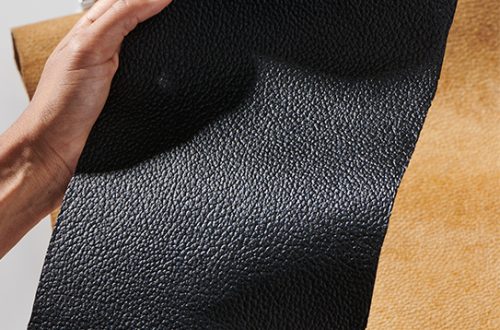
H&M defines a garment as “Conscious” if it contains at least 50% sustainable materials — organic cotton, recycled polyester, recycled wool, or other alternatives. Recycled cotton, due to quality constraints, is capped at 20%. Twice a year, the company also releases a “Conscious Exclusive” collection, introducing experimental fabrics: grape-based vegan leather, circular cellulosic fibers, hemp biofibre derived from crop waste.
On paper, this is progress.
And to dismiss it outright would be intellectually lazy. H&M is not a niche label producing 200 pieces per season. It is a global giant. Any shift in material sourcing at that scale reverberates through supply chains, agricultural systems, and textile production networks.
When a corporation that large experiments with grape leather, it is not merely aesthetic curiosity — it is capital investment into alternative materials.
So yes, these steps matter.
But here is where the unease begins.
Because the narrative surrounding “Conscious” does something subtle. It implies that the act of shopping itself can eliminate waste.
“By shopping with us, you help turn ideas like these into reality.”
The logic folds in on itself. Consumption becomes activism. Purchase becomes participation in circularity.
And that is where language becomes dangerously elastic.
Conscious vs. Conscience
The word “conscious” suggests awareness — being awake to the impact of one’s actions. “Conscience,” however, carries moral weight. It refers to an internal compass, a sense of right and wrong.
The marketing language blurs the two.
When I buy a “Conscious” blouse, I feel conscientious. The tag performs moral labor on my behalf. It reassures me that I am not just consuming; I am choosing wisely.
But a garment made of 52% recycled polyester and 48% virgin synthetic fibers is still a synthetic garment. It will not biodegrade. It will shed microplastics in the wash. It will likely outlive me in some form.
Blended materials — polyester with elastane, acrylic with wool — are notoriously difficult to recycle at scale. The technology to separate fibers efficiently is still developing. So while the fabric may contain recycled input, its afterlife remains ambiguous.
Shopping does not eliminate waste. It redistributes it.
And sometimes, it disguises it.
Fast Fashion’s Structural Paradox
Fast fashion is not defined solely by materials. It is defined by velocity.
High turnover. Rapid trend cycles. Continuous drops. Psychological stimulation through novelty.
Even if every garment were made from 100% recycled fibers, the system’s fundamental engine — producing vast quantities at high speed for low prices — would still strain environmental limits.
There is a structural paradox at play: encouraging sustainability within a business model predicated on constant growth.
H&M has pledged climate positivity goals, invested in garment collection programs, and published sustainability reports detailing carbon footprints and supply chain transparency. These are not insignificant gestures. But they coexist with thousands of new products released weekly.
The question becomes uncomfortable: can a company built on accelerating consumption truly decelerate it?
Or does “Conscious” function as a pressure valve — allowing ethically anxious consumers to remain inside the system rather than stepping outside it?
I ask this as someone who remains inside it.
The Psychology of the Green Label
There is research around what behavioral economists call the “moral licensing effect.” When we perform one virtuous action, we often feel permitted to indulge elsewhere.
Buying a “Conscious” sweater can psychologically offset buying three non-conscious ones. The green tag soothes the cognitive dissonance.
I have felt it myself. The internal negotiation sounds something like this:
Yes, it’s still fast fashion.
But at least it’s the better option.
At least I’m trying.
And trying does matter.
But trying within the same behavioral pattern is not the same as transformation.
It is adjustment. Not overhaul.
Scale as Both Excuse and Opportunity
Defenders of H&M Conscious often argue that incremental improvements at scale are more impactful than radical purity at boutique level. If a multinational reduces virgin polyester use by even 5%, the environmental savings could dwarf the total output of a small sustainable brand.
This is true.
Scale amplifies both harm and progress.
However, scale also provides resources — financial, technological, logistical — that smaller brands do not possess. Which raises another question: are these efforts proportional to capacity? Or calibrated to consumer expectation?
When H&M invites customers to return old garments for recycling, it gestures toward circularity. But textile recycling infrastructure globally remains limited. Much of what is collected cannot be mechanically recycled into equivalent fibers. Some is downcycled into insulation. Some is exported. Some is incinerated.
The circular economy is aspirational. It is not yet fully operational.
So when I stand at the checkout with a “Conscious” dress, I am participating in a system mid-transition — not post-solution.
The Comfort of Continuity
The genius of “Conscious” is that it requires no behavioral discomfort.
You do not need to buy less.
You do not need to repair.
You do not need to confront the labor conditions embedded in ultra-low pricing.
You simply switch racks.
It preserves continuity.
In times of climate anxiety, continuity feels safe. Radical change feels destabilizing.
And perhaps this is why I hesitate to condemn H&M entirely. Because the brand is responding to a shift in public values. Consumers demanded greener options; the company supplied them.
But responsiveness is not the same as leadership.
True leadership might mean slowing production. Increasing prices to reflect environmental costs. Designing for longevity rather than trend turnover.
Those steps are less marketable.
They do not fit neatly on a green tag.
My Own Complicity
It would be easy to position myself above the system — to critique from a distance.
But I still walk into H&M. I still scroll through new arrivals. I still feel a flicker of excitement at the phrase “new drop.”
The tension is personal.
I want affordable fashion. I want variety. I want to experiment without financial risk. And I also want rivers not to be polluted by dye runoff. I want garment workers paid fairly. I want less landfill.
These desires collide in the fitting room.
When I choose a “Conscious” piece, I am choosing the least uncomfortable compromise available within that store. It is not pure. It is not radical. It is incremental.
Perhaps the honest answer to “How conscious is H&M Conscious?” is this: conscious enough to reflect cultural pressure, not yet conscious enough to dismantle its own foundations.
Beyond the Tag
Real sustainability extends beyond fiber composition. It includes durability, repairability, emotional attachment, and use frequency.
A 100% organic cotton dress worn twice is less sustainable than a blended-fiber dress worn a hundred times.
The green label cannot measure attachment.
It cannot guarantee that I will still love the garment next season.
And this is where responsibility shifts subtly back to me.
No corporate initiative can fully compensate for overconsumption. Even the most progressive material innovation cannot neutralize closets overflowing with barely worn clothes.
Consciousness, in the deeper sense, requires restraint.
It requires asking not only “What is this made of?” but “Do I need this at all?”
That question is far less market-friendly.
So, Is It Greenwashing?
The term “greenwashing” implies deliberate deception — exaggerating environmental benefits to mask harm.
Is H&M Conscious pure greenwashing? I don’t think the answer is binary.
There are genuine material innovations. There are measurable shifts. There is transparency, albeit imperfect.
But there is also strategic framing. Emphasis on the greener 50%, less emphasis on the remaining 50%. Celebration of recycling without equal emphasis on reduction.
It is not entirely illusion.
It is not entirely solution.
It is a negotiation between profit and principle.
And perhaps that is the most honest description.
Where That Leaves Me
I no longer feel the same glow when I see the green tag. The innocence is gone. But neither do I feel cynically detached.
Instead, I feel aware.
If I buy from the Conscious line, I do so knowing it is a marginal improvement within a fundamentally extractive system. I try — not always successfully — to buy less. To choose pieces I will actually wear. To repair when possible.
Sustainability is slower than marketing.
It is less photogenic. Less immediate. It does not promise transformation in fifteen minutes.
But it also does not rely on illusion.
The green tag may initiate awareness. It may guide first steps. For some consumers, it is an entry point into deeper questioning.
The real measure of consciousness, however, is what happens after the purchase.
Does it change behavior?
Does it alter volume?
Does it challenge speed?
Or does it simply soothe the conscience long enough to continue as before?
When I fold my “Conscious” sweater and place it in my wardrobe, I no longer feel absolved.
I feel implicated.
And perhaps that discomfort — not the green label — is where genuine awareness begins.