There is a sweater in my wardrobe that does not belong to me.
Technically.
It is charcoal grey, slightly oversized, the sleeves a little too long. When I pull it over my head, it smells faintly of a cologne I did not buy and a life that is not entirely mine. I reach for it on cold mornings when I want warmth that feels less like fabric and more like presence.
My boyfriend would say I stole it.
I insist I borrowed it.
And somewhere between those two verbs lies the beginning of this story.
Because the sweater is not the point. The point is what happens when we allow clothes to circulate between bodies instead of being permanently assigned to one.
We have been trained to believe that ownership equals identity. My wardrobe. My style. My signature look. But what if identity is less fixed than that? What if style is porous?
What if your closet could double in size without you buying a single new thing?
The Illusion of “Nothing to Wear”
Let me confess something unfashionable: I often stand in front of a full wardrobe and feel uninspired.
The hangers are heavy with fabric. Dresses I once loved. Blouses I swore would change my life. Trousers bought in moments of optimism. And yet, the familiar phrase rises: I have nothing to wear.
It is absurd, of course. The problem is not absence. It is over-familiarity.
We grow blind to what we see every day.
Modern consumer culture has quietly convinced us that novelty must be purchased. That the solution to boredom is acquisition. The fashion industry, now one of the most resource-intensive industries in the world, depends on this restlessness. Micro-seasons. Flash sales. New drops every week.
Desire is manufactured, and dissatisfaction keeps the machine running.
But there is another way to encounter novelty. Not through ownership. Through exchange.
Borrowing clothes disrupts the logic of possession. It introduces movement where there was stagnation.
And movement, I am beginning to realize, is what style needs to stay alive.
Wearing the Familiar, Differently
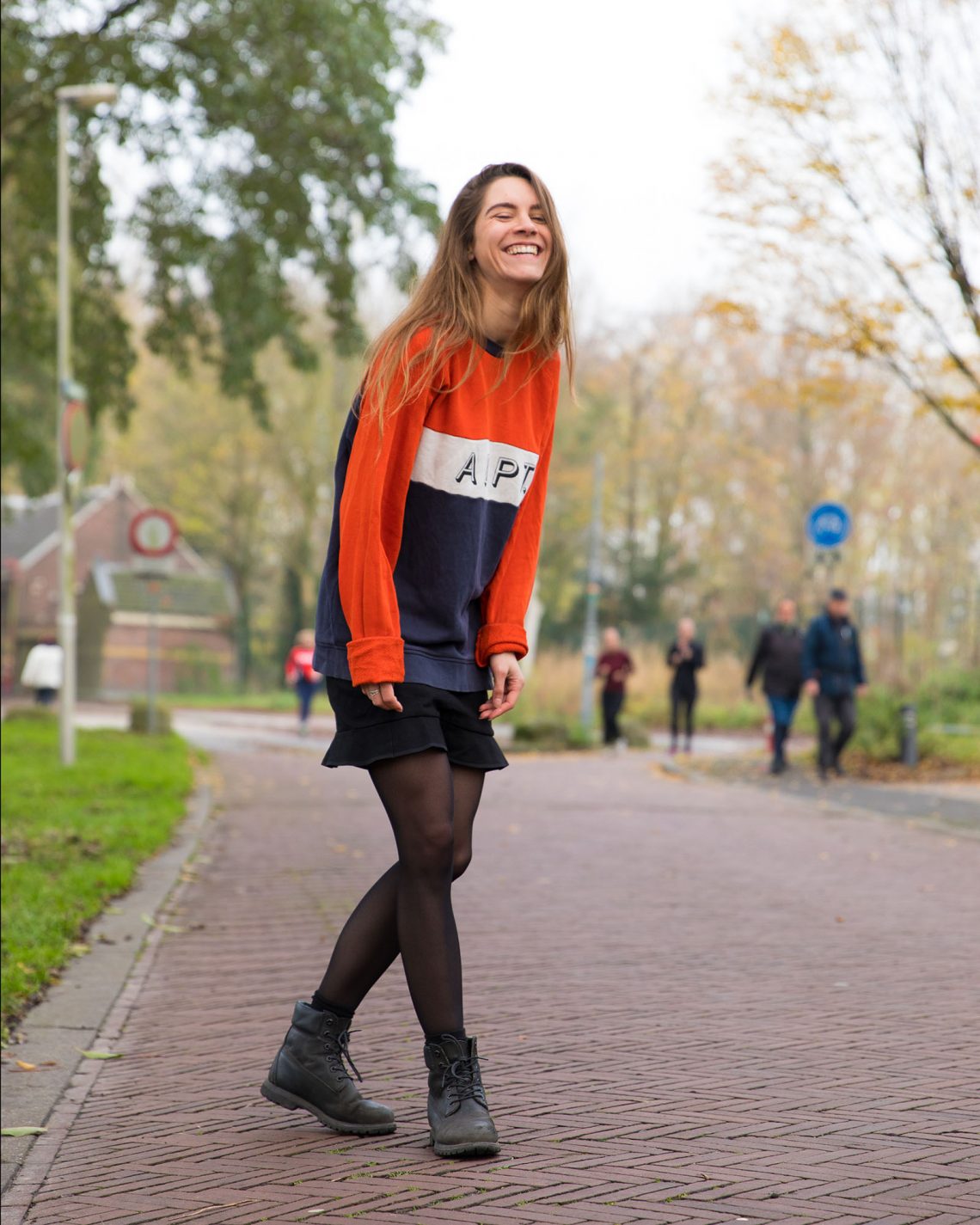
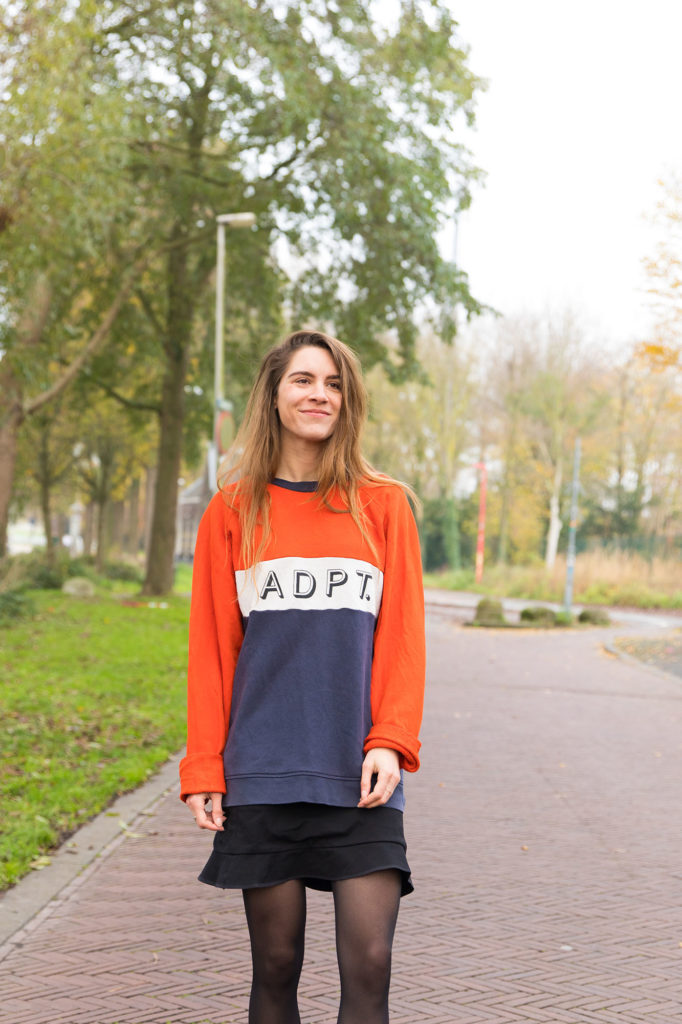
When I borrow my boyfriend’s sweater and pair it with a silk skirt and boots, something interesting happens.
The sweater loses its original context. It is no longer just his casual weekend layer. In my hands, it becomes contrast. Soft masculinity meeting fluid femininity. Structure meeting drape.
Clothing shifts meaning depending on who wears it and how.
Sociologist Georg Simmel once wrote about fashion as a tension between imitation and differentiation. We want to belong, but we also want to stand out. Borrowing complicates that dynamic. You are literally wearing something that belongs to someone else, yet the styling becomes your signature.
The borrowed garment becomes a collaboration.
And collaboration is far more interesting than solitary consumption.
Why Borrowing Feels Radical (Even Though It Isn’t)
There was a time when borrowing clothes was not a trend but a necessity.
Siblings shared. Communities mended and passed down garments. Clothing carried visible histories — patched elbows, altered hems, inherited coats.
Industrialization and fast fashion altered that relationship. Clothes became cheaper, more abundant, more disposable. Ownership became easy. Sharing became optional.
Now, in a culture saturated with “mine,” borrowing feels almost rebellious.
Not because it is dramatic, but because it challenges the idea that everything must be individually possessed.
When I slip into a friend’s dress for a dinner party, I am not just trying a new silhouette. I am stepping into her perspective. How does she see herself in this fabric? How does she move? What does she consider comfortable or bold?
Clothes are intimate teachers.
They reveal our habits.
1. Borrowing as Experimentation
One of the most practical reasons to borrow is also the most liberating: it allows experimentation without commitment.
Do you wear jeans every day but secretly admire tailored trousers? Try your friend’s pair.
Are you curious about bright colors but afraid to invest? Borrow that red blazer.
Borrowing is a low-risk rehearsal for a different version of yourself.
And sometimes, you will discover that the imagined transformation was only fantasy. The dress looks stunning on your friend but feels wrong on you. That is valuable knowledge — gained without spending money or adding clutter.
Other times, something clicks.
You realize you love wide-leg trousers. Or that oversized shirts make you feel powerful. Or that florals are not, in fact, “not your thing.”
Style becomes a dialogue instead of a declaration.
2. The Economics of Intimacy
There is something quietly subversive about expanding your wardrobe without expanding your expenses.
Swapping clothes with friends costs nothing. No transaction. No receipt. No packaging. No shipping emissions.
It also reintroduces fashion into the realm of relationship rather than commerce.
When we gather with friends and lay our clothes on a bed or a table to swap, the atmosphere shifts. We laugh. We tell stories about where we wore that blouse. We negotiate gently over a jacket both of us want.
The act of exchange becomes social ritual.
In an economy obsessed with scaling and profit, these small, informal systems of circulation feel almost utopian.
Of course, borrowing requires trust. It requires care. You must return the garment in good condition. You must respect that it is not yours to keep (unless explicitly offered).
But that responsibility deepens the connection.
3. Memory in Fabric
The sweater I borrowed carries memory.
Not just of him wearing it on a date night, but of shared mornings, shared winters. When I wear it, I feel the echo of those moments.
Clothes hold scent, shape, history.
Anthropologists often speak of “material culture” — how objects carry social meaning. A borrowed garment is saturated with another person’s life. To wear it is to participate in that narrative.
When I borrow my mother’s blouse, I see her in the cut of the collar. When I borrow a friend’s coat, I recall the party she wore it to.
The garment becomes layered.
And perhaps this layering of memory is more satisfying than the sterile thrill of something brand new.
4. New Combinations, No New Space
There is also a practical magic in borrowing: your closet expands without physically expanding.
No extra storage. No crowded rails. No guilt over unworn items.
You introduce fresh silhouettes into your rotation, but they do not permanently colonize your space.
In an era of urban living, where closets are small and apartments smaller, this matters.
But more than space, borrowing introduces friction — in a good way.
You cannot impulsively grab the borrowed dress at 7 a.m. without thinking about how you will care for it. You become more deliberate.
Deliberation slows fashion down.
And slowness is a form of sustainability.
5. Style as Collective Creation
Perhaps my favorite aspect of borrowing is the collaborative styling process.
When I bring a friend’s blouse home, I style it differently than she would. She might pair it with heels and tailored trousers. I might wear it open over a tank top and jeans.
Neither approach is more correct.
They are simply different interpretations.
In this way, style becomes less about fixed identity and more about play.
We often imagine personal style as something deeply individual — almost sacred. But individuality does not have to mean isolation.
In art history, movements evolved through dialogue. Artists influenced one another, borrowed techniques, responded, reinterpreted. Fashion can function similarly.
Borrowing is conversation in cotton and wool.
The Emotional Resistance
And yet, I notice resistance in myself sometimes.
A subtle voice that says: Shouldn’t you have your own version? Isn’t it better to invest in your personal wardrobe?
That voice is not entirely wrong. Ownership can provide stability. Certain pieces — a well-fitting coat, comfortable boots — deserve permanence.
But the idea that every desirable garment must be acquired is rooted in scarcity thinking.
What if abundance is relational rather than material?
What if your friend’s closet is not competition, but extension?
This shift requires humility. It requires admitting that you do not need to possess everything that delights you.
You can enjoy it temporarily.
And then let it go.
Borrowing Beyond Romance
Borrowing from a partner feels natural. There is already intimacy.
But the practice can extend further.
Clothing swaps among friends. Sisters sharing dresses for weddings. Colleagues lending blazers for important meetings.
Even intergenerational borrowing carries power. Wearing your mother’s jacket. Your grandmother’s scarf. These are not merely aesthetic choices; they are acts of continuity.
In a world that prizes newness, choosing circulation over consumption feels almost philosophical.
It suggests that identity is not static.
It moves. It exchanges. It adapts.
The Quiet Revolution of Enough
I still buy clothes occasionally. I am not a purist.
But before I purchase something new, I now ask: Could I borrow something similar? Could I experiment first? Could I create this feeling differently?
Sometimes the answer is yes.
And sometimes that yes saves money, space, and unnecessary production.
More importantly, it introduces a different rhythm into my relationship with fashion.
Less urgency. More curiosity.
Less ownership. More exchange.
Doubling Without Adding
The sweater is still in my wardrobe.
I will return it, eventually. Or maybe it will migrate permanently into my section — relationships have their own logic.
But the lesson remains.
You do not always need more.
Sometimes you need access.
Access to another silhouette. Another perspective. Another story.
Your closet does not have to grow outward. It can grow sideways — into the wardrobes of those around you.
And perhaps in that sideways expansion, something shifts not only in how we dress, but in how we relate.
Because to borrow is to trust.
To lend is to trust back.
And trust, unlike fast fashion, does not come cheaply — nor does it go out of season.