There’s a very specific kind of winter exhaustion that sets in around late January.
The lights are down. The novelty of layering has evaporated. The idea of “building an outfit” feels… ambitious. I don’t want to build anything. I want to exist. Preferably in fleece.
And yet — I still want to look like myself.
Not styled. Not editorial. Just… intact.
That’s where what I privately call low-effort winter dressing comes in. Not sloppy. Not chaotic. Just low-bar. The kind of outfits that require minimal emotional labor but still read as deliberate when you catch your reflection in a store window.
For me, that usually means one foundational truth:
If the base is comfortable, the jacket does the heavy lifting.
Leggings? Yes.
Jeans that feel suspiciously like sweatpants? Also yes.
Actual sweatpants? I am not above them.
The trick isn’t pretending you’re not tired. It’s building around the fatigue in a way that feels coherent.
Lately, I’ve been leaning into a handful of easy formulas — most of them anchored by pieces I’ve found at Nordstrom, mostly because it’s one of those rare department stores where you can toggle between elevated and practical without leaving the page. Contemporary brands next to heritage labels. Trend-adjacent next to timeless.
But this isn’t about shopping as sport.
It’s about dressing for winter reality without surrendering your sense of self.
Let’s start where I usually start: color.
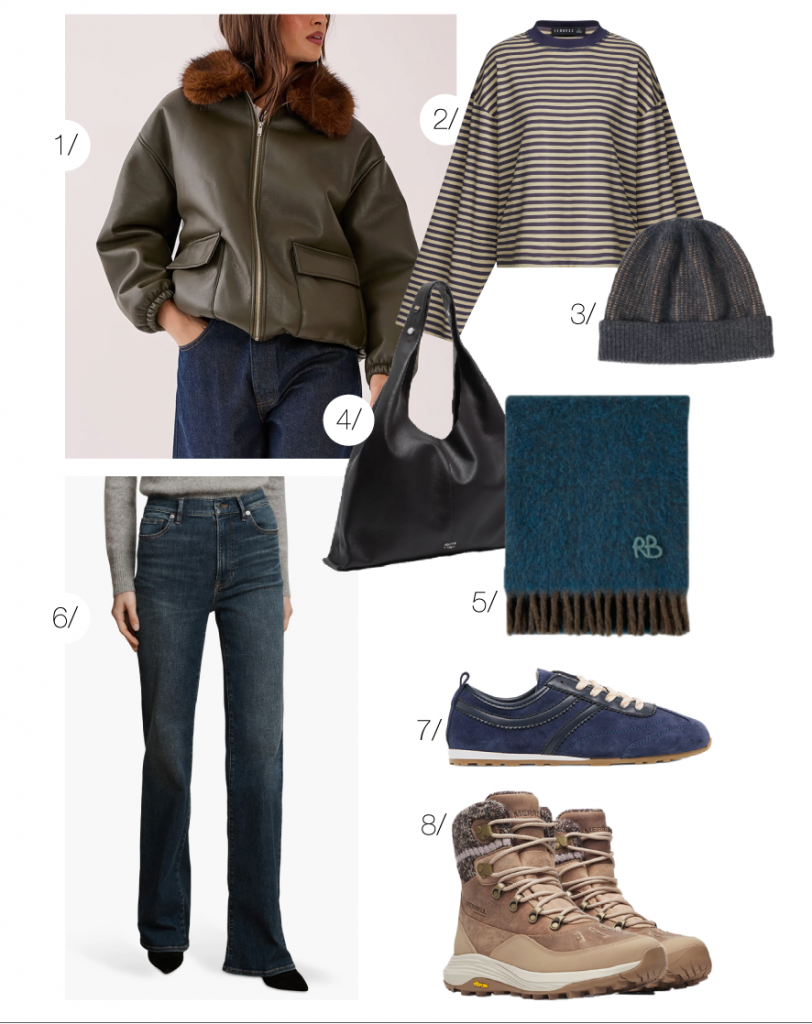
1. Moody Neutrals and Stripes (a.k.a. My Emotional Support Palette)
If you opened my closet in winter, you’d assume I’m committed to a thesis on brown.
Chocolate. Espresso. Taupe. Navy. Cream. The occasional stripe to break the solemnity.
There’s something stabilizing about a tight color palette when everything outside is grey.
A brown bomber jacket — slightly oversized, slightly structured — has been my most reached-for layer this season. Bombers carry a quiet utilitarian energy. Originally military, later absorbed into subcultures, they’ve always balanced toughness with wearability.
Over a striped knit? It becomes softer.
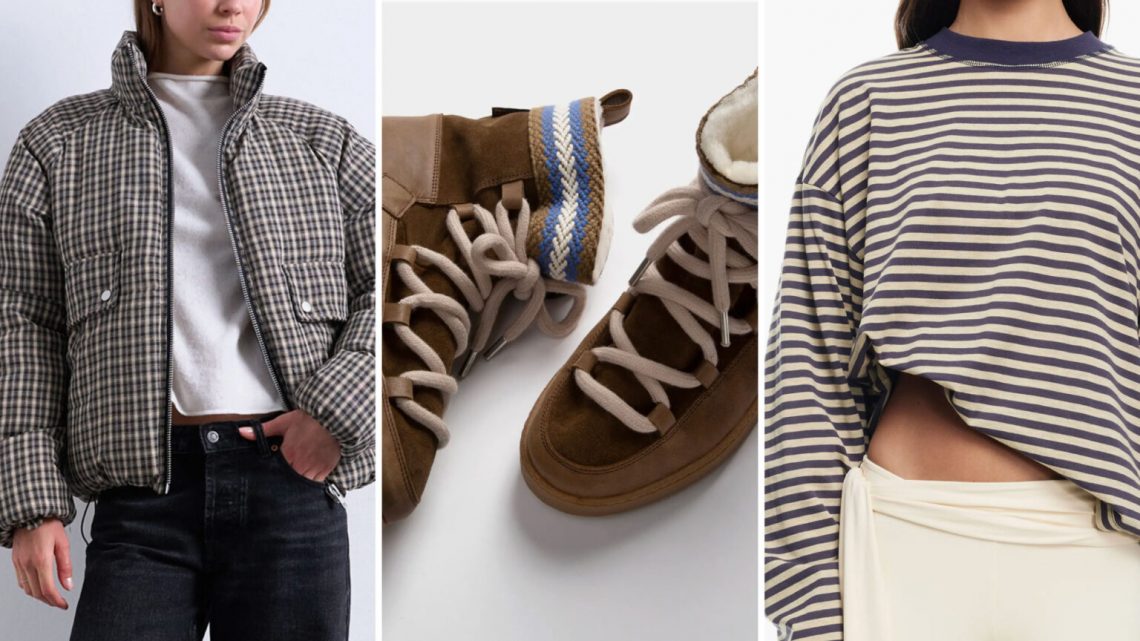
Stripes, historically nautical and later Parisian-intellectual-coded, add just enough pattern without becoming loud. A boxy striped sweater over straight-leg jeans or black leggings reads intentional without requiring thought.
The formula is almost embarrassingly simple:
- Comfortable base layer
- Slightly structured outer layer
- One classic pattern
That’s it.
What makes it feel elevated isn’t effort. It’s coherence.
When your color story is tight, even the laziest silhouette looks composed.
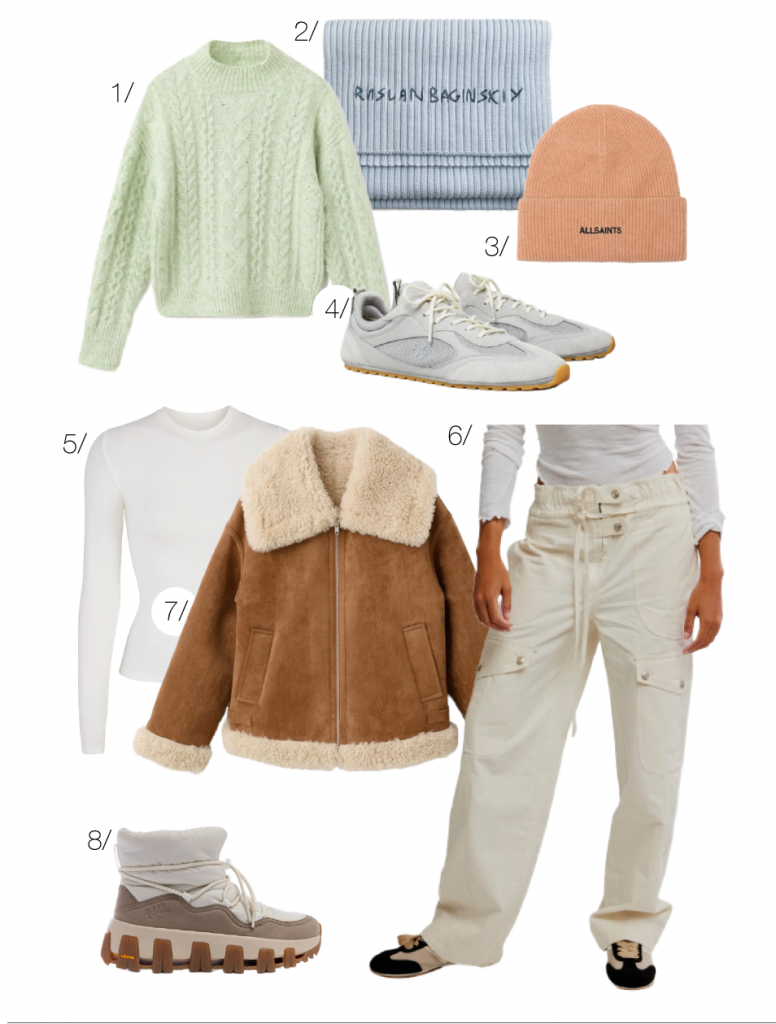
2. Winter White with a Hint of Pastel (Light Therapy, But Make It Fabric)
By February, I start craving light.
Not neon. Not dopamine dressing in the TikTok sense. Just relief.
Enter winter white — but layered, textured, grounded.
Cream denim. Off-white knit. Ecru trousers. There’s something quietly luxurious about wearing pale tones in winter, especially when everyone else is in black puffers.
The key is contrast and material. A chunky mint sweater — not saccharine, but muted — layered over structured white denim feels fresh without screaming SPRING.
Mint in winter does something interesting psychologically. It brightens without overwhelming. It interrupts the heaviness without denying the season.
Paired with neutral boots and a camel coat, the whole look becomes less pastel, more painterly.
Historically, white in winter was once considered impractical — a privilege color. It showed dirt. It signaled distance from manual labor. Today, it reads more as quiet confidence. You’re not afraid of slush. You’re prepared.
And that’s the subtle shift: winter whites aren’t fragile if styled with intention. They’re assertive.
Low effort, high impact.
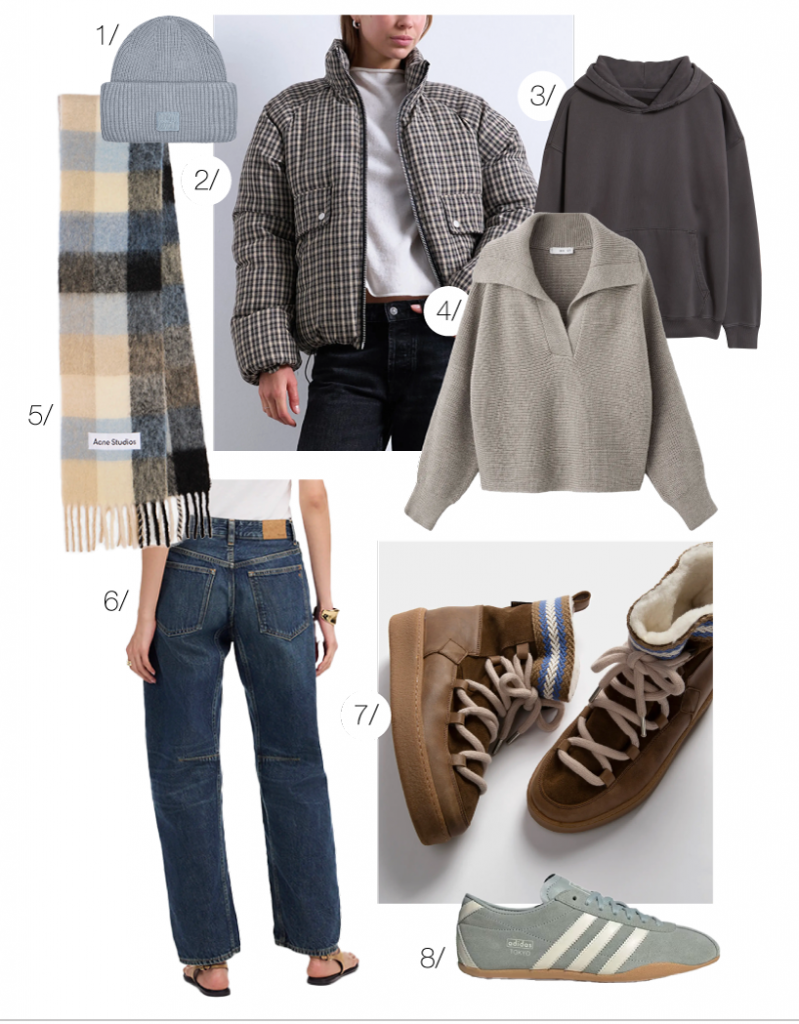
3. Plaid Puffers and Taupe Layers (Because the Puffer Doesn’t Have to Be Boring)
The puffer jacket has become winter’s default armor.
Practical. Insulated. Slightly shapeless.
For years, they existed in safe colors — black, navy, olive — chosen for invisibility. But lately, plaid puffers and textured variations have started to surface, and I find myself strangely grateful.
Plaid has a long, layered history. Scottish clans. Punk rebellion. Grunge nonchalance. Academia. It refuses to belong to one narrative.
A plaid puffer in taupe or muted tones adds dimension to an otherwise sleepy winter outfit.
Underneath? Keep it simple.
A washed hoodie on tired days. A soft knit sweater if you’re attempting to raise the bar 4%.
The magic is that the jacket becomes the statement piece, which means the rest can stay deeply comfortable.
And there’s something culturally satisfying about that reversal.
Outerwear used to be protective necessity. Now it’s the headline.
In winter, your coat is your outfit. Accepting that is liberating.
4. The Statement Jacket + Reliable Base (The Outfit Multiplier)
There are days when I genuinely do not care what’s happening under my coat.
Black leggings. White tee. Fine.
But throw on a plaid shacket or textured wool-blend jacket, and suddenly the whole thing reads styled.
Shackets — that hybrid between shirt and jacket — have become winter’s diplomatic garment. Less formal than a coat. More substantial than a flannel. They bridge indoor and outdoor spaces gracefully.
I love a bold plaid in unexpected color combinations — rust with navy, forest with cream. It makes the rest of the outfit almost irrelevant.
And then there are the tees.
Graphic tees layered under tailored jackets have a specific energy — slightly irreverent, slightly curated. Brands like Damson Madder (and similar contemporary labels) have leaned into that playful-meets-grown-up aesthetic.
Layered under a structured jacket, even a simple tee feels deliberate.
It’s a reminder that low-bar dressing doesn’t mean abandoning personality.
It means concentrating it in one piece.
5. Leggings, But Elevated (Yes, We’re Going There)
Let’s stop pretending.
Leggings are not leaving my winter rotation.
They are the backbone of cold-weather existence. Especially on days when jeans feel like a commitment.
The difference between “just rolled out of bed” and “intentionally relaxed” often comes down to two elements:
- Proportion
- Outerwear
An oversized sweater that hits mid-thigh balances the slim silhouette of leggings. Add tall boots or sleek sneakers, and suddenly it feels styled.
But the real game-changer? A heritage jacket.
Barbour, for example — with its waxed cotton history rooted in British countryside practicality — carries cultural weight. Originally designed for outdoor labor and riding, it now signals understated tradition.
Throwing a heritage-style jacket over leggings reframes them entirely. What was once gym-adjacent becomes countryside-adjacent.
And context changes everything.
You’re not underdressed. You’re practical.
Why Low-Effort Dressing Feels So Necessary Right Now
There’s a larger cultural undercurrent here.
We live in a time of hyper-curation. Hyper-productivity. Hyper-visibility.
Winter, though, has always been a season of retreat. Historically, agrarian societies slowed down. Light diminished. Social calendars thinned.
Our bodies still respond to that rhythm, even if our inboxes do not.
So low-bar outfits aren’t laziness.
They’re alignment.
They acknowledge that energy fluctuates. That dressing can support you rather than demand from you.
And perhaps that’s the quiet luxury of winter style in 2026: not excess, not spectacle — but ease with intention.
The Formula I Keep Returning To
When I strip it down, my winter dressing algorithm looks like this:
- Comfortable base (leggings, soft jeans, knit trousers)
- One interesting layer (plaid puffer, structured bomber, textured coat)
- Cohesive color palette (no more than three tones)
- Grounded footwear (boots or sneakers that make sense for weather)
Everything else is optional.
Jewelry? Minimal.
Makeup? If I feel like it.
Hair? Controlled chaos is acceptable.
The point is not perfection.
It’s coherence.
A Quiet Defense of the Department Store
There’s something slightly nostalgic about sourcing these pieces from a place like Nordstrom.
Department stores were once temples of aspiration. Carefully merchandised floors. Seasonal transitions. A kind of retail theater.
In the digital era, they’ve had to evolve — becoming hybrid spaces of convenience and curation. You can find trend-driven contemporary brands alongside long-standing heritage labels in one scroll.
For winter dressing, that matters.
You can pair a modern oversized knit with a classic Barbour jacket. A trendy plaid puffer with timeless denim. High-low, without friction.
And winter style thrives in that tension — between new and known, comfort and structure, fatigue and self-expression.
When in Doubt: Put On the Jacket
If there is one piece of advice I return to every January, it’s this:
When you don’t know what to wear, choose the jacket first.
Not the jeans. Not the sweater.
The jacket.
Because in winter, it’s what people see.
Choose something with texture, pattern, or structure. Let it define the tone. Then build the laziest, coziest base underneath.
You’ll still be comfortable.
But you’ll also look like you meant it.
And maybe that’s the real low-bar winter win: dressing in a way that acknowledges your energy level without surrendering your aesthetic.
You don’t need ten layers. You don’t need a reinvention.
You need one good jacket, a forgiving pair of pants, and a color story you can trust.
Everything else is just weather.