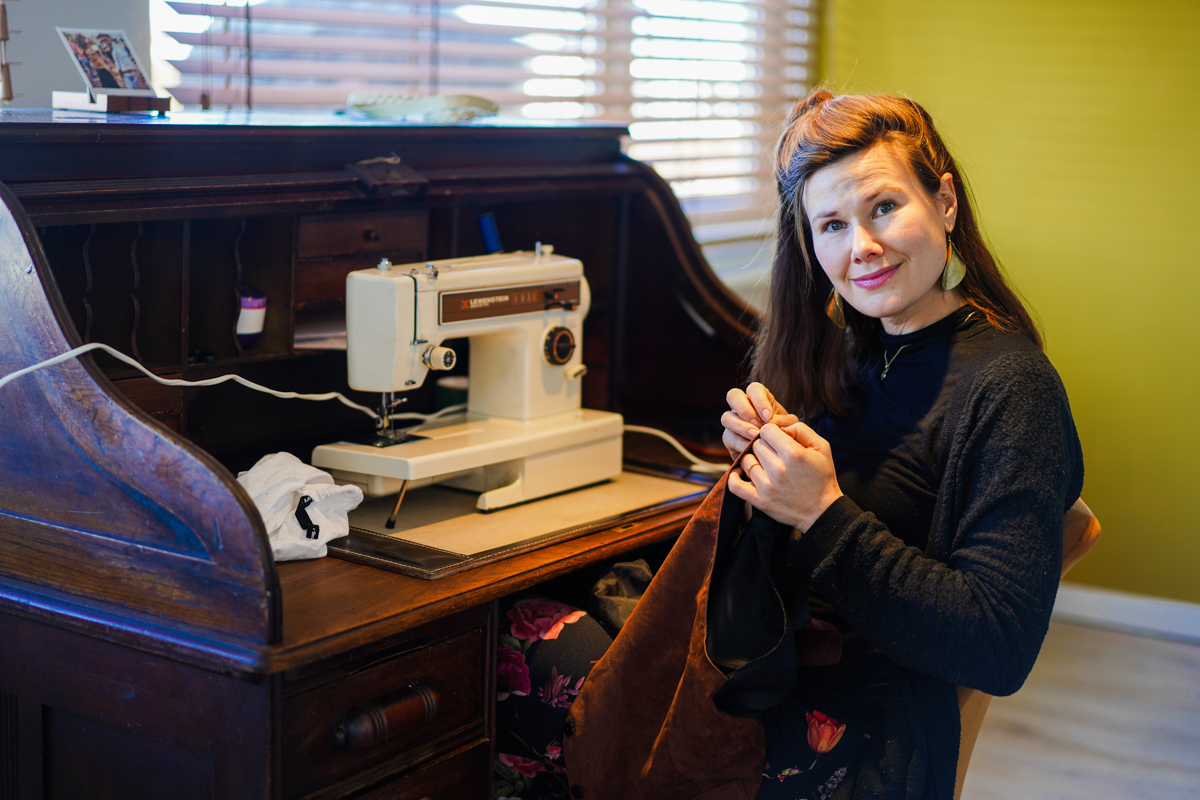
I’ve always loved a good confession. Not the dramatic kind, more the soft, everyday ones—the kind you mutter to yourself while standing in line, holding something you absolutely did not plan to buy.
So let’s start properly.
Hello, my name is Rachel, and I am very good at convincing myself that this purchase is different.
Different because it’s second-hand.
Different because it’s vintage.
Different because it was meant to find me.
I quit fast fashion years ago. That part was easy. What wasn’t easy was admitting that my relationship with shopping didn’t magically heal the moment I switched racks. I simply moved the habit into thrift stores, flea markets, resale apps, and late-night Pinterest spirals.
The guilt softened. The volume didn’t.
The Comfort of “Preloved”
Second-hand shopping has excellent PR. It wears a halo. It lets you feel responsible while still feeling excited. You’re not consuming—you’re rescuing. You’re not buying—you’re giving something a second life.
And to be clear: I still believe in second-hand fashion deeply. It’s slower, kinder, richer in stories. But it can also become a loophole. A way to keep the same impulses alive under a different name.
I would buy a few items and feel utterly convinced that I was done. Content. Complete. And then, quietly, that feeling would dissolve. Another month would pass. Another “perfect” piece would appear. Another small justification would bloom.
At some point, I had to admit that sustainability isn’t only about what you buy. It’s also about why you buy—and how often.
The Idea That Wouldn’t Leave Me Alone
The thought came to me slowly, the way inconvenient thoughts do. Not as a bold declaration, but as a persistent itch.
What if I didn’t buy clothes for a year?
Not second-hand.
Not fair fashion.
Not “just this one exception.”
Nothing.
The idea felt both absurd and strangely relieving. As if someone had suggested silence after years of background noise.
But very quickly, another question followed:
If I don’t buy clothes… what do I wear when I need something new?
And that’s when the idea shifted from restraint to creation.
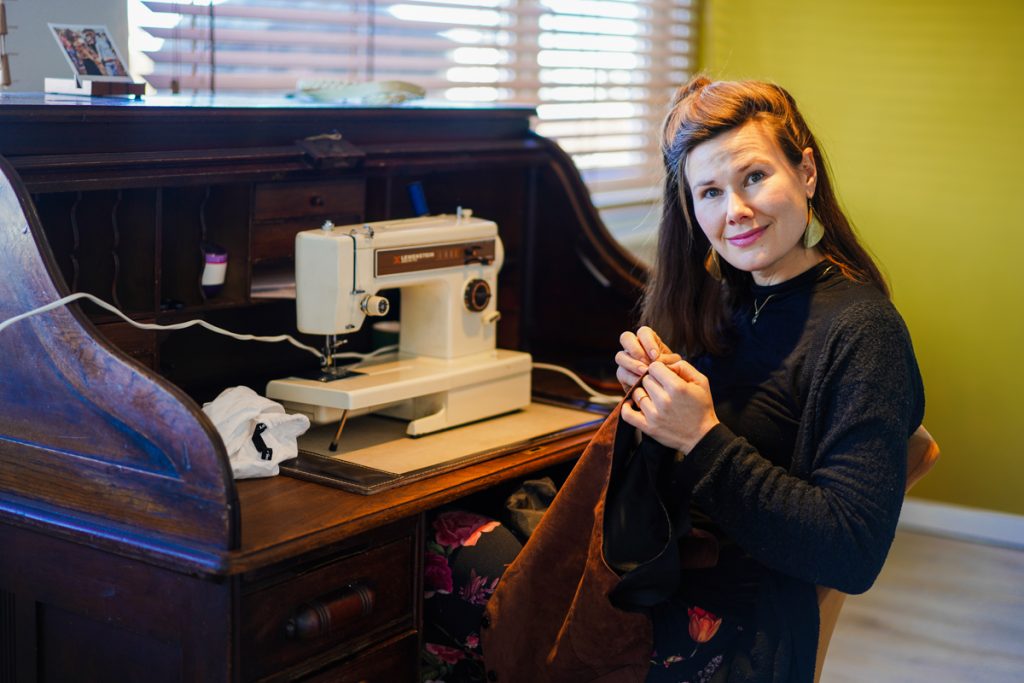
What if I made my own clothes—for one entire year?
Why Making Feels Radical Now
There was a time when making your own clothes wasn’t a challenge. It was normal. Practical. Necessary. Garments came from hands you knew—often your own, or someone close to you. The distance between need and creation was short.
Today, that distance is vast. Clothing arrives pre-made, anonymous, frictionless. We’ve outsourced skill, patience, and time in exchange for convenience. And in doing so, we’ve also outsourced responsibility.
Making your own clothes interrupts that system completely.
It forces you to slow down. To feel fabric. To accept mistakes. To understand why something costs what it costs—whether that cost is money, labor, or time.
And perhaps most confronting of all: it reveals how little we actually need.
Fear No. 1: I Am Not a Sewing Hero
Let’s be honest. I am not a master seamstress. I don’t draft patterns in my sleep or own an intimidating studio with perfect daylight and industrial machines.
I know the basics. I can follow instructions. I can mend, alter, improvise. Enough to be dangerous—but not enough to feel confident.
Which, in a way, was part of the appeal.
This wasn’t about producing a flawless wardrobe. It was about rebuilding a relationship with clothing from the inside out. Accepting imperfection. Wearing things that carry visible effort. Letting clothes be personal again.
A crooked seam suddenly felt less like a failure and more like a signature.
The Rules I Had to Set (So I Wouldn’t Cheat Myself)
I learned quickly that vague intentions are easy to negotiate with. So I made rules—not as punishment, but as clarity.
For one year:
- I wouldn’t buy new or second-hand clothing.
- I could mend, alter, and remake items I already owned.
- I could use existing fabric, old garments, or responsibly sourced materials if truly necessary.
- Shoes and underwear were allowed exceptions—because realism matters.
The goal wasn’t purity. It was awareness.
Time Became the Currency
One of the first things I noticed was how much time clothing normally doesn’t take from us anymore. We forget this because shopping feels quick, even when it isn’t.
Making clothes reintroduces time as a visible cost.
An afternoon for a skirt.
A weekend for a dress.
Hours spent unpicking seams because you rushed the first time.
At first, this felt inconvenient. Then it felt grounding.
I started planning differently. Thinking ahead. Asking myself whether I truly wanted to invest hours of my life into a garment—or whether the desire would pass.
Surprisingly often, it passed.
Desire Didn’t Disappear—It Changed Shape
I didn’t stop wanting clothes. I stopped wanting volume.
Instead of scrolling endlessly, I began noticing details. Cuts. Seams. Why something worked. Why something didn’t. Clothing shifted from being a product to being a process.
I found myself drawn less to trends and more to construction. Less to novelty and more to longevity.
And perhaps most unexpectedly: I felt calmer.
There is something deeply soothing about knowing that nothing is arriving in the mail. No packages to anticipate. No choices to regret. No returns to manage.
The wardrobe became quiet.
Wearing Effort Feels Different
Wearing something you made changes how you move through the world. You stand a little straighter. You notice how the fabric behaves. You forgive small flaws because you know exactly where they came from.
You also stop chasing perfection. Store-bought clothing trains us to expect flawlessness. Handmade clothes remind us that bodies are not standardized forms—and neither is life.
I didn’t feel underdressed.
I felt present.
What This Year Is Really About
This challenge isn’t about rejecting fashion. I love fashion too much for that. It’s about reclaiming it.
About remembering that clothing used to be an expression of skill, care, and intention—not just taste and purchasing power.
It’s about breaking the automatic link between desire and acquisition. About sitting with wanting something and asking what’s underneath that want.
Sometimes it’s boredom.
Sometimes comparison.
Sometimes the belief that a new version of ourselves is just one garment away.
Spoiler: it rarely is.
A Quiet Kind of Rebellion
In a culture that constantly tells us to update, refresh, replace—choosing to make and mend feels almost defiant. Not loud. Not performative. Just quietly resistant.
I don’t know exactly what my wardrobe will look like at the end of this year. I do know it will carry stories I can trace with my fingers. Time I can account for. Choices I can stand behind.
And maybe that’s the point.
Not to own less.
Not to make everything.
But to remember that clothes are not disposable ideas. They are objects that live with us. Move with us. Witness our days.
This year, I want to meet them halfway.