Every year, somewhere around late October, I perform the same small ritual.
I stand in front of my wardrobe and start dividing my clothes into two imaginary camps: the “still allowed” and the “see you in April.” Linen slips drift to the back. Bare-shouldered dresses retreat into shadow. Light cotton jumpsuits—once so alive in August—suddenly look naive against the first grey sky.
It feels practical. Seasonal. Logical.
And yet, something about it bothers me.
Why do we exile half our wardrobe for six months?
Partly, of course, because we’re cold. Because the body, unlike fashion campaigns, reacts poorly to frost. But also because we’ve internalized an aesthetic rule: summer silhouettes belong to summer. Puffy sleeves require sun. Flowing skirts demand bare legs.
I used to accept that division without question. Until I realized that most of what we call “seasonal” is less about fabric and more about fear of layering.
So I stopped reaching for jackets first.
Instead, I reached for a turtleneck.
And it changed everything.

I’m not going to give you a sermon about sustainability, though it is there quietly in the background. About buying less, wearing more, resisting the hypnotic call of winter collections. You already know that logic.
This is simpler.
If you remember one word from this entire piece, let it be this: turtleneck.
Because this humble, slightly underestimated garment has the power to turn almost any summer dress into something winter-proof—without hiding the reason you fell in love with it in the first place.
Why Not Just Throw on a Jacket?
We’ve been trained to think in layers that cover.
Cold? Add a blazer. Add a cardigan. Add a coat. We build insulation on top, like architectural add-ons.
But here’s the problem: jackets obscure. They flatten. They erase.
Those charming short sleeves that convinced you to buy that dress? Gone. The subtle waist detail? Lost. The sculptural neckline? Hidden under wool.
A turtleneck works differently.
Instead of covering the design, it supports it from underneath. It warms you without rewriting the garment’s silhouette. It allows the original shape to remain intact.
Culturally, the turtleneck has had many identities. Intellectual uniform. Beatnik staple. Minimalist essential. Tech CEO cliché. It oscillates between seriousness and sensuality depending on context.
But at its core, it does something very simple: it creates a second skin.
And that second skin is precisely what summer dresses lack in winter.
The Psychological Shift: From “Seasonal” to “Layerable”
There’s a quiet consumer script we follow: each season requires new clothes.
Retail calendars depend on it. So do our habits. We’re nudged to refresh. To update. To rotate not only weather-appropriate fabrics, but entire aesthetics.
But what if the issue isn’t that your summer dress is too thin?
What if the issue is that you’ve never been taught to see it as incomplete?
A sleeveless dress in July is whole. A sleeveless dress in January looks unfinished.
Add a turtleneck, and it regains coherence.
This small shift—from seeing garments as fixed to seeing them as modular—can transform the way you relate to your closet. Suddenly, your wardrobe becomes less of a timeline and more of a toolkit.
And that is liberating.
How to Do It Without Looking Like a Padded Snowman
Layering is an art, and like any art, it can go wrong.
The goal is warmth without bulk. Intentional contrast, not accidental chaos.
Here are the principles I return to again and again.
1. Avoid the Lumpy Effect
The quickest way to ruin this trick is by ignoring fabric weight.
Not all turtlenecks are created equal.
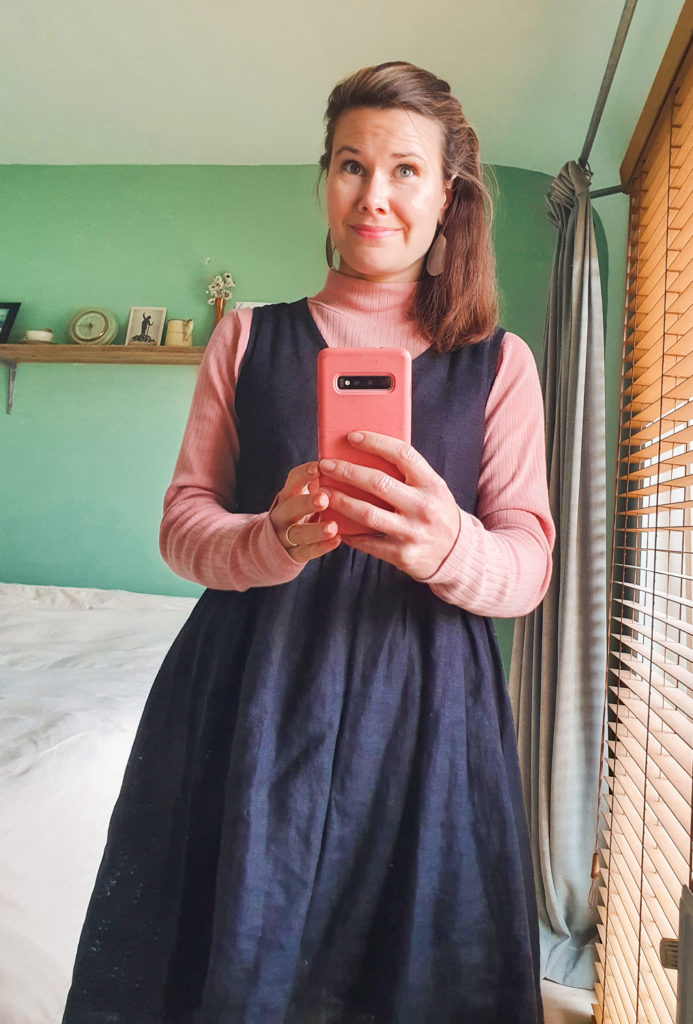
If you’re layering under a voluminous, wavy dress with structure—think thicker cotton, denim, or anything with puffed sleeves—you can afford a sturdier knit underneath. A slightly thicker turtleneck creates balance and holds its own beneath the fabric.
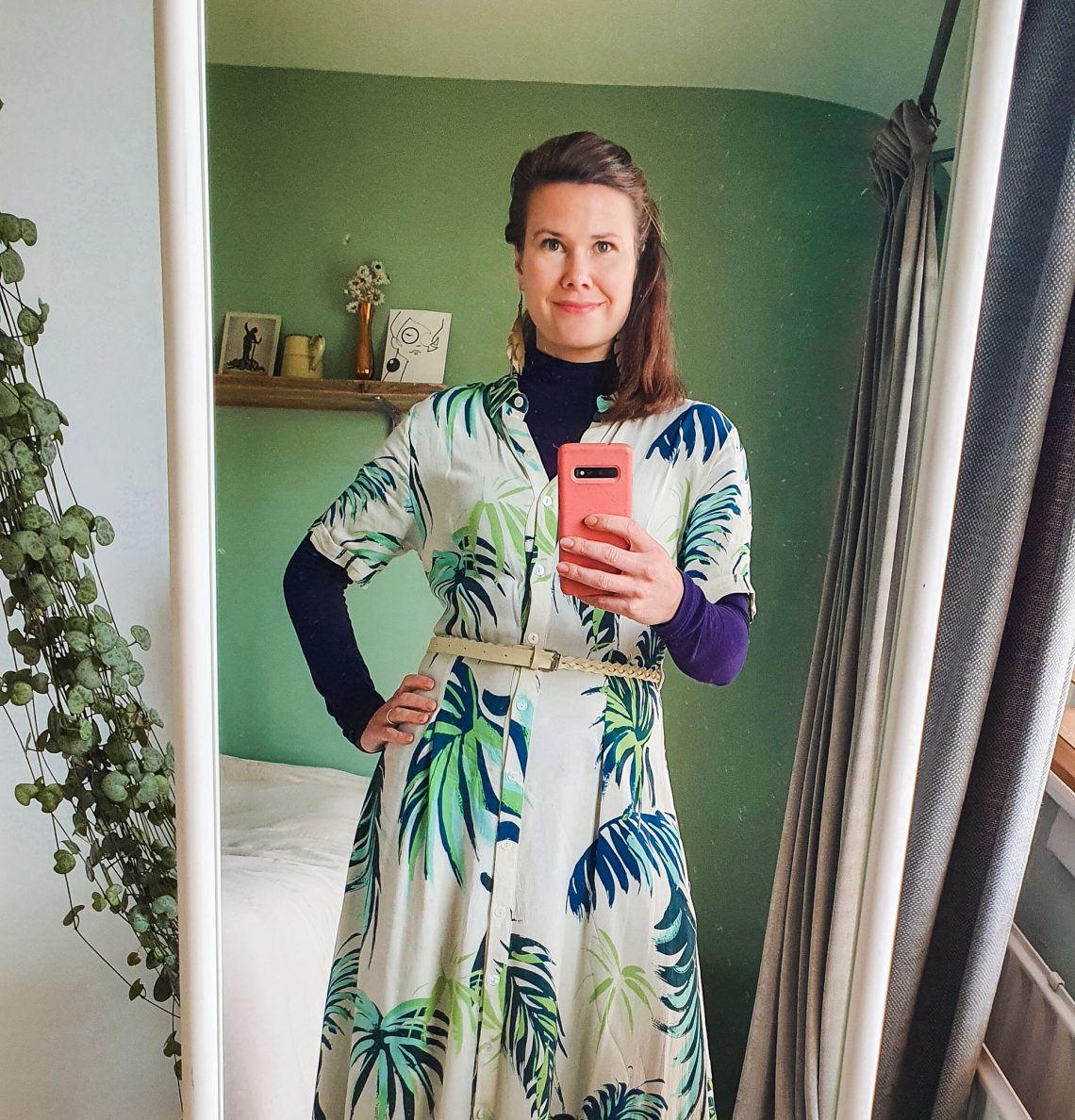
But if your summer dress is delicate—silk, viscose, something that skims the body—then you need a second-skin base. A fine rib knit. A lightweight bodysuit. Something that disappears visually and physically.
Otherwise, you risk creating tension lines across the bust or shoulders that make the dress look strained.
Layering should feel intentional, not forced.
The trick is to match softness with softness, structure with structure.
When I layer a floaty floral maxi over a thin, almost translucent turtleneck, it feels romantic. When I place a heavier knit under a structured mini dress, it feels architectural.
In both cases, the key is proportion.
2. Color: Harmony or Rebellion
Color is where this styling trick becomes truly interesting.
There are two main paths: complement or clash.
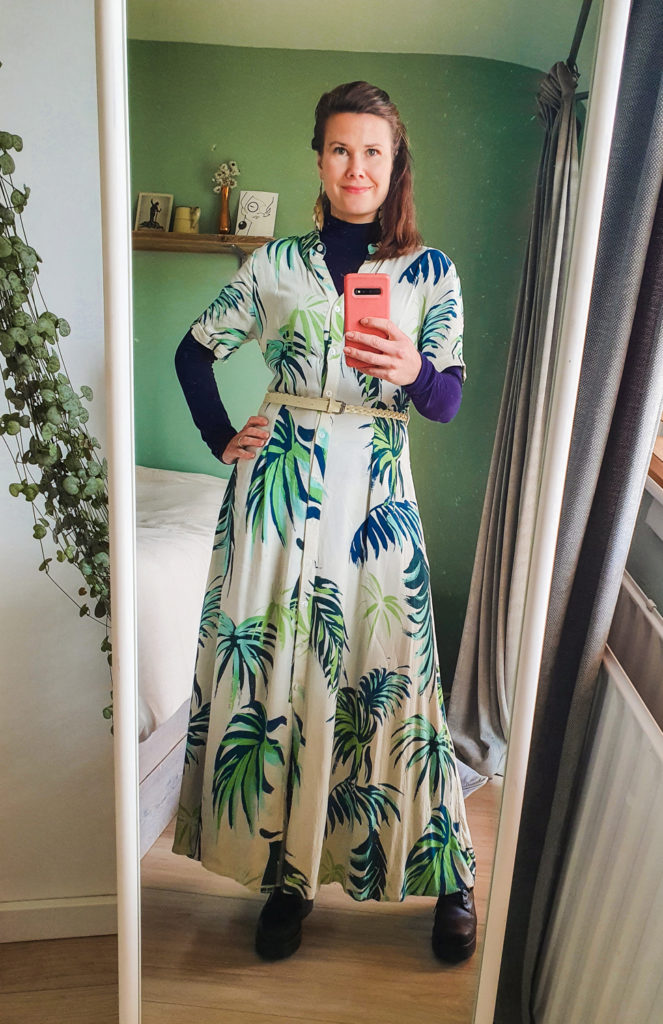
If your dress contains multiple shades—say, blues and greens—look for a turtleneck that echoes one of them. It doesn’t have to be an exact match. In fact, slight variations create depth. An olive tone under a forest-green pattern. A navy under a cobalt print.
This creates continuity. The outfit feels considered, almost quiet.
But then there is the opposite approach.
Contrast.
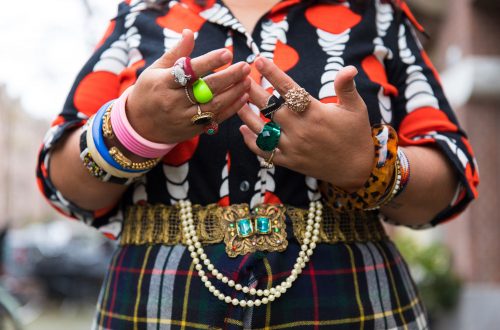
A red dress with a pink turtleneck. A mustard slip over a deep plum base. A pastel floral layered onto a charcoal grey.
At first, it might feel wrong. But sometimes wrong is precisely what makes an outfit come alive.
Color clashing, when done consciously, introduces energy. It suggests confidence. It says: I am not afraid of visual tension.
Historically, winter wardrobes have leaned toward dark palettes. Black, navy, brown, grey. Practical colors. Urban colors. Colors that absorb rather than radiate.
Layering a bright turtleneck under a summer dress in December feels like defiance. A refusal to surrender entirely to the season’s mood.
And I find that surprisingly comforting.
3. Stockings Are Not the Enemy
Let’s talk about legs.
If you search for winter dress inspiration online, you’ll find endless images of bare-legged women in coats, standing in snow as if immune to temperature.
It looks beautiful.
It also looks fictional.
Tights are often dismissed as unglamorous. But they are, quite simply, necessary.
And they can be part of the styling conversation rather than an afterthought.
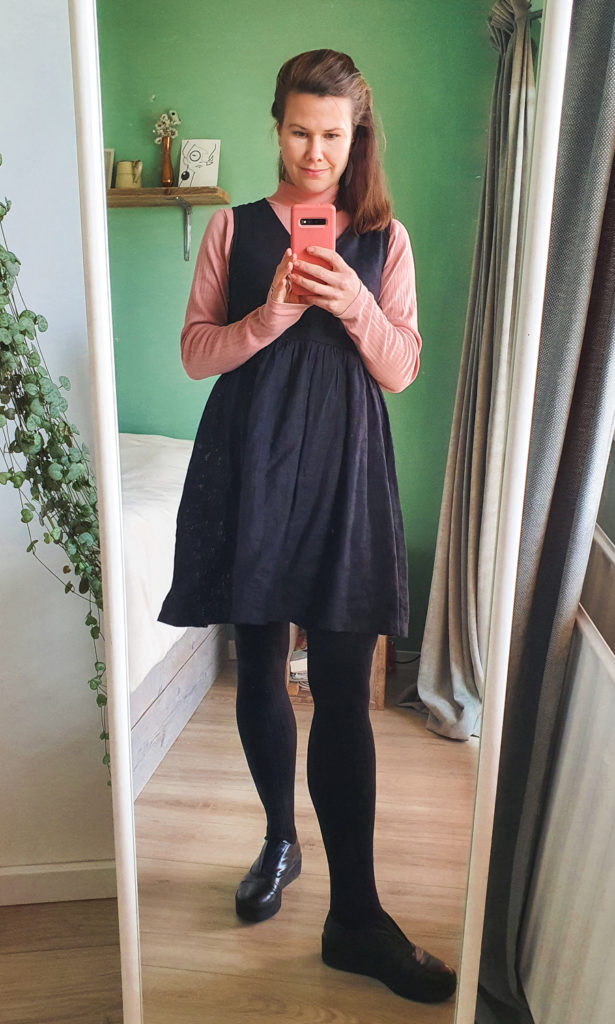
Opaque black tights are the safest choice. They ground a dress. They add weight to the lower half, which can be helpful when layering on top.
But you can also play here.
Deep burgundy. Navy. Even textured tights that subtly echo a pattern in your dress.
The key is balance. If your upper layers are busy, keep your legs simple. If your dress and turtleneck combination is relatively minimal, tights can add interest.
Warmth is not the enemy of style. It is its precondition.
4. Mind the Neckline
Not every dress works equally well with every turtleneck.
A high-neck dress layered over a high-neck base can feel suffocating. Too much fabric around the collarbone.
But a square neckline over a sleek turtleneck? Elegant. Almost historical. It evokes portraits where garments were layered not for fashion, but for necessity.
A V-neck dress becomes instantly softer when filled in with a contrasting knit. A strappy slip dress gains gravity.
In a way, you are redrawing the neckline of your dress.
And that redraw can change its entire personality.
5. Accessories: Keep Them Honest
Once you’ve layered your dress and base, resist the urge to overcompensate.
Heavy scarves, oversized necklaces, dramatic belts—sometimes they compete with the simplicity of the trick.
Let the layering do the talking.
If anything, choose accessories that anchor the look seasonally. Chunky boots. Structured loafers. A wool coat that frames rather than overwhelms.
The goal is cohesion, not spectacle.
Why This Trick Matters (More Than It Should)
On the surface, this is just a styling tip.
But I’ve noticed that the way we treat our clothes reflects how we treat time.
We segment our lives into seasons. Summer self. Winter self. Party self. Office self.
And perhaps that segmentation is comforting. It suggests clarity.
But real life is messier. January can feel like July emotionally. A December party might demand lightness rather than solemnity.
When I wear a summer dress in winter, I feel like I’m carrying a piece of sunlight forward. Refusing the narrative that everything must darken.
It’s small. Almost symbolic.
But symbols matter.
Fashion, historically, has always responded to climate not only physically but psychologically. In eras of austerity, hemlines dropped and palettes dimmed. In moments of optimism, colors exploded and silhouettes expanded.
Layering a breezy dress with a turtleneck in winter feels like bridging those moods. A practical compromise between warmth and whimsy.
It says: I acknowledge the cold. But I am not surrendering entirely to it.
The Christmas Outfit You Already Own
Here’s the part that makes me smile.
If you’re staring at your wardrobe in December wondering what to wear to a holiday dinner, you might already have the answer.
That slightly dramatic summer dress you wore to a wedding? Add a fine black turtleneck underneath. Dark tights. Polished boots.
Suddenly, it looks intentional. Festive, even. Without being predictable.
There is something deeply satisfying about arriving at a gathering wearing something that didn’t require a new purchase. Something reimagined.
It shifts the energy from consumption to creativity.
And perhaps that’s what this entire trick is about.
Not just staying warm.
But reclaiming the narrative that new occasions require new clothes.
Sometimes, they simply require a different layer.
I no longer move my summer dresses to the back of the closet in October.
They stay where I can see them.
Because now, when the temperature drops, I don’t see limitations. I see potential pairings.
A thin rib knit waiting for a floral print. A bold color ready to challenge a muted one. A silhouette prepared to evolve.
All because of one simple garment.
The turtleneck.
Quiet. Reliable. Transformative.
And somehow, still underestimated.