There is a particular kind of satisfaction that comes from clearing out a closet.
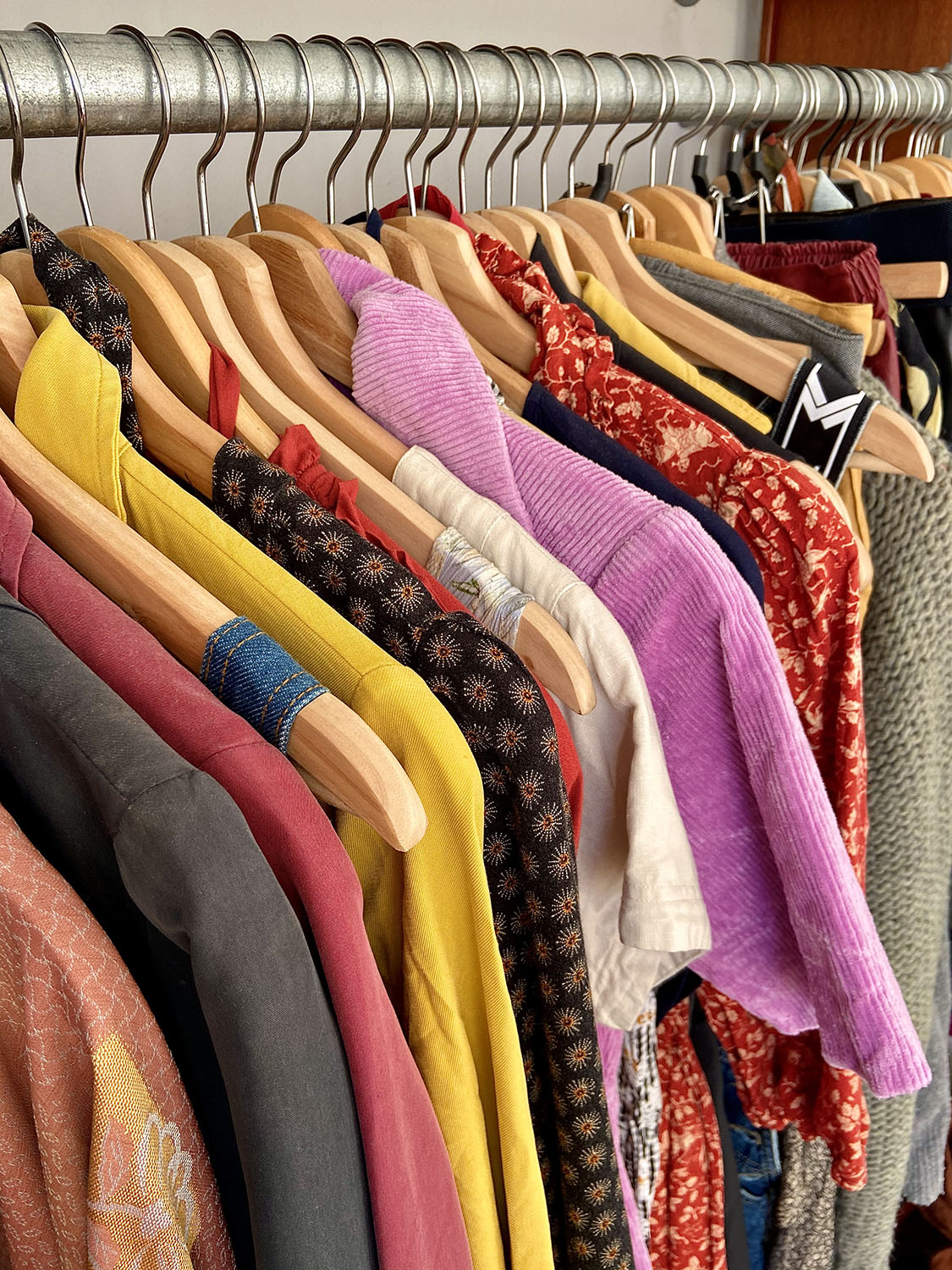
You pull everything onto the bed. You try on what no longer feels like you. You build two piles: keep and release. The release pile grows with alarming speed. A dress from a version of yourself who thought she loved ruffles. Jeans that almost fit. A promotional T-shirt from an event you barely remember.
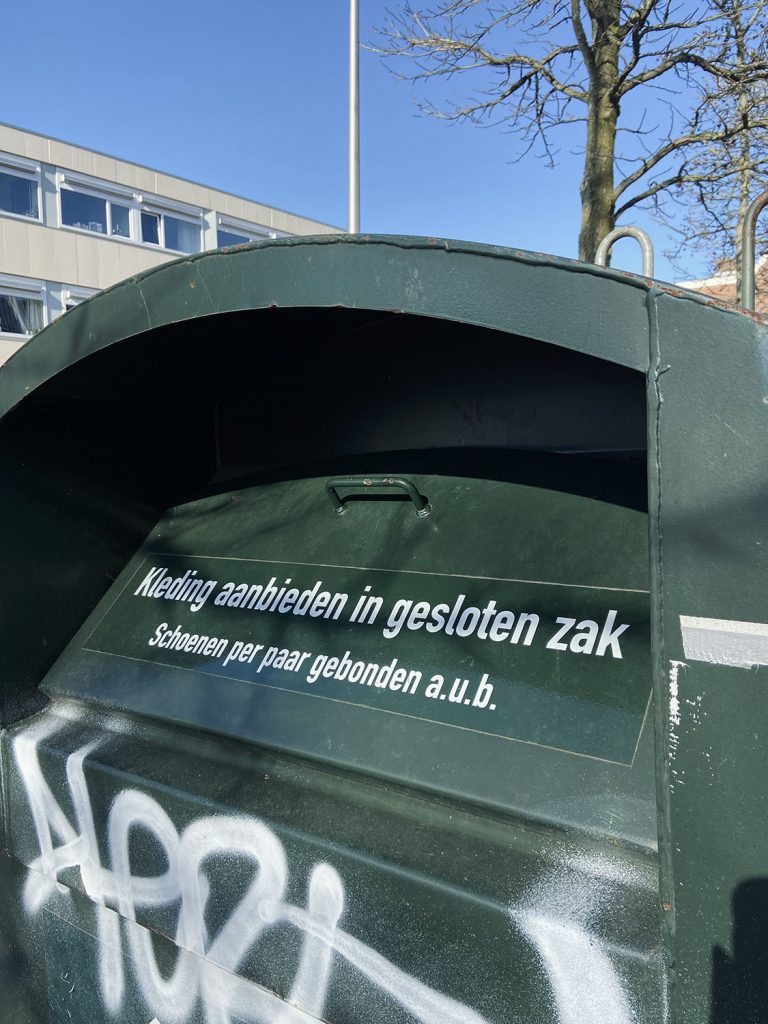
Then comes the ritual: folding, bagging, tying the handles into a tight plastic knot. You carry the bags to a metal bin on the street corner—usually white or green, often decorated with a vague promise about helping someone, somewhere. You slide the garments through the narrow opening. They disappear with a soft, fabric sigh.
And you walk away lighter.
It feels virtuous. Responsible. Almost generous.
But I’ve started to distrust that feeling.
Not because donating clothes is inherently wrong. But because the simplicity of the act conceals a global system that is anything but simple. The afterlife of our clothes is more complicated, more commercial, and more political than most of us would like to imagine.
An average consumer discards around thirty kilograms of clothing each year. Pause on that number. Thirty kilograms. Every year. That’s roughly the weight of a small child. Multiplied by millions of wardrobes, it becomes mountains—literal mountains—of textile waste.
We produce far more clothing than we can wear, love, repair, or even meaningfully resell. And when we place those garments into a recycling bin, we are not ending their story. We are merely moving them into a different chapter.
The first misconception is that all donation bins are charitable in the way we assume.
Some are run by nonprofits. Some are operated by commercial collectors. Some are hybrid models where a private company collects, sorts, and sells the clothing, and a portion of the profit goes to a charitable partner. The branding on the outside of the bin rarely explains the economics inside.
Clothes placed in those bins typically enter a sorting facility. There, workers—often in warehouses far from the tidy street where you dropped your bag—separate garments by category: high-quality resale, export grade, recycling grade, and waste.
Only a small percentage will be deemed good enough for local thrift stores. Even fewer will be displayed prominently. Thrift shops are curated spaces; they cannot absorb endless volumes of fast fashion blouses and stretched-out leggings. They select what they believe will sell. The rest moves on.
What moves on often travels far.
The global second-hand clothing trade is vast. Bales of used garments are compressed into dense cubes, wrapped in plastic, and shipped overseas. Sub-Saharan Africa, parts of South America, and regions in Southeast Asia have become major destinations for these exports.
On the surface, this can sound like a beautiful circular story. Clothes you no longer want find new life elsewhere. Someone else wears your former favorite sweater. Nothing is wasted.
But reality is layered.
In many importing countries, second-hand clothing markets are not fringe—they dominate. In some regions, used clothing accounts for the majority of garments sold. Traders buy sealed bales without knowing exactly what is inside. It’s a gamble. Some pieces are resold in bustling open-air markets. Others are too damaged, too trend-specific, too low quality to sell.
And those unsellable pieces? They become someone else’s waste problem.
This is the part that unsettled me when I first began reading beyond the feel-good narrative. We imagine donation as redistribution. In practice, it often functions as displacement. We export excess.
There is also an economic dimension that rarely enters our closet-cleaning daydreams. Many developing countries have local textile industries—farmers growing cotton, weavers producing fabric, dyers, tailors, designers, small-scale merchants. These industries provide jobs and sustain communities.
When imported second-hand clothing floods the market at extremely low prices, local producers struggle to compete. Why buy a locally made shirt when a cheaper imported one is available in abundance? The result can be a stifled domestic industry and lost livelihoods.
It’s a painful paradox. What feels like generosity on one end can contribute to dependency and economic imbalance on the other.
And yet, the story is not as simple as “exports bad, local good.” In many places, the second-hand trade itself supports thousands of traders and vendors. Informal economies thrive around sorting, repairing, customizing, and reselling used garments. People build businesses from what we discard.
So which narrative is correct?
Both. Neither. It depends.
This is the uncomfortable truth about textile recycling: it is not a moral fairy tale with a clean ending. It is a global system shaped by overproduction, inequality, consumer habits, and corporate incentives.
Then there is the category often labeled “recycling,” which deserves scrutiny of its own.
When a garment is too damaged to resell, it may be downcycled. Cotton fibers can be shredded and turned into industrial rags or insulation. Synthetic blends can be processed into stuffing. Some textiles are mechanically recycled into lower-grade fibers.
But textile-to-textile recycling—turning an old T-shirt back into a new T-shirt—is still limited, especially when garments are made from blended fibers like polyester-cotton mixes. Those blends are notoriously difficult to separate. The more complex the fabric composition, the harder it is to recycle efficiently.
So when a bin promises “textile recycling,” it often means transformation into something of lesser value, not rebirth as clothing.
And a significant percentage—especially of low-quality, ultra-fast-fashion pieces—ultimately ends up in landfill anyway. Torn seams, cheap elastics, thin synthetic knits: they are not built for second or third lives.
This is the part that forces me to look at my own shopping habits with sharper eyes.
It is comforting to believe that we can consume without consequence as long as we donate responsibly. That the bin absolves us. That the bag we tie up is a tidy solution.
But donation is not a magical eraser.
If we buy five trend-driven tops, wear each twice, and then “recycle” them, we have still participated in a system that thrives on speed and disposability. The environmental cost—water use, chemical dyes, labor exploitation—has already been paid long before the garment reaches the bin.
The bin is the epilogue, not the story.
Over time, I’ve shifted my own approach. When I clear my closet now, I ask different questions.
Is this item genuinely wearable by someone else? Or am I offloading guilt disguised as generosity?
Could I resell it myself, ensuring it goes directly to a new owner? Peer-to-peer resale platforms are imperfect, but they create a clearer line between giver and receiver. There is something ethically satisfying about knowing exactly who bought your coat and seeing it reappear in their outfit photo.
If resale feels too transactional, targeted donation is another path. Giving directly to a local shelter, a job-interview nonprofit, or a community organization reduces ambiguity. The garment’s destination is visible, tangible.
And sometimes, the most honest choice is to admit that an item has reached the end of its life. Not everything deserves a dramatic second act.
There is also the matter of quantity. The sheer volume of clothing we produce each year overwhelms even the most efficient sorting and resale systems. Thrift stores in many Western countries are saturated. Racks overflow. Warehouses overflow. When supply exceeds demand, the system strains.
It is tempting to frame this as a recycling problem. In reality, it is a production problem.
Fast fashion has compressed the design-to-store cycle to a matter of weeks. Trends mutate at algorithmic speed. Garments are designed to be inexpensive, not enduring. And when clothing is cheap enough, we treat it as ephemeral.
The donation bin becomes part of that cycle—a pressure valve for excess.
There is a cultural layer here too. Clothing has always carried symbolic meaning: status, belonging, rebellion. In previous decades, garments were fewer and mended more often. Today, abundance has diluted attachment. When a T-shirt costs less than lunch, we form a different relationship with it.
It is easier to let go of what was never deeply valued.
I don’t say this from a pedestal. I have owned my share of impulse purchases. Dresses that photographed well but never felt quite right. Shoes that pinched but were “on trend.” Each eventually found its way into a donation bag.
Each felt like a small confession.
Understanding where those clothes likely traveled—through sorting warehouses, into compressed bales, across oceans, into markets where they might compete with local makers—has not paralyzed me. But it has slowed me down.
Now, before buying, I try to imagine the full arc. Not just how an item will look at dinner next Friday, but how it will age. Will it pill? Stretch? Fade? Will someone else realistically want it in three years?
It’s an imperfect mental exercise. But it shifts the focus from acquisition to stewardship.
Because perhaps that is the missing word in our conversation about clothing: stewardship. Not ownership. Not disposal. Stewardship.
If we saw ourselves as temporary caretakers of garments rather than end consumers, our behavior might change. We might buy fewer, choose better fabrics, repair small tears, replace buttons, re-dye faded cotton.
We might hesitate before dropping another bulging bag into a metal bin and calling it a day.
There is no singular villain in this story. Not the person donating. Not the trader reselling. Not even the consumer in another country buying second-hand because it is affordable. The system is interconnected. Each decision ripples outward.
But we do have agency at the beginning of the chain.
The most sustainable garment is the one that is worn, repeatedly, with intention. The one repaired rather than replaced. The one chosen not because it was trending, but because it felt like it belonged in your life for years.
Donation bins will likely remain part of our urban landscapes. They are not inherently malicious. They can extend the life of clothing. They can fund charitable work. They can provide affordable options in secondary markets.
But they are not absolution machines.
The next time I clear my closet—and I will, because wardrobes evolve—I know the ritual will feel different. Lighter, perhaps, but also more sober.
I will still fold. Still bag. Still walk to the bin or the charity shop. But I will carry with me the understanding that I am participating in a global choreography of fibers and freight ships, of markets and margins.
Clothes do not disappear when they leave our hands.
They travel.
And if we truly care about sustainability—not as a trend, but as a practice—we have to care about that journey as much as we care about the thrill of the purchase.
The afterlife of a T-shirt begins long before it hits the metal flap of a recycling bin.
It begins the moment we decide to bring it home.