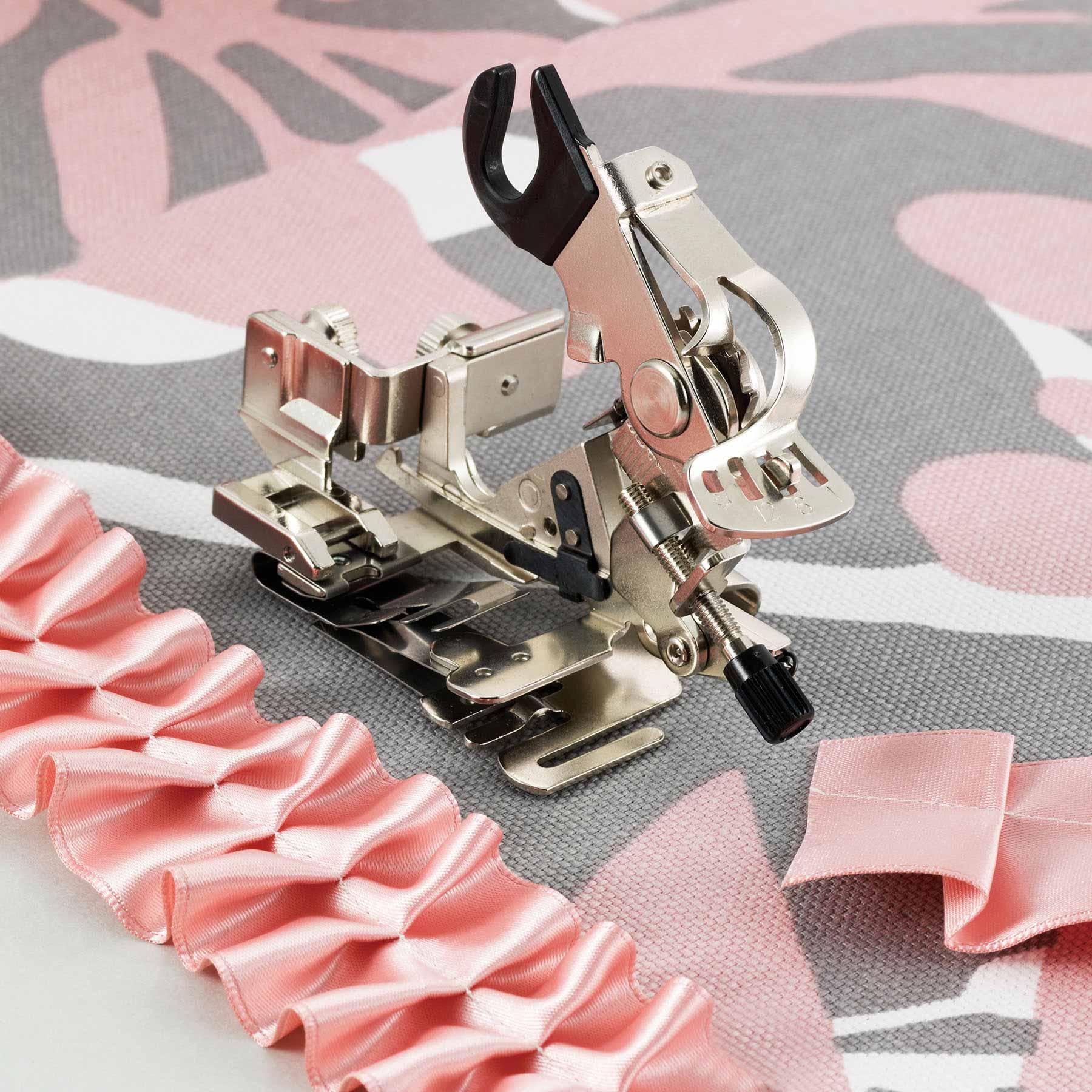
There’s a very specific moment in sewing when patience snaps. It’s usually somewhere between the third meter of fabric and the quiet realization that you still have two sleeves and a skirt panel left to gather. I’ve been there more times than I’d like to admit. That’s exactly why, at some point, a ruffler foot stopped being a “nice-to-have” curiosity and turned into a tool I genuinely rely on.
This isn’t a technical manual and it’s definitely not a sales pitch for any particular brand. Think of this as me talking you through how I actually use a ruffler foot when I want even pleats quickly—without losing my mind or my love for sewing in the process.
Why Pleats Are Mentally Harder Than They Look
Gathering fabric by hand is one of those skills everyone learns early on. Two rows of long stitches, pull the threads, distribute the gathers, pin, adjust, adjust again. It works. It’s reliable. It’s also deceptively draining when the project involves repetition.
The real issue isn’t difficulty—it’s consistency. Even gathers are easy on a short section. Over long seams, human hands introduce tiny inconsistencies. You don’t see them immediately, but once the garment is finished, your eye absolutely does.
Pleats, especially narrow, rhythmic ones, are even more unforgiving. If one is deeper or spaced differently, the whole thing looks slightly “off,” even if no one can quite explain why.
This is where the ruffler foot quietly changes the experience.
The Ruffler Foot: Intimidating Object, Surprisingly Logical Tool
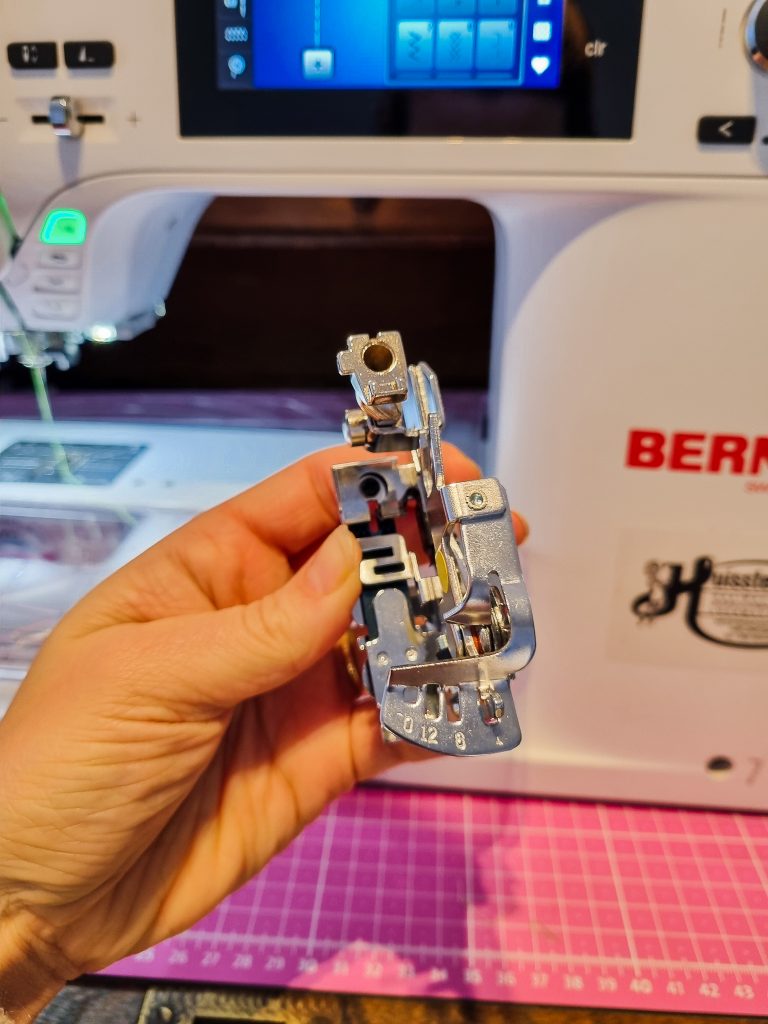
Let’s get this out of the way: a ruffler foot looks absurd the first time you see it. Industrial. Mechanical. Slightly medieval. It does not resemble anything else in your presser foot collection, and that alone can be enough to make people avoid it.
But underneath all that metal is a very simple promise: repeatable motion.
The ruffler doesn’t “gather” fabric in the soft, organic sense. It folds fabric into small, structured pleats at set intervals. Once you understand that distinction, everything clicks. You’re not coaxing fabric into submission—you’re letting a mechanism do the same movement over and over, perfectly.
And that repetition is the real luxury here.
When a Ruffler Foot Makes Sense (and When It Doesn’t)
I don’t use my ruffler for everything. It shines in specific situations:
- Long seams that need uniform pleats
- Ruffles that should look intentional rather than floaty
- Home décor projects like curtains, bed skirts, or valances
- Garments where symmetry matters (skirts, tiered dresses, cuffs)
Where it’s less ideal:
- Ultra-light, slippery fabrics where softness is key
- Very short gathered sections
- Projects where irregularity is part of the aesthetic
Once you stop expecting it to replace every gathering technique, it becomes much easier to appreciate what it is good at.
Ruffler Foot vs. Gathering Foot: Not the Same Job
This is a common point of confusion, and it matters more than people think.
A gathering foot creates gentle ripples by feeding fabric unevenly. It’s subtle, soft, and great for casual volume. A ruffler foot physically folds fabric at intervals. The result is sharper, more architectural.
If I want romance, movement, or something that looks lightly touched by hand, I’ll gather manually or use a gathering foot. If I want order—visual rhythm, structure, precision—the ruffler wins every time.
Neither is “better.” They just speak different design languages.
The Three Adjustments That Actually Matter
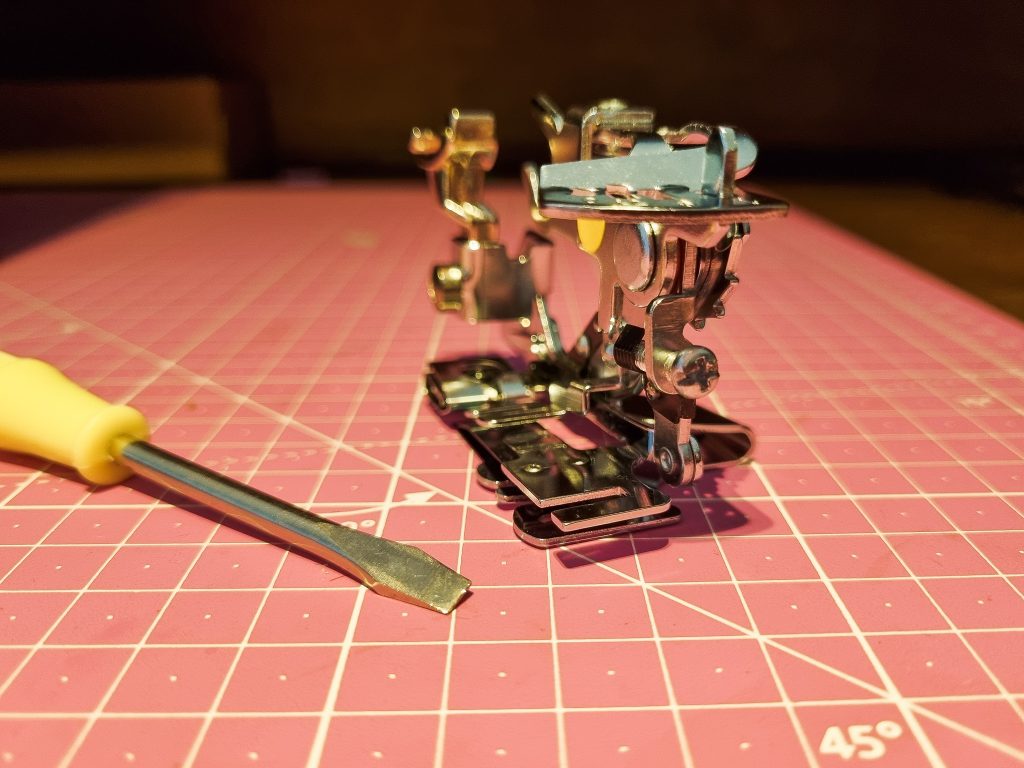
Most ruffler feet give you three main variables to play with. Once you understand how they interact, you can predict results instead of guessing.
1. Pleat Frequency: How Often the Fabric Folds
This is usually controlled by a numbered dial or lever—often marked 0, 1, 6, 12. These numbers indicate how many stitches happen between each pleat.
- A lower number = more frequent pleats
- A higher number = more space between them
Setting it to “1” creates a pleat at almost every stitch—dense and dramatic. “12” is far more restrained. I personally live in the 6–12 range for garments. It gives structure without turning the fabric into an accordion.
2. Pleat Depth: How Much Fabric Is Taken In
This adjustment controls how deep each pleat is. Deeper pleats eat more fabric and create more volume. Shallower pleats are subtle and elegant.
This is where people often go wrong by overdoing it. Deep pleats can look incredible—but only when the fabric and design support them. On stiff or heavy fabric, deep pleats can feel bulky fast.
I always start shallow and increase gradually. It’s much easier to add drama than to undo it.
3. Stitch Length: The Quiet Influencer
Stitch length subtly affects both spacing and visual texture. Longer stitches mean fewer pleats across the same length of fabric; shorter stitches pack them closer together.
This is the setting I tweak last. Once frequency and depth feel right, stitch length becomes the fine-tuning knob.
Testing Isn’t Optional (And That’s Not a Bad Thing)
I know testing sounds boring, but with a ruffler foot, it’s oddly satisfying. A small scrap of fabric can tell you everything you need to know.
I keep a notebook where I jot down combinations that work for certain fabrics. Not precise ratios—just impressions:
- “Crisp cotton: 6 / shallow / stitch 3.5 = neat, wearable”
- “Linen blend: 12 / medium / stitch 4 = relaxed structure”
Over time, you stop needing to test much at all. You develop a feel for what each fabric wants.
Fabric Choice Changes Everything
The same ruffler settings behave very differently depending on fabric.
- Crisp cottons show pleats beautifully and hold shape
- Linens soften the structure slightly, which I love for everyday garments
- Denim creates bold, sculptural pleats (amazing for statement pieces)
- Silks and rayons can work, but only with shallow settings and patience
If a fabric has a lot of drape, I usually dial everything back. Let the fabric move; don’t fight it.
Speed Is the Obvious Benefit—Consistency Is the Real One
Yes, a ruffler foot is fast. But speed alone wouldn’t justify its place in my sewing drawer.
What I value more is predictability. When I’m working on a multi-tier skirt or repeating design element, I don’t want to “hope” things line up. I want them to line up because the process guarantees it.
That consistency changes how confidently I design. I’m more willing to add ruffles or pleated panels because I know execution won’t be a struggle.
The Psychological Shift: Less Tedium, More Creativity
There’s an emotional aspect to this tool that doesn’t get talked about enough.
When a technique feels tedious, we subconsciously avoid it. We simplify designs, skip details, or compromise ideas because we don’t want to deal with the process.
The ruffler removes friction. Suddenly, pleats aren’t something you dread—they’re just another option. That mental freedom is where creativity expands.
Brand Talk (Briefly and Honestly)
Yes, some ruffler feet are expensive. Yes, cheaper versions exist. I’m not here to tell you what to buy.
What I will say is this: fit and stability matter. A poorly fitting ruffler is worse than no ruffler at all. If the mechanism slips or vibrates, consistency disappears.
If you sew often and value reliability, investing once can make sense. If you only need pleats occasionally, borrowing or renting is a perfectly reasonable choice.
Common Mistakes I’ve Made (So You Don’t Have To)
- Starting with maximum depth (it’s almost never the answer)
- Forgetting to adjust stitch length when switching fabrics
- Not accounting for how much fabric the pleats will “consume”
- Expecting soft gathers instead of structured folds
Every one of these taught me something. Mostly, that subtlety wins more often than excess.
When Hand Gathering Still Wins
Despite all this, I still gather by hand regularly. Sometimes you want imperfection. Sometimes you want softness. Sometimes the fabric demands it.
Tools don’t replace skill—they expand it. Knowing when to use a ruffler is just as important as knowing how.
Final Thoughts (Without Wrapping It Up Too Neatly)
The ruffler foot isn’t magical. It won’t make bad fabric choices good or fix unclear design ideas. What it does is remove one very specific bottleneck from the sewing process.
If pleats are part of your visual language—or something you’ve avoided because they felt annoying—this tool can genuinely change how you work. Not by making sewing easier in a shallow sense, but by making it smoother, more predictable, and frankly, more enjoyable.
And that enjoyment? That’s usually the difference between finishing a project and abandoning it halfway through.
If you’ve ever looked at a pile of fabric and thought, I love this idea, but I don’t love the process, a ruffler foot might be exactly the quiet upgrade you didn’t know you needed.