Some people shop.
Cherelle hunts.
There is a difference.
I have known her long enough to understand that what looks like luck is actually literacy — a deep, intuitive fluency in fabric, silhouette, decade, and possibility. We used to work together in a vintage store, back when I had just graduated from Art School and still believed that curating racks of old denim and silk blouses was a temporary detour before my “real” life began.
Looking back, that shop was more educational than any lecture hall.
And Cherelle was its quiet professor.
She could scan a rack in seconds. Not frantically. Not greedily. Just calmly, like someone reading subtitles. Her fingers would pause on a sleeve, tug lightly at a hem, pull out something I had skimmed past entirely — and suddenly the forgotten garment in her hands looked inevitable. Necessary.
I admired her style long before I understood it.
Because Cherelle does not just wear clothes.
She composes them.
The Grammar of Combination
There are people who follow trends and people who follow instinct. Cherelle belongs to the second category.
She once combined a faded men’s blazer with a delicate slip dress and heavy boots in a way that felt both accidental and architecturally precise. The proportions were always right. The tension between masculine and feminine never forced. She understands that an outfit is not about individual pieces performing loudly, but about dialogue.
Working in vintage retail sharpened that skill. When you are surrounded by garments from the 60s, 70s, 80s, and 90s all at once, you stop thinking in seasonal drops and start thinking in references. You begin to see how silhouettes repeat across decades. How shoulder pads migrate from power suits to streetwear. How fabrics carry memory.
Vintage is not nostalgia.
It is continuity.
And Cherelle moves through that continuity effortlessly.
Lockdown Without the Racks
When the pandemic closed thrift stores, something subtle shifted. For people like Cherelle, secondhand shopping is not just a hobby; it is a ritual. A slow, tactile experience. The smell of old fabric. The quiet hum of other browsers. The satisfaction of digging.
Suddenly, the digging stopped.
“I felt like I wanted a new outfit,” she told me once during lockdown, her voice half amused at the contradiction. “But I didn’t feel comfortable ordering from big retail chains.”
That discomfort is telling. Fast fashion, during those months, felt louder than usual — its machinery too visible against the backdrop of global crisis. Buying new, mass-produced garments while reading headlines about supply chain disruptions and garment worker layoffs felt… misaligned.
So she adapted.
Instead of wandering through physical stores, she scrolled through the Instagram pages of her favorite local vintage shops. The digital feed became her new rack. She learned to read images the way she once read fabric. Zooming in on stitching. Evaluating drape through a square screen.
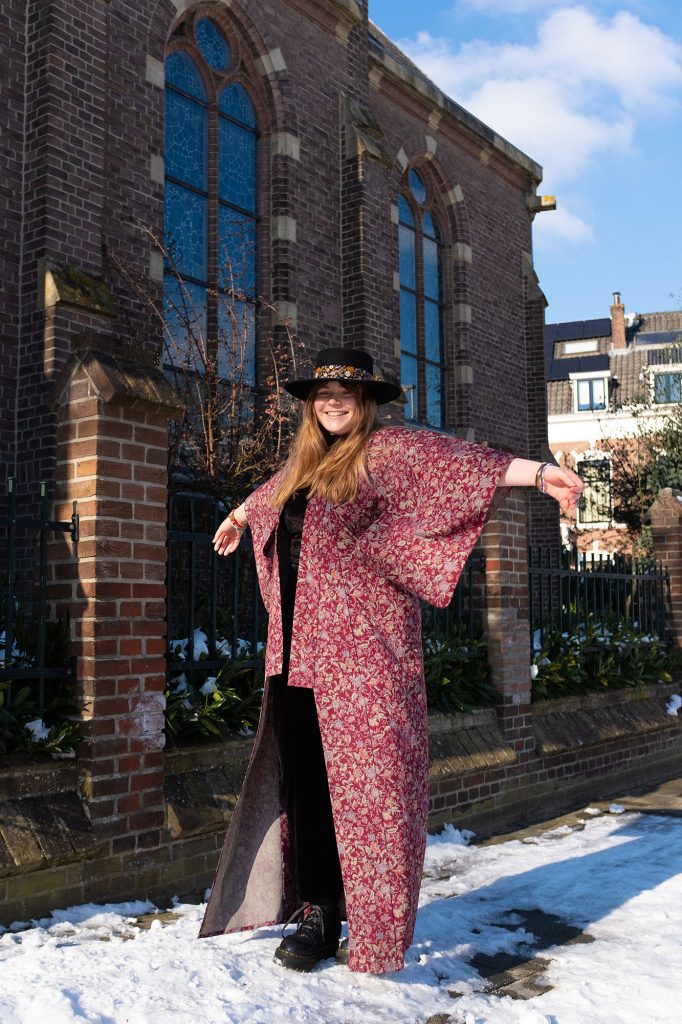
That’s where she found the kimono.
A soft, fluid piece posted by a small local vintage store. Not algorithmically pushed. Not globally distributed. Just quietly photographed and uploaded.
Buying it was not just a style decision. It was an act of support — a way to keep small businesses breathing during a time when breathing felt fragile.
The kimono arrived folded carefully, like a message.
Thrifting as Resistance
Secondhand fashion has long oscillated between necessity and rebellion.
In the post-war decades, thrift stores were associated with economic limitation. Later, in the 1970s and 80s, subcultures reclaimed them — punks, artists, students — transforming discarded garments into anti-establishment statements. Wearing vintage became a refusal to participate fully in consumer cycles.
Today, thrifting carries yet another layer: sustainability.
The fashion industry is one of the largest polluters globally. Overproduction, textile waste, water consumption — the statistics are no longer obscure. They circulate widely, reshaping how we perceive our closets.
For Cherelle, thrifting is not an aesthetic gimmick. It is a conscious alignment. “There are so many clothes available,” she once said, almost casually. “There’s no need to buy new ones.”
It sounds simple. Almost naive.
But simplicity can be radical.
Because the fashion system thrives on perceived scarcity. Limited drops. Seasonal urgency. Artificial newness. Thrifting disrupts that tempo. It asks you to slow down. To search. To imagine.
It removes immediacy and replaces it with patience.
Vinted and the Digital Flea Market
Of course, the landscape has shifted. Platforms like Vinted have turned secondhand shopping into something both accessible and vast. The flea market now lives in your pocket.
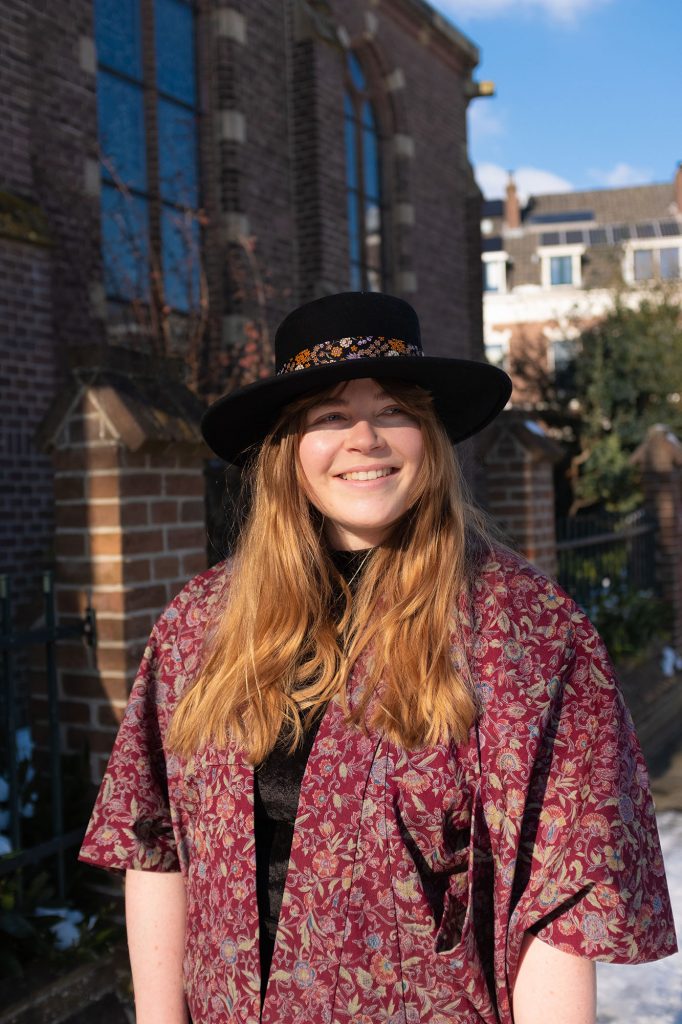
Cherelle found her hat there — a piece that completed her lockdown outfit without introducing anything newly manufactured into the world.
There is something quietly revolutionary about assembling an entirely “new” look without contributing to new production.
And yet, digital thrifting carries its own paradox. It can replicate the speed and volume of fast fashion if we let it. Endless scrolling. Impulse buys. Packages arriving daily.
The difference lies in intention.
Cherelle does not scroll mindlessly. She searches with clarity. She knows her palette. She knows her silhouettes. She knows what she is missing — and what she absolutely does not need.
That discernment is rare.
The Spring Outfit That Felt Like Hope
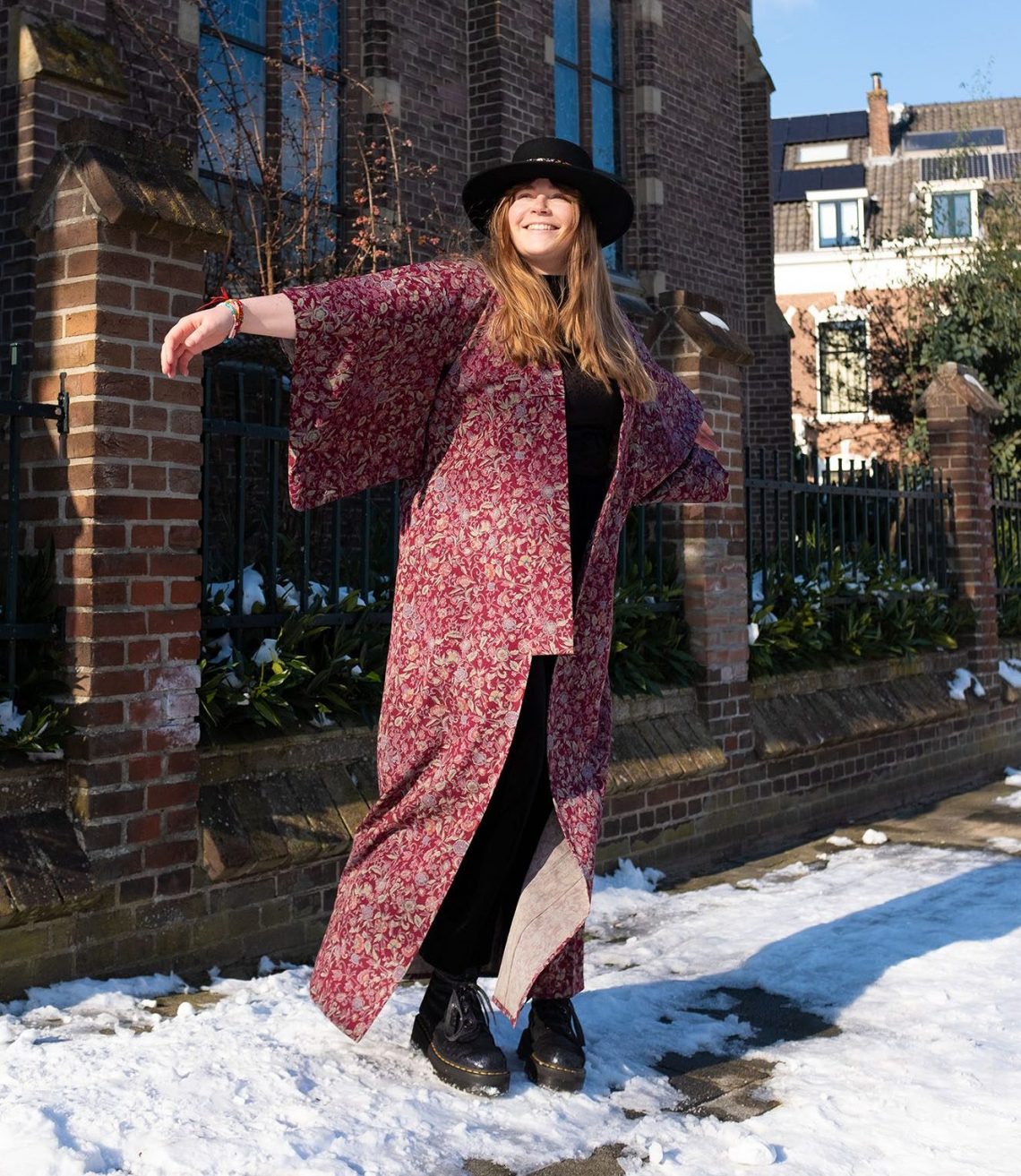
When I saw her in that kimono — paired with thrifted trousers, the Vinted hat tilted just slightly — it radiated something beyond style.
It felt like spring.
Not in the cliché sense of florals and pastels, but in the deeper sense of renewal. An outfit built from existing materials, existing histories, yet arranged in a way that felt fresh.
There is a metaphor there, if you look for it.
During lockdown, many of us were forced to reassemble our routines from fragments. Work from home. Exercise in living rooms. Celebrate birthdays over screens. We learned to recombine what was already available.
Cherelle’s outfit mirrored that process.
She did not wait for stores to reopen. She did not wait for new collections. She worked with what existed.
And that is the essence of thrifting: seeing potential in what others overlook.
The Eye That Sees Beyond the Stain
One of the first things I learned from her in the vintage store was this: ignore the hanger.
A garment on a wire hanger under fluorescent lighting rarely reveals its full character. You must lift it. Feel its weight. Imagine it styled differently.
Most shoppers look for perfection — pristine fabric, current cuts, immediate appeal.
Cherelle looks for possibility.
A slightly oversized blazer becomes a statement with rolled sleeves. A long skirt becomes modern when paired with sneakers. A dated blouse transforms when layered under something unexpected.
This capacity to envision transformation is not just aesthetic. It is philosophical.
In a culture obsessed with the new, thrifting teaches reinterpretation.
It suggests that value is not inherent in novelty, but in perspective.
Supporting Local, Preserving Stories
There is also intimacy in buying from local vintage shops — especially during difficult times. Each purchase supports not just a business, but a curator. Someone who selected that garment, steamed it, photographed it, described it.
In large retail chains, clothes are anonymous. They arrive in bulk. They hang in repetition.
In vintage stores, each piece feels singular.
The kimono Cherelle found had already lived another life. Perhaps many. It carried unknown stories — dinners, dates, travels — now layered with her own.
Fashion historians often speak about garments as archives. Fabric preserves gestures. Seams remember movement.
When we thrift, we participate in that archive.
We do not erase the past; we extend it.
Why She Is the Thrifting Queen (And Why That Matters)
Calling someone a “thrifting queen” might sound playful, but there is expertise behind it.
It requires patience in a world that rewards speed. It requires creativity in a culture that offers pre-styled mannequins. It requires ethical reflection in an industry designed for impulse.
Cherelle embodies that combination effortlessly. Not preachy. Not self-righteous. Just consistent.
She proves that style does not demand constant newness. That you can look current without being current. That you can support small businesses while expressing personal aesthetics.
And perhaps most importantly, she demonstrates that fashion can be joyful without being wasteful.
What I Learned From Watching Her
Working beside her years ago, I absorbed lessons I did not fully appreciate at the time.
Slow down.
Touch the fabric.
Ignore the label.
Imagine the outfit beyond the hanger.
These principles extend beyond clothing.
They shape how you move through culture. How you consume. How you create.
In an era where algorithms predict what we might like before we know it ourselves, thrifting reintroduces surprise. It allows serendipity back into the equation.
You cannot filter a rack of mixed decades with a search bar. You must be present.
Cherelle is always present when she shops. Focused. Curious. Attentive.
That attentiveness is what makes her outfits feel alive.
When I think about her lockdown kimono, I do not just see fabric. I see adaptation. Support. Creativity under constraint.
I see someone who refuses to let closed doors dictate closed possibilities.
And maybe that is the real treasure she finds — not just beautiful garments, but new ways to assemble meaning from what already exists.
In a world drowning in excess, that feels quietly radical.
And undeniably regal.