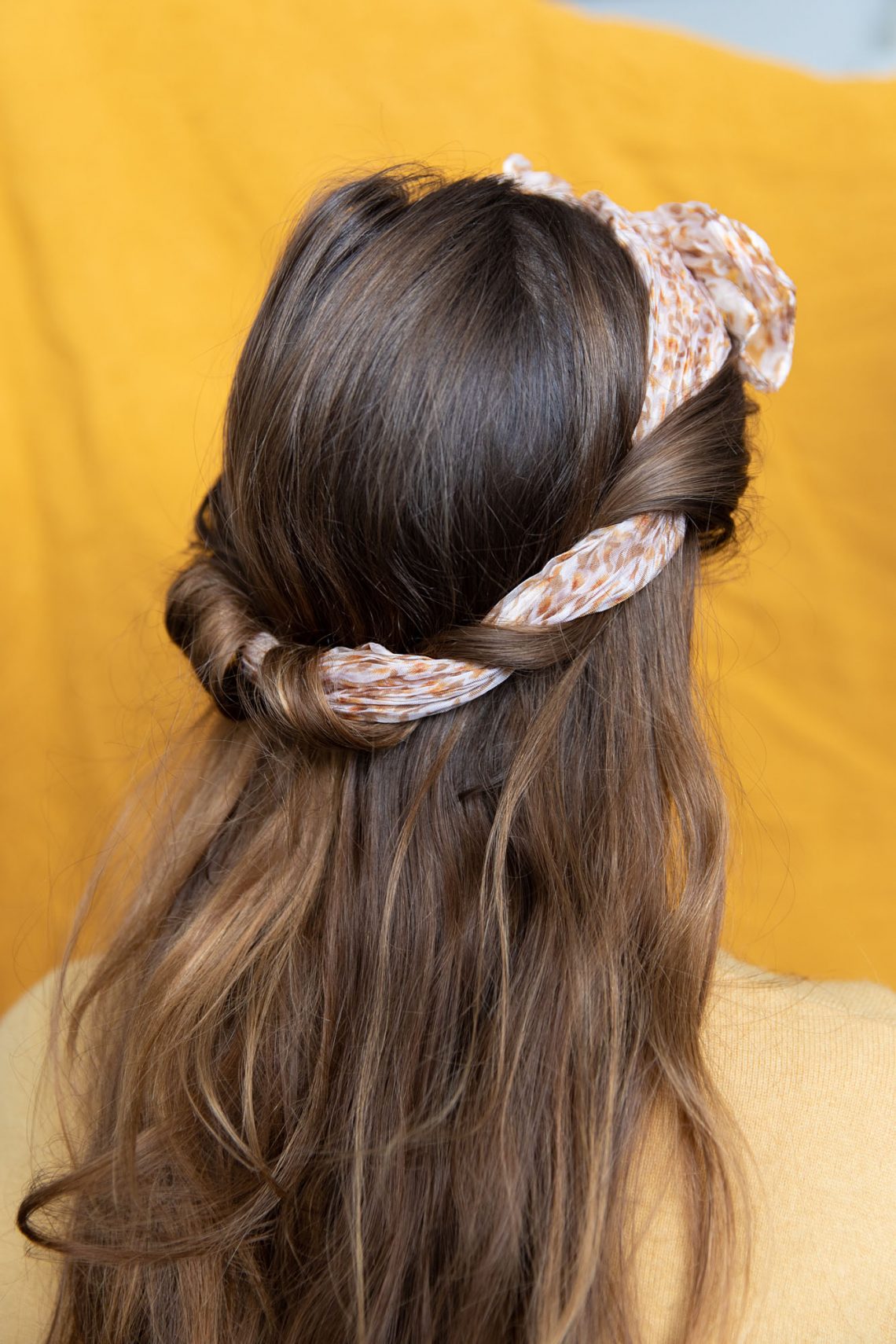
There was a moment — somewhere between the third banana bread and the fifteenth postponed plan — when I realized my hair had quietly staged a rebellion.
It grew. It expanded. It frizzed in directions I had not approved. Without the regular punctuation of salon visits, trims, and small talk under fluorescent lights, it began to tell time differently. Slower. Wilder. Less disciplined.
Lockdown did that to many of us. We lost structure, and our hair followed.
And since most of us do not share our living room with a hairdresser (if you do, please know I envy you in a very civilized way), we had to negotiate with what was on our heads. Not fight it. Not shame it. Negotiate.
I did not want to cut it myself. I did not trust myself with scissors. Instead, I reached for fabric.
A scarf — humble, overlooked, historically dramatic — became my quiet accomplice.
Because hair, like mood, can be reframed.
And perhaps that was the real lesson of lockdown style: not reinvention, but reinterpretation.
1. The Messy Braid That Pretends It Was Intentional
There is something deeply reassuring about a messy braid. It says: I woke up like this. It also says: I absolutely did not wake up like this.
I love it because it disguises everything. Split ends, uneven layers, the existential crisis hiding near the crown of my head.
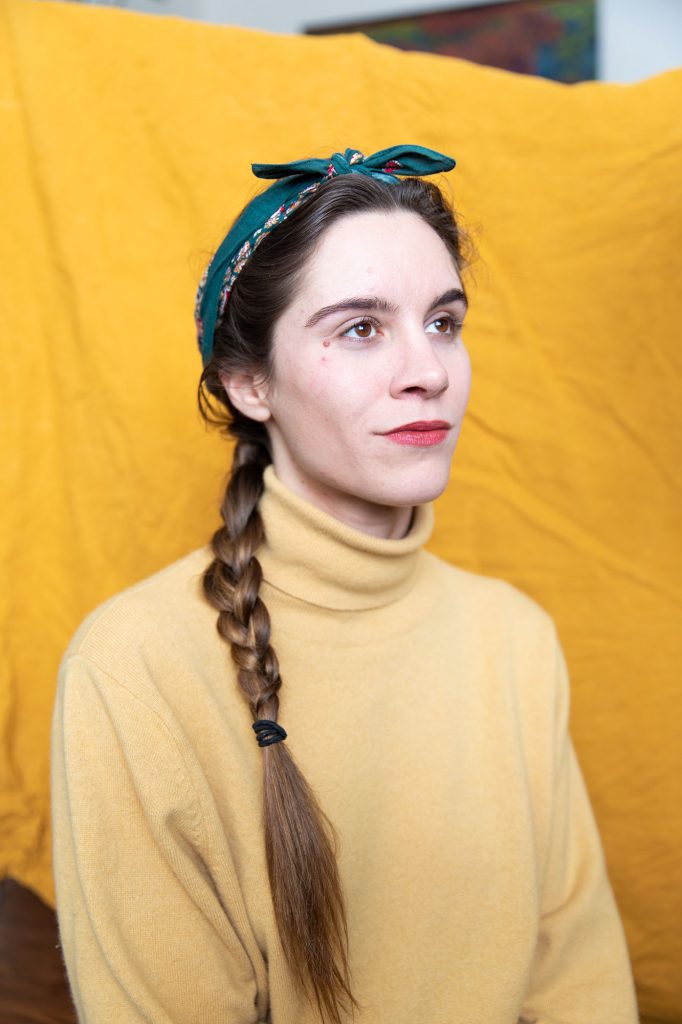
Braid your hair loosely. Leave pieces out. Do not aim for perfection; perfection is not invited.
Then slide a scarf — folded into a headband — over your head.
Suddenly the braid becomes deliberate. Framed. Composed.
In Renaissance portraits, women often wore their hair partially concealed, partially revealed. There was always an element of softness — an understanding that beauty lives in suggestion. A scarf does the same. It edits without erasing.
And in the era of Zoom rectangles and pixelated intimacy, that small frame around your face becomes surprisingly powerful.
You are no longer someone who did not wash her hair.
You are someone who styled it.
2. The Half-Bun (Yes, I Know) — But With a Twist
The half-bun divides opinions. It is the pineapple pizza of hairstyles.
But hear me out.
Volume at the crown creates lift. Lift creates energy. Energy creates the illusion that you slept eight hours and drank water like a responsible adult.
Place your scarf about two centimeters behind your hairline. Not too forward — that reads accidental. Not too far back — that reads medieval monk.
Take a section from the left, loop it gently through the scarf. Repeat on the right.
The movement feels almost ceremonial. Like threading something through memory.
The result is softer than a standard half-bun. More romantic. Slightly Pre-Raphaelite. If Dante Gabriel Rossetti had access to cotton bandanas, I suspect he would have approved.
There is something historically cyclical about head adornments. From 1920s silk wraps to 1970s bohemian bands, fabric around the head signals a kind of quiet resistance to uniformity. During lockdown, when days blurred into each other, this small ritual restored difference.
A twist. A loop. A decision.
3. Long Hippie Hair, Don’t Care — Except I Do Care
Let’s be honest: long hair in confinement can feel less “ethereal muse” and more “forgotten attic.”
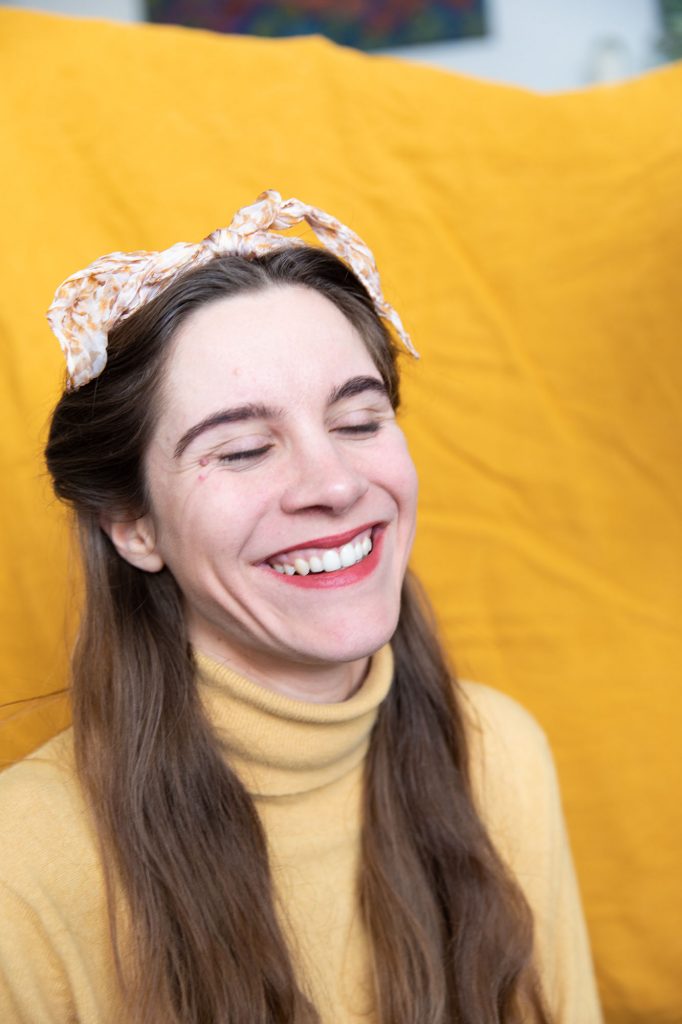
But the oversized scarf — the larger, softer one — changes the narrative.
Place it behind your head. Bring the ends forward. Twist them together. Then carry them back again and secure with a pin.
It is practical. It keeps ears warm. It hides unwashed roots. But it also evokes something else.
The late 1960s were not only about rebellion; they were about reclaiming natural form. Long, unstructured hair became political. It rejected the rigid geometry of previous decades.
During lockdown, our hair did something similar. It grew because it could. Because no one was policing it. Because time had loosened.
Wrapping it gently instead of forcing it into compliance feels almost symbolic.
You are not suppressing the chaos. You are framing it.
And framing is power.
4. The Bandana Crown (For Oily Days and Emotional Honesty)
There are days when washing your hair feels like climbing a philosophical mountain.
On those days, the bandana is not an accessory. It is mercy.
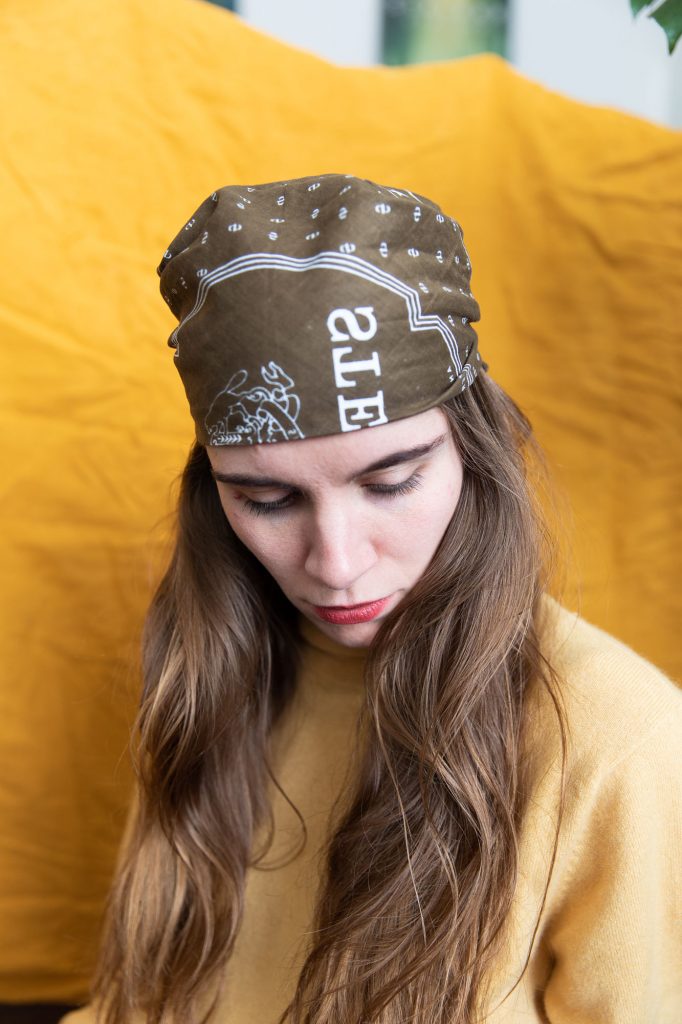
Fold it into a triangle. Place it at the front of your head. Tie it at the back.
Instant transformation.
The silhouette changes. The problem disappears. The narrative shifts.
Headscarves have carried layered meanings across cultures — modesty, status, rebellion, identity. In Western fashion cycles, the bandana in particular oscillates between working-class practicality and runway irony.
On your living-room floor, it is simply functional chic.
And perhaps that is enough.
There is dignity in not pretending you have energy you do not possess.
The bandana says: I am tired, but I am still here.
5. The Big Bun (A Study in Structural Engineering)
The oversized bun is the unofficial emblem of staying home.
It is architecture.
Gather everything upward. Twist. Secure.
Now introduce a colorful scarf around the base.
What was previously “I gave up” becomes “I curated.”
The scarf at the base adds proportion. It creates visual weight. It suggests intention.
In classical sculpture, drapery is never random. It guides the eye. It balances form. Fabric at the base of a bun performs the same function on a smaller, domestic scale.
You may be wearing sweatpants.
You may be surrounded by laundry.
But your bun has structure.
And sometimes structure at the top of your head is enough to restore structure elsewhere.
6. The Ponytail That Refuses to Be Basic
The ponytail is underestimated.
It is efficient. It is athletic. It is democratic.
Add a bandana — tied around the elastic, letting the ends fall — and it shifts from utility to charm.
Movement becomes part of the style. Every turn of your head creates a small flutter of fabric.
There is something cinematic about that.
In old films, scarves in motion signaled departure. Adventure. Transition.
In your kitchen, it might simply signal that you are making coffee.
But why shouldn’t coffee deserve drama?
Why Scarves, Really?
I sometimes think the appeal of scarf-styling during lockdown was not just aesthetic.
It was tactile.
When so much of life moved to screens — flat, cold, pixel-based — fabric reintroduced texture. Cotton, silk, linen. Weight and softness.
Tying a scarf is a small physical ritual. It requires hands. It requires mirrors. It requires noticing your own face.
In isolation, that act becomes grounding.
Historically, head coverings have often marked shifts in circumstance — mourning, celebration, labor, ritual. During lockdown, our circumstances shifted abruptly, invisibly.
Perhaps we reached for scarves because we needed a visible sign that something had changed.
Not just our hair. Our pace. Our priorities. Our understanding of control.
And here is the quiet irony: when salons reopened and trims resumed, many of us kept the scarves.
Because we had learned something.
That style does not require external permission.
That imperfection can be styled rather than corrected.
That fabric is not only decorative — it is narrative.
A Small Confession
There were days I did not style my hair at all.
There were days the scarf sat untouched on the dresser.
But the knowledge that I could transform my reflection with something as simple as a square of fabric was strangely comforting.
It reminded me that reinvention does not always demand drastic change. Sometimes it asks for reinterpretation.
A fold.
A knot.
A decision.
And perhaps that is the larger metaphor of lockdown hair.
It grew because time grew.
It tangled because thoughts tangled.
It softened because we softened.
We did not need to tame it.
We needed to meet it where it was — and gently frame it.
So if your hair forgets the calendar again, let it.
Find a scarf.
Stand in front of the mirror.
And tie yourself back into the day.