Tights are the plastic straws of fashion.
Small. Convenient. Used without much thought. Ripped, discarded, replaced.
And like plastic straws, they feel harmless—until you multiply them by billions.
Each year, around two billion pairs of tights are produced. Most of them made with elastane. Most of them worn a handful of times. Many of them torn on first contact with a fingernail, a zipper, a slightly sharp winter breeze.
I used to buy the cheapest ones. Not because I didn’t care, but because they felt temporary by nature. Who invests in something so fragile?
The bar was low. If they survived the first day, I was impressed.
To be fair, I am not gentle with life. I climb trees. I sit on rough stone walls. I cross my legs on wooden benches as if fabric were indestructible. Cheap tights and a slightly chaotic personality are not a good combination.
But even when I upgraded to more expensive brands, I ran into the same truth: it’s still delicate. It’s still elastane. And elastane, for all its comfort and stretch, is petroleum-based. It doesn’t biodegrade. It lingers.
At some point, during my slow shift toward a more conscious wardrobe, I realized tights were the blind spot I kept ignoring.
It felt inconsistent. I was scrutinizing cotton origins and factory conditions, and yet I was throwing away sheer nylon without blinking.
That cognitive dissonance bothered me.
So I started asking two questions:
- Can I buy better ones?
- Can I make them last longer?
The second question turned out to be more interesting.
The Hidden Politics of a Thin Layer
It’s strange how something so thin can carry so much weight.
Tights sit between your skin and the world. They shape the line of your legs. They protect you from cold pavements and social expectations. They are often invisible, yet deeply coded.
In the mid-20th century, stockings were luxury items. Carefully mended. Stored with intention. A ladder was not an excuse to throw them away—it was a small tragedy to be repaired.
Then came mass production. Synthetic fibers. Fast fashion.
And suddenly, tights became disposable.
There’s something telling about that shift. When production accelerates, care declines. The cheaper something is, the less we feel obligated to respect it.
But the environmental cost didn’t shrink with the price.
Elastane is a form of plastic. Washing tights releases microfibers. Discarding them adds to landfill layers that will outlive us. When we talk about the textile industry being one of the most polluting sectors globally, tights are quietly part of that statistic.
It’s uncomfortable to confront.
But discomfort is often the beginning of change.

Step One: Buy Fewer, Buy Better
Before we even get to care tips, there is a foundational decision.
Stop treating tights as an impulse purchase at the checkout line.
I remember the first time I bought tights made from recycled yarn. I hesitated at the price. Twenty to thirty euros for something that could technically rip tomorrow?
It felt irrational.
But then I recalculated. If a five-euro pair lasts two wears, and a higher-quality pair lasts an entire winter—perhaps longer—the equation changes.
More importantly, the mindset changes.
When you invest more, you automatically handle with more care. You slow down when putting them on. You wash them intentionally. You don’t throw them in with jeans and metal zippers.
And that shift alone extends their life.
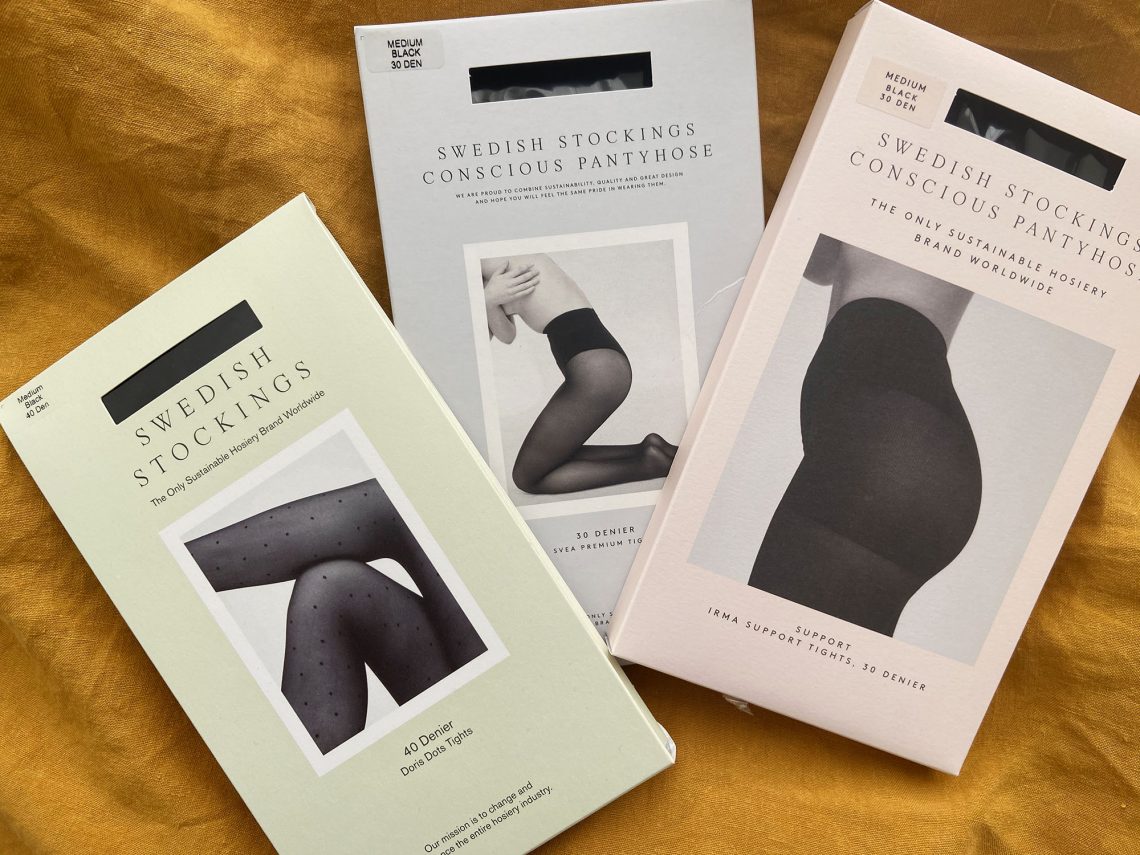
There are brands now producing tights from recycled materials, using improved dye processes, treating wastewater responsibly. They are not perfect solutions—synthetics remain synthetics—but they are an attempt to reconfigure the system.
Buying better tights will not save the planet. But it will reduce the frequency with which you contribute to the problem.
And sometimes, reduction is the most honest form of progress.
How to Make Your Tights Last (Without Losing Your Sanity)
Now for the practical part.
Because good intentions are useless if your tights ladder before breakfast.
These are the habits that genuinely made a difference for me.
1. Size Up—Yes, Really
It sounds counterintuitive.
We’re trained to buy our exact size, to optimize fit. But tights are under constant tension. Every step stretches them. Every bend tests the fiber’s elasticity.
If they are already operating at maximum stretch the moment you put them on, they have no margin.
Buying one size up gives the yarn room to breathe.
It reduces strain across thighs and hips. It decreases the risk of micro-tears that eventually become full ladders.
I used to ignore the size chart. Now I study it. And more often than not, I go one size higher than instinct suggests.
The result? Fewer surprise rips when sitting down.
2. Pre-Stretching: A Small Ritual
Before you put them on, gently stretch them.
Place one hand at the foot, the other near the waistband, and carefully pull them apart—softly, not aggressively. Think of it as waking the fibers up.
This small action mobilizes the yarn. It prepares the elastane to adapt to your body rather than resist it.
It takes ten seconds.
But it reduces that sudden shock of expansion when you first step in.
It’s almost meditative. A reminder that even small garments deserve attention.
3. One Leg at a Time, Slowly
This is where impatience usually ruins everything.
We’re in a hurry. We grab the waistband and yank. We forget about rings, rough nails, tiny cracks in our skin.
Instead:
Scrunch one leg of the tights down to the foot. Insert your foot gently. Pull up slowly to the knee. Stop. Repeat on the other side.
Only once both legs are secured to the knee do you pull them up over your thighs and hips.
This method ensures the fabric is distributed evenly. It avoids overstretching one section while another remains bunched.
And yes, it feels slightly old-fashioned.
But so does mending. And we’re trying to bring back a bit of that mentality.
Also: check your nails. Smooth them. Remove sharp jewelry. Tiny details matter when you’re dealing with fine yarn.
4. Wash Them Like You Care
Most damage happens in the washing machine.
Heat breaks down elastane. Agitation causes friction. Zippers and hooks are silent enemies.
Handwashing in cold water is ideal. It sounds inconvenient, but tights are small. It takes five minutes.
If you must machine wash, use a mesh garment bag. Delicate cycle. 30°C maximum. No fabric softener—softeners weaken elastane over time.
After washing, never wring them out. Instead, roll them in a towel to absorb excess water. Lay flat or hang gently to dry.
Heat from dryers is essentially a death sentence for tights.
And here’s something I had to unlearn:
You don’t need to wash them after every wear.
Unless they’re visibly dirty or you’ve had an especially intense day, tights can be worn multiple times. Some brands recommend five to six wears before washing.
I’m still not that brave. But extending from one wear to three already cuts washing—and wear—dramatically.
5. Rotate Your Pairs
If you own multiple pairs, rotate them.
Wearing the same tights every day increases strain and frequency of washing. Giving them rest allows fibers to recover their elasticity.
It sounds almost anthropomorphic—to let your tights rest—but elastane benefits from recovery time.
And when something costs more, you’re more inclined to treat it like part of a system rather than a disposable tool.
The Emotional Layer
There is something oddly symbolic about caring for tights.
They are fragile. Invisible under skirts and dresses. Often unnoticed unless something goes wrong.
Perhaps that’s why we neglect them.
But when I began extending their life—when a pair survived an entire winter, then another—I felt a small, disproportionate satisfaction.
It wasn’t just about saving money.
It was about resisting a pattern.
We live in a culture that normalizes breakage. Phone cracks? Replace. Trend shifts? Replace. Fabric tears? Replace.
Choosing repair, maintenance, and longevity—even in something as humble as tights—feels like practicing a different rhythm.
A slower one.
One where objects are allowed to age instead of fail immediately.
Keeping Warm Without Compromise
Let’s not forget why we wear tights in the first place: cold legs are miserable.
And while bare legs might look beautiful in editorial photos, most of us are not walking through winter streets at zero degrees without consequences.
Investing in higher-denier tights for colder months reduces the temptation to double-layer cheap ones (which usually leads to more friction and faster damage).
Opaque 40 or 60 denier pairs are often sturdier. They hide minor imperfections. They hold warmth better.
The thicker the yarn, the less likely a tiny snag becomes catastrophic.
If you care about style, consider tights part of the outfit rather than an afterthought. Deep burgundy under a black dress. Navy beneath a grey skirt. Texture under minimalism.
When tights feel intentional, you’re more inclined to protect them.
A Small Shift, Multiplied
On their own, tights are not the largest environmental offender.
But habits compound.
If two billion pairs are produced annually, even a modest increase in lifespan—doubling average wears, for example—would significantly reduce production demand.
And that’s the quiet power of maintenance.
You don’t need a perfectly sustainable wardrobe to participate in change.
You need small, repeated acts of care.
Choosing one size bigger.
Stretching before wearing.
Washing less often.
Buying fewer pairs.
It won’t make headlines.
But it will make your tights last longer.
And perhaps, in the process, it will shift how you treat other things too.
Because once you learn to care for the most fragile layer in your wardrobe, it becomes harder to accept disposability anywhere else.
And that, I think, is where real sustainability begins.