Laundry feels harmless. Almost domestic in the most innocent sense of the word. A quiet Sunday ritual. A background activity while you answer emails, cook pasta, or stare out the window pretending to be productive.
And yet, every time you press start, something invisible leaves your home.
Not stains.
Not detergent.
Plastic.
By 2050, there will be more plastic than fish in our oceans. That sentence has been repeated so often it risks becoming abstract, like a dystopian slogan printed on a tote bag. We imagine straws, bottles, packaging—things we can point at, shame, refuse.
What we don’t imagine is our wardrobe.
The Plastic You Can’t See Is the One That Stays
Most of us have learned the visible rules of sustainability. Bring your reusable cup. Refuse plastic bags. Buy shampoo bars that look good on your bathroom shelf. These gestures are tangible. They feel clean. They photograph well.
Microplastics don’t.
Up to 64% of new fabrics are made from plastic-based fibres: polyester, nylon, acrylic, polyamide. Materials that feel soft, technical, modern. Materials that stretch, dry fast, survive trends—and, inconveniently, survive everything else too.
Every wash releases millions of microscopic fibres. They’re too small to be filtered out by wastewater treatment plants. Too small to scoop up during beach clean-ups. They flow straight into rivers, seas, bodies.
Fish eat them. Smaller organisms eat the fish. The circle closes quietly.
Plastic doesn’t disappear. It just gets better at hiding.
Why Synthetic Fabrics Took Over in the First Place
To understand why your laundry is part of the problem, you have to understand why plastic fabrics became normal.
They’re cheap.
They’re efficient.
They’re obedient.
Synthetic fibres behave well in industrial systems. They don’t wrinkle easily. They survive long shipping routes. They adapt to trend cycles and mass production. They made fast fashion possible.
Natural fibres, on the other hand, are stubborn. Cotton creases. Wool shrinks. Linen demands patience. They resist the logic of speed.
So we traded inconvenience for convenience—and outsourced the consequences to places we don’t see.
The Impossible Ideal of a Plastic-Free Closet
In theory, the solution sounds easy: stop buying synthetic fibres.
In practice, it’s messy.
What about sportswear?
What about raincoats?
What about the clothes you already own?
I don’t believe sustainability lives in dramatic overhauls. Throwing away half your wardrobe because it contains polyester doesn’t save the planet—it just creates a different kind of waste.
Real sustainability starts where you are. With what you already have.
And, inconveniently, with your washing machine.
Washing Is the Real Damage Point
The harm doesn’t happen when you wear your polyester sweater. It happens when you clean it.
Heat, friction, water—all perfect conditions for microfibres to break loose. The more aggressive the wash, the more fibres escape.
Which means: how you wash matters more than you think.
This is where the story gets practical without becoming preachy.
The Guppyfriend (And Why It’s Not a Gimmick)
I’m skeptical by nature. Especially when sustainability comes in product form. But some solutions are quietly effective rather than performative.
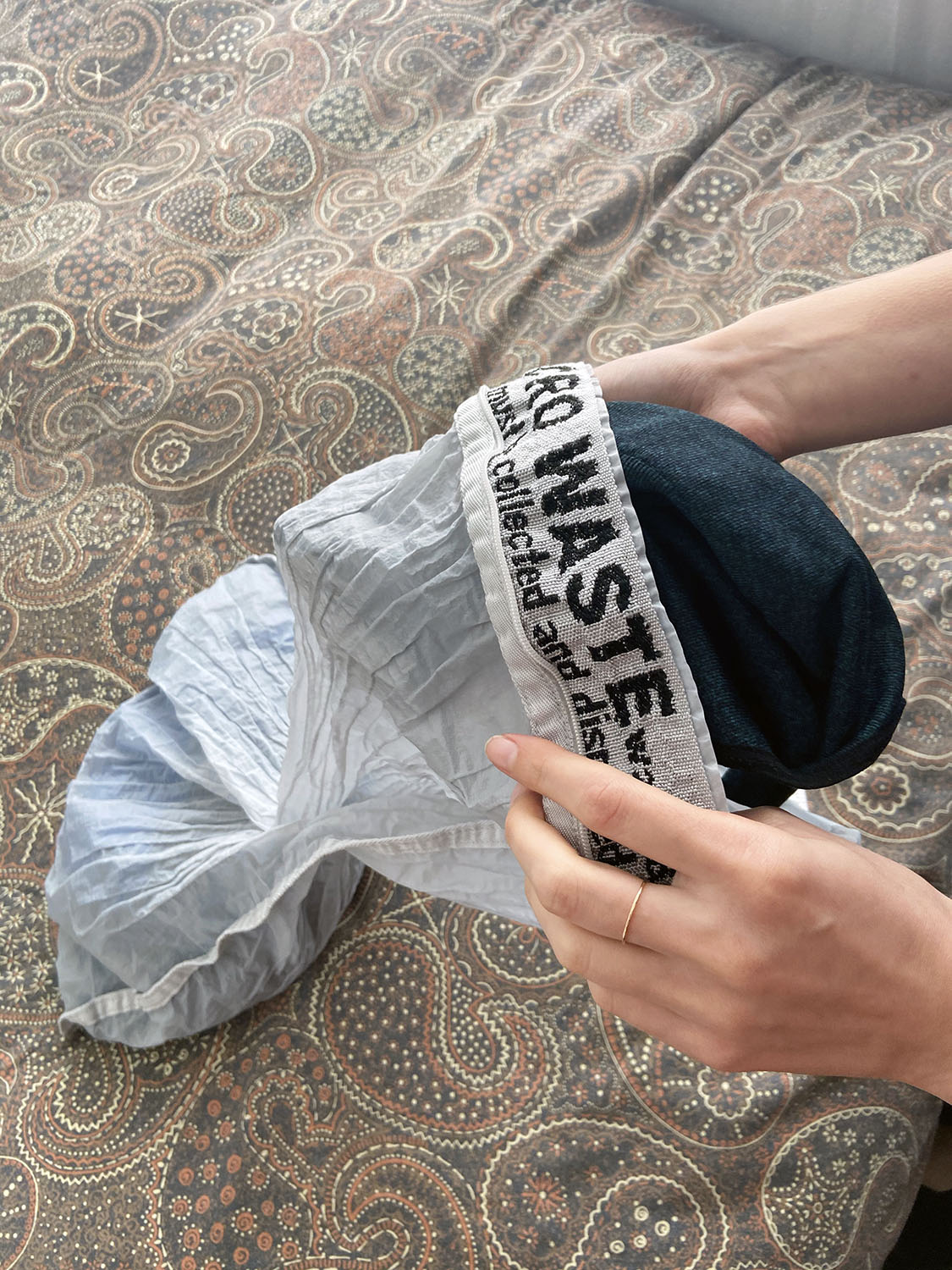
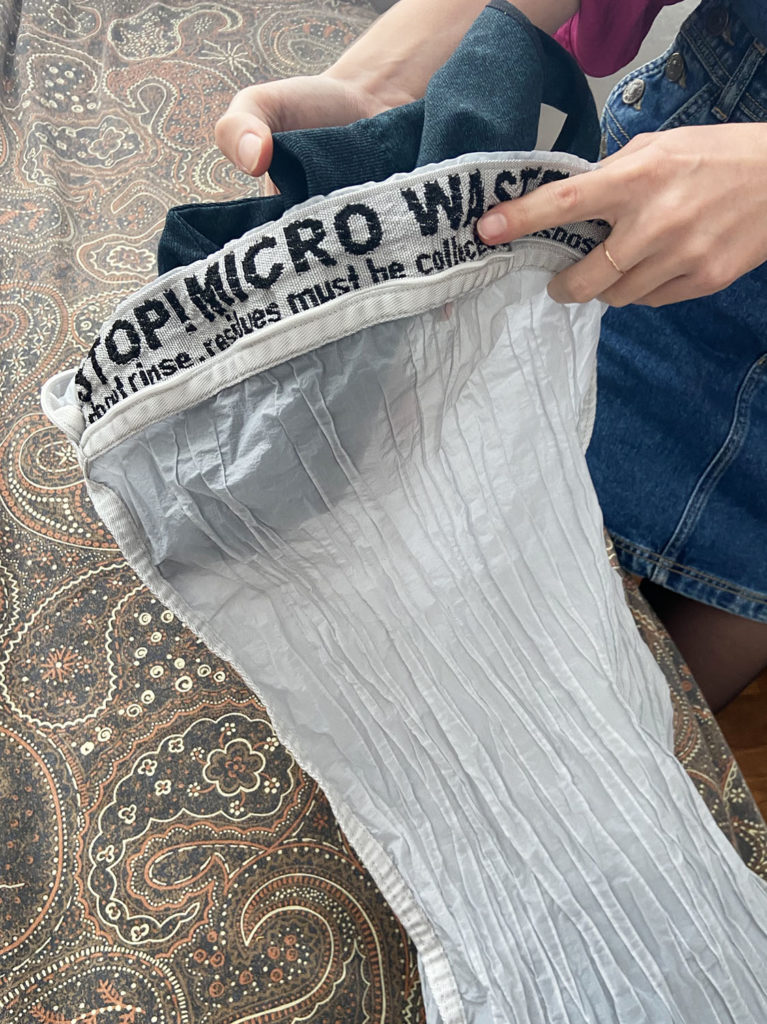
The Guppyfriend washing bag is one of them.
It looks simple—almost underwhelming. A mesh bag you put your synthetic clothes in before washing. But the material matters. Unlike regular laundry bags, it’s made from monofilaments that don’t shed fibres themselves.
The bag reduces friction. The fibres that do break off get trapped inside instead of flowing into the water system.
Every time I use it, I find tiny threads collected in the corners. Proof that something was caught. Proof that something didn’t escape.
Those fibres go into residual waste, preferably sealed. It’s not perfect. But it’s contained. And containment is the point.
Small Adjustments That Actually Matter
You don’t need to turn your laundry routine into a moral battlefield. But a few shifts make a real difference:
- Wash less often. Clothes don’t need to be cleaned after every wear. Especially synthetics.
- Lower temperatures. Heat increases fibre shedding.
- Gentler cycles. Less friction, fewer broken fibres.
- Full loads. Fewer washes, less overall release.
- Liquid detergent. Powder can increase abrasion.
None of these require buying new things. They just require slowing down.
Which, in itself, feels quietly radical.
But What About “Sustainable” Synthetic Clothing?
This is where the conversation gets uncomfortable.
Recycled polyester. Ocean plastic turned into leggings. Waste rebranded as virtue.
Opinions differ. Some argue it’s greenwashing. Others see it as harm reduction.
I fall somewhere in between.
Is it ideal to turn plastic into clothing that will eventually shed microfibres again? No.
Is it better than leaving plastic in the ocean? Probably.
Brands like EcoAlf work with recovered waste, turning it into functional garments. It’s not a final solution—but it’s an interim one. A holding pattern while better materials are developed.
Sustainability isn’t about purity. It’s about direction.
The Cultural Blind Spot Around Laundry
Laundry has always been invisible labour. Historically feminized. Hidden in basements, attics, back rooms. Something that happens between the meaningful parts of life.
That invisibility makes it easy to ignore its impact.
We talk endlessly about what we buy. Rarely about how we maintain it.
But care is where values show up consistently. Not in declarations. In routines.
The way you wash your clothes says more about your relationship to consumption than the slogans on your tote bag.
You Don’t Have to Be Perfect to Be Responsible
It’s tempting to frame sustainability as a checklist. To turn it into a competition. Who’s plastic-free. Who’s pure.
That mindset exhausts people. And exhausted people give up.
You don’t need a flawless wardrobe. You need awareness.
You need to know that your fleece jacket sheds fibres. That your leggings leave traces. That your washing machine is connected to something much larger than your bathroom.
Once you know that, you can act—quietly, imperfectly, consistently.
The Strange Comfort of Doing Something Small
There’s a particular comfort in solutions that don’t scream for attention.
No dramatic before-and-after. No aesthetic transformation. Just a bag in your laundry basket. A button pressed with slightly more intention than before.
You still wear your clothes.
You still wash them.
But something changes.
Not everything has to be visible to matter.
Sometimes the most meaningful resistance happens in places no one sees—between soap bubbles, spinning drums, and water disappearing down a drain that leads far beyond your home.