I remember the first time I heard that nearly half of the plastic in the Great Pacific Garbage Patch consists of abandoned fishing nets. Forty-six percent. The number lodged itself somewhere uncomfortable. Fishing nets are not the first thing that come to mind when we talk about plastic straws or disposable cups. Nets feel almost noble — tools of labor, symbols of tradition, sun-bleached and cinematic. And yet they drift, they suffocate, they kill long after they’ve been discarded. They become what the industry calls “ghost gear,” as if giving them a poetic name makes their violence gentler.
If you’ve watched Seaspiracy, you know the oceans are not simply “struggling.” They are unraveling. Overfishing, biodiversity collapse, plastic soup swirling in gyres the size of countries. It is overwhelming. And in moments like that, I oscillate between two impulses: retreat into personal purity — eat plant-based, refuse plastic, opt out — or look for imperfect collaborations that try to mend what is already broken.
That is how I found myself reading about Ecoalf.
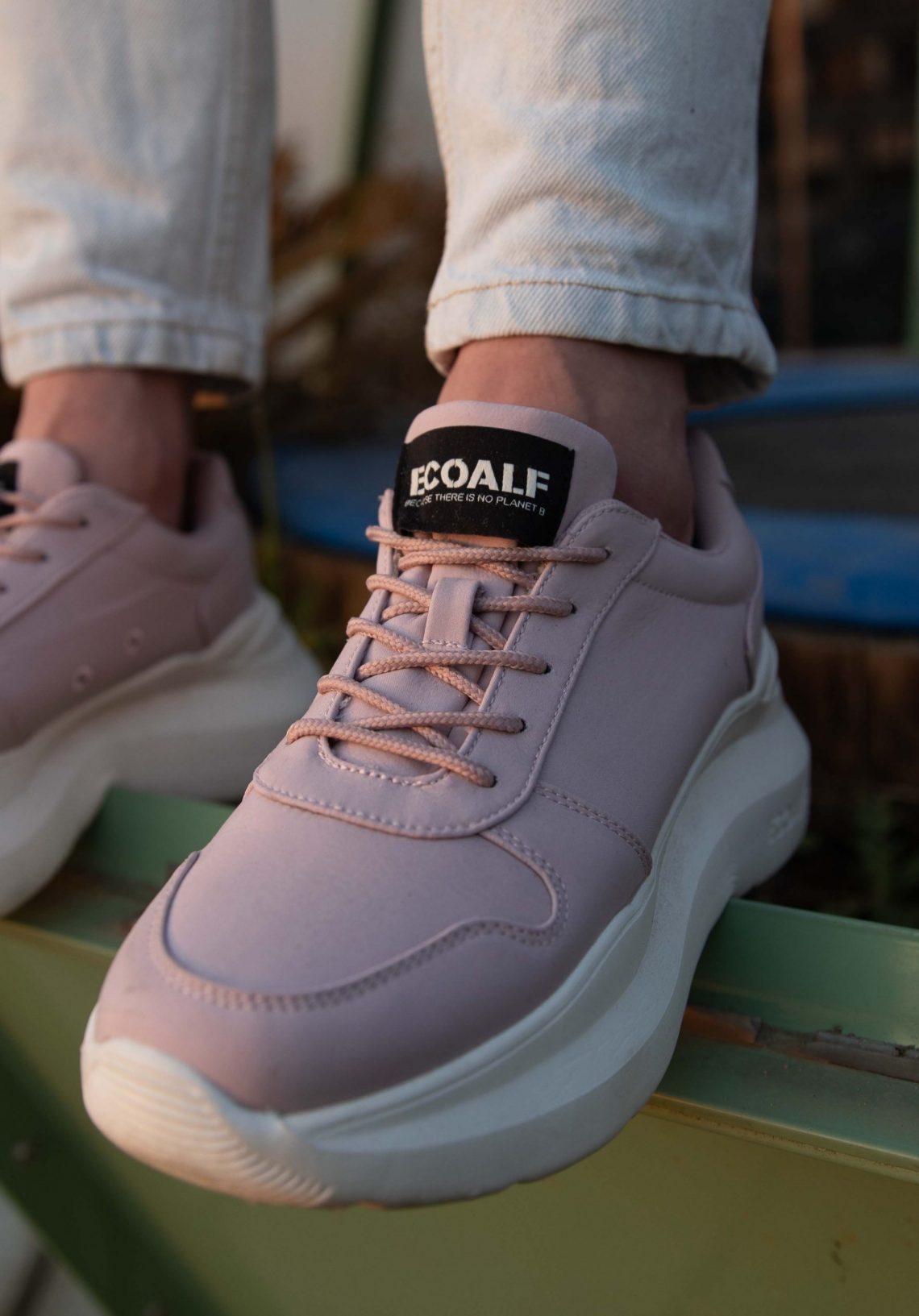
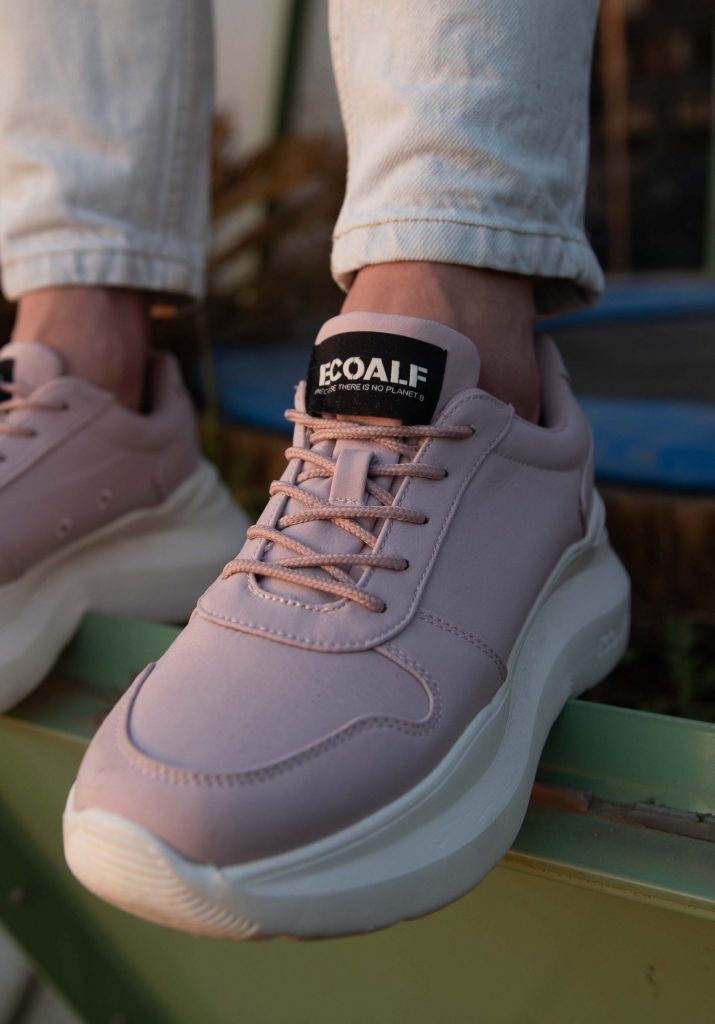
Ecoalf does something that sounds almost mythological at first: it turns ocean waste into clothing. Old fishing nets, plastic bottles, discarded debris pulled from the sea floor — all of it becomes nylon yarn, jackets, sneakers, sportswear. The slogan practically writes itself: from waste to wardrobe. But as with most things that sound too neat, the reality is layered.
The brand works with thousands of fishermen who collect the plastic caught in their nets instead of throwing it back into the water. The waste is sorted, processed, transformed into recycled nylon. They also use secondhand cotton and even recycled tires for flip-flop soles. Energy and water savings are substantial compared to virgin materials. Animals are spared from entanglement. The ocean floor is, piece by piece, relieved.
On paper, it is compelling. But I didn’t approach it on paper. I approached it as someone who lives plant-based and feels uneasy about the fishing industry. I don’t romanticize it. I know what trawling does to ecosystems. I know what bycatch means. And here was a brand proudly collaborating with that same industry.
This is where the moral friction begins.
We like our sustainability stories clean. Heroes and villains. Solutions without compromise. But environmental repair rarely happens in a vacuum. It happens inside messy systems. Ecoalf is not boycotting fishermen; it is partnering with them. It is saying: if this industry exists — and it does — then let’s redirect part of its impact toward restoration.
In an ideal world, we would drastically reduce seafood consumption. The oceans would regenerate. Ghost nets would not exist because industrial fishing would not operate at its current scale. In that world, perhaps Ecoalf would be unnecessary. But we are not living there.
We are living in a world where plastic is already in the sea.
So the question becomes less about purity and more about pragmatism. Is it better to leave the plastic where it floats and strangles? Or to retrieve it and reincarnate it into something useful, even if that something is a jacket or a pair of trainers?
I find myself thinking of this transformation almost symbolically. Fishing nets, once instruments of extraction, become fabric that covers and warms. Tires, once propelling cars along asphalt, soften into soles. There is something alchemical in that shift — from exploitation to utility, from waste to wearability.
Yet there is another layer that complicates the narrative: microfibers. Recycled plastic clothing, like all synthetic textiles, sheds tiny fibers during washing. These microplastics enter waterways and eventually return to the ocean. Some argue that turning plastic into garments merely delays its return to the environment in a different form.
They are not wrong.
When I pull on a recycled polyester sports top, I am aware that its life cycle is not magically circular. It is an improvement, yes — less virgin oil extracted, less waste drifting at sea — but it is not a utopia stitched in thread. It is a compromise.
And perhaps this is the most honest way to approach sustainable fashion: as a series of negotiated compromises rather than absolutes.
Ecoalf’s sportswear line fascinates me precisely because it sits at the intersection of performance culture and environmental urgency. We demand breathable fabrics, moisture-wicking properties, durability. These demands historically tied us to synthetics. Now, those same synthetics are being reclaimed from waste. The gym becomes, unintentionally, part of an ecological narrative. The body in motion wearing the residue of ocean debris.
There is something unsettling and poetic about that.
We talk often about “voting with your wallet.” The phrase is repeated so frequently it risks becoming hollow. But what does it mean in this context? To buy from a brand collaborating with fishermen to reduce ocean waste is to acknowledge that change can emerge from within problematic systems. It is to support remediation over retreat.
And yet, I feel the tension every time I think about it. My plant-based ethics whisper: do not legitimize an industry that harms marine life. My pragmatic side counters: if fishermen are already at sea, isn’t it efficient for them to retrieve plastic rather than sending separate ships solely for cleanup? Isn’t awareness among those directly interacting with the ocean potentially transformative?
Sustainability, I am learning, is rarely about being morally unblemished. It is about staying in the discomfort long enough to choose the option that does the most good in an imperfect reality.
I imagine a fisherman pulling in his nets and finding not only fish but bottles, ropes, fragments of packaging. For decades, perhaps those items were tossed back — an annoyance, an inconvenience. Now, through initiatives like Ecoalf’s, that “waste” has value. It is collected, stored, sold, processed. The narrative shifts: plastic is not invisible. It is tangible, countable, monetizable.
Value changes behavior. Awareness changes culture.
This does not absolve the industry of its environmental footprint. But it introduces a crack in the wall — a space where dialogue and responsibility can enter. And sometimes, systemic change begins with such cracks rather than with grand revolutions.
There is also something deeply contemporary about wearing ocean waste. It forces us to confront the material reality of our consumption. We cannot pretend plastic disappears once discarded. It returns — in gyres, in fish stomachs, in microfibers, in fabric.
When I run my fingers over a jacket made from recycled nylon, I am touching a former net. That knowledge alters the intimacy of clothing. Fashion is no longer only aesthetic; it is geological, marine, industrial. It carries the weight of extraction and the hope of restoration.
But let’s not romanticize too quickly.
No brand, however innovative, can solve the ocean crisis alone. Upcycling plastic addresses symptoms, not root causes. We must reduce plastic production, regulate fishing practices, shift dietary patterns, redesign waste systems. Ecoalf operates within a broader ecosystem of change. It is one thread among many.
Still, threads matter.
What I appreciate is the refusal to frame the situation as black and white. When I began writing about this, I wanted a clean conclusion — either wholehearted endorsement or principled rejection. Instead, I found myself inhabiting a grey zone. A space where I can acknowledge the contradictions and still see the value.
I suspect many of us live in that grey zone daily. We choose reusable coffee cups but still board planes. We eat plant-based but wear synthetic activewear. We criticize fast fashion yet occasionally succumb to convenience. The modern ethical landscape is complex, and perhaps expecting purity is itself a form of escapism.
So what does it mean to support a brand like Ecoalf?
For me, it means recognizing that retrieving plastic from the ocean is an urgent act. It means accepting that recycled synthetics are, for now, a transitional material — better than virgin plastic, not better than natural fibers in every context. It means engaging critically rather than blindly consuming.
It also means imagining a future where such initiatives become obsolete because we have addressed the sources of pollution. A future where the ocean is not a reservoir of raw material for fashion but a thriving ecosystem in its own right.
Until then, I find a strange comfort in the idea that some of the debris we have scattered across the planet can be woven back into usefulness. Not as a final solution, but as a gesture of responsibility.
When I look at the ocean now, I see both beauty and burden. Waves carry sunlight and plastic fragments. Fish swim alongside invisible threads of nylon. It is overwhelming. But then I think of the fishermen who now pull waste from their nets and keep it. I think of factories spinning recycled yarn. I think of jackets that began their life strangling coral reefs and now shield someone from wind.
Transformation is not redemption. But it is movement.
And perhaps that is what sustainable fashion, at its best, offers us: movement in the right direction. Not perfection, not absolution — but a shift.
I would love to live in a world where we catch more plastic than fish. Where the idea sounds less like a slogan and more like a statistic. Until that day, I will continue navigating these moral crossroads, asking uncomfortable questions, choosing the least harmful option available, and acknowledging that sometimes our values do clash.
Maybe the real sustainability lies not only in materials but in our willingness to stay engaged — to wrestle with contradictions rather than turning away.
Because the ocean is not abstract. It is not a metaphor. It is a body of water absorbing the consequences of our lifestyle. If some of those consequences can be retrieved, spun into fabric, and worn as a reminder of responsibility, then perhaps our wardrobes can become small sites of repair.
Imperfect, yes. But repair nonetheless.