About a year ago I bought a black blouse on Vinted.
On paper, it was perfect. The kind of garment capsule-wardrobe evangelists would applaud. Black. Clean lines. Polite silhouette. The sort of piece that promises versatility and maturity and “effortless chic” if you just pair it correctly.
It ticked every rational box.
And yet, every time I put it on, I felt like I was borrowing someone else’s restraint.
You know that feeling? When a garment is objectively beautiful but subjectively wrong. It fits. The fabric is good. The color is safe. But something in the mirror looks… muted. As if you’ve dialed yourself down to 60 percent opacity.
This is the quiet guilt of the well-considered misbuy.
Not the impulse neon dress you regret instantly. No, this is worse. This is the piece you should love. The piece that aligns with all the aesthetic rules you claim to follow. The one that whispers: “Be minimal. Be refined.”
And yet, you hang it back in the closet every single time.
The Myth of the Perfect Capsule
We’ve been told that adulthood equals simplification. Fewer items. Neutral tones. Interchangeable pieces. A wardrobe that behaves like a polite dinner guest.
There’s cultural logic to this. Modern minimalism emerged as a reaction to excess — a desire for control in a chaotic consumer landscape. Clean lines, subdued palettes, architectural shapes. Think of the late 20th century’s obsession with restraint.
But minimalism can also become a performance.
Sometimes we adopt an aesthetic not because it mirrors us, but because it represents who we think we should be.
My black blouse belonged to that category. It was aspirational minimalism. Understated. Sensible.
I am not, by nature, sensible.
The Closet as Archive of Versions
If you open any long-standing wardrobe, you’ll find ghosts.
The bohemian phase. The corporate experiment. The hyper-feminine summer. The monochrome winter of self-seriousness.
Clothes are autobiographical fragments. They record the people we tried to become.
This blouse represented a version of me that wanted to be quieter. More edited. More “timeless.” And while I admire that version, she is not the whole story.
So the blouse lingered. Too pretty to sell. Too expensive to donate without resentment. Too wrong to wear.
That limbo is familiar to many of us.
We feel drawn to something aesthetically. We buy it. But aesthetic attraction does not automatically equal identity alignment. The body knows before the brain does.
The Thrift Flip as Reclamation
There are many ways to resolve this tension. Swap it. Sell it. Tailor it.
But I decided to flip it.
“Thrift flip” is borrowed language — originally from real estate. Buy low, renovate, resell high. Applied to clothing, it becomes something more intimate. It’s not about resale value. It’s about reclaiming value.
You take a garment that doesn’t work and reshape it until it does.
There’s something deeply contemporary about this practice. It resists passive consumption. It insists that you participate in the narrative of your clothing.
I am not a skilled seamstress. Let’s be clear. My sewing abilities hover somewhere between enthusiastic amateur and chaotic optimist. Which means this was not a smooth transformation. There were missteps. Burn marks. Fabric casualties.
But that’s almost the point.
Perfection is not the objective. Ownership is.
Dismantling the Respectable
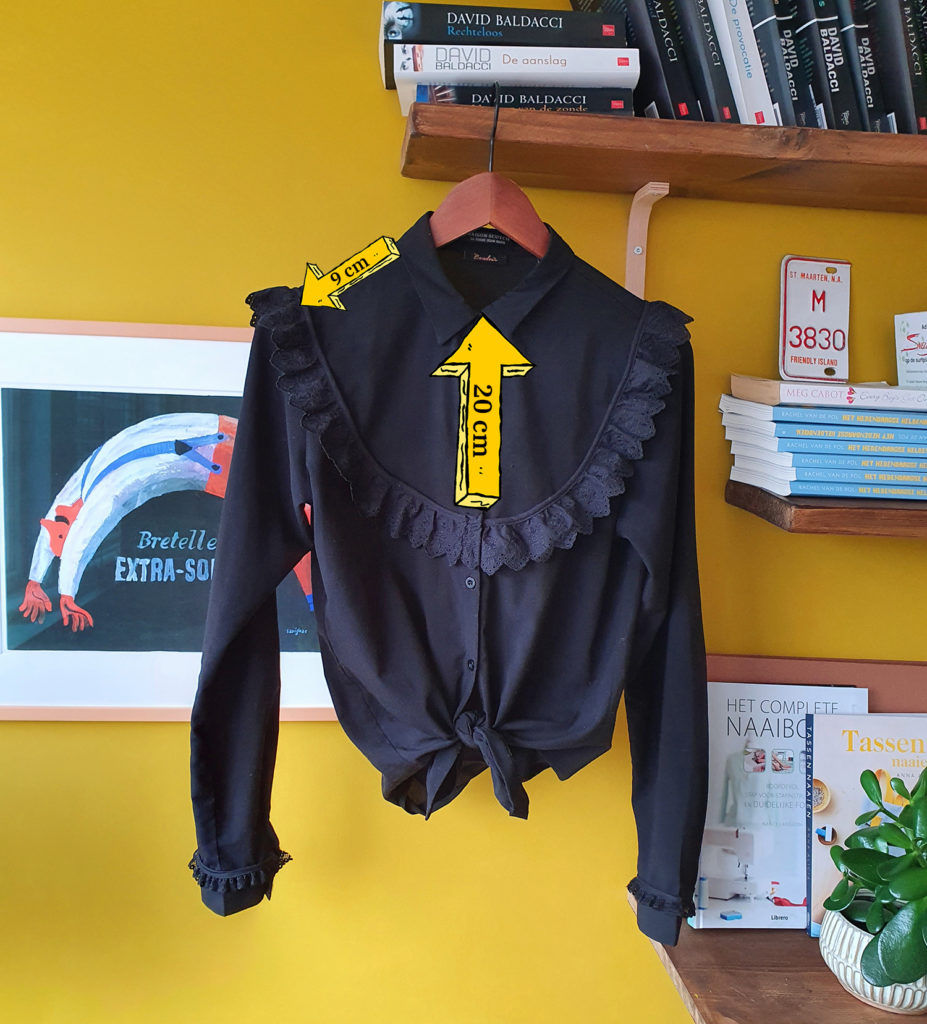
The blouse had faux breast pockets and stiff shoulder patches — details that leaned into a vaguely utilitarian minimalism. I removed them first.
A seam ripper in inexperienced hands is a dangerous thing.
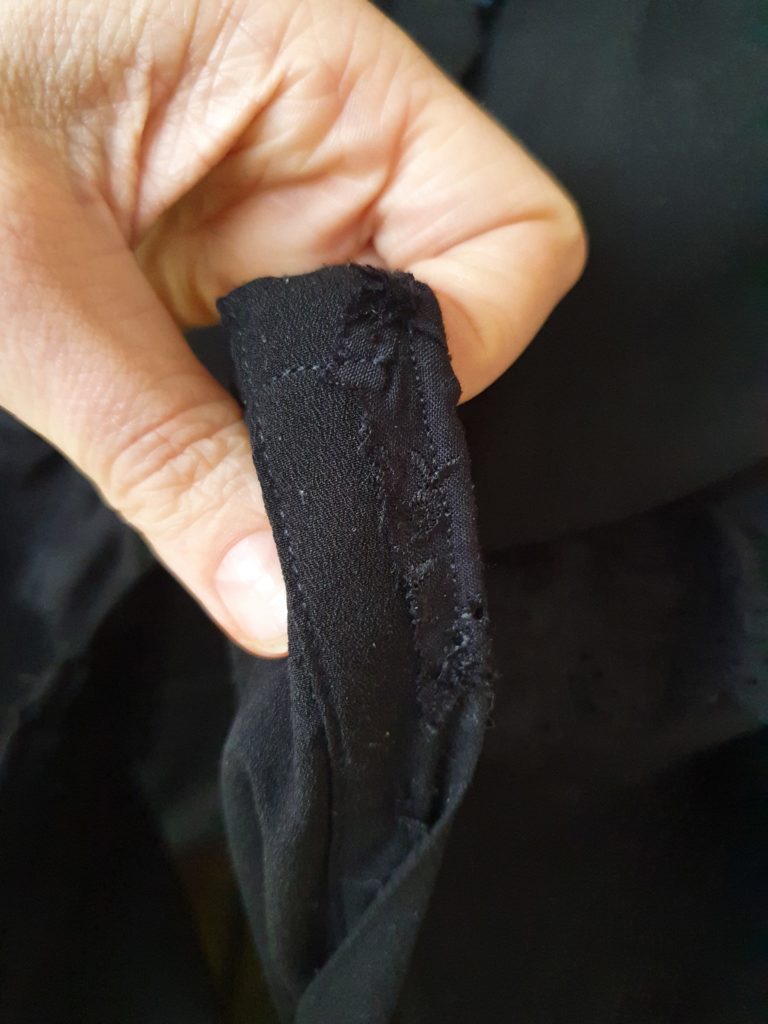
You have to go gently. Fabric remembers tension. Push too hard and it tears. Which, naturally, I did. A small rip. A reminder that undoing is just as delicate as constructing.
There’s a metaphor in there somewhere about how we dismantle the identities we no longer want to inhabit. Carefully. Patiently. Sometimes clumsily.
Once the pockets were gone, the blouse looked naked. Stripped of its seriousness.
Then came the ironing.
Let me confess something humiliating: my old iron burned a hole straight through the fabric. Immediately. Without warning. A clean, cruel puncture.
That moment could have ended the experiment.
Instead, it forced a pivot.
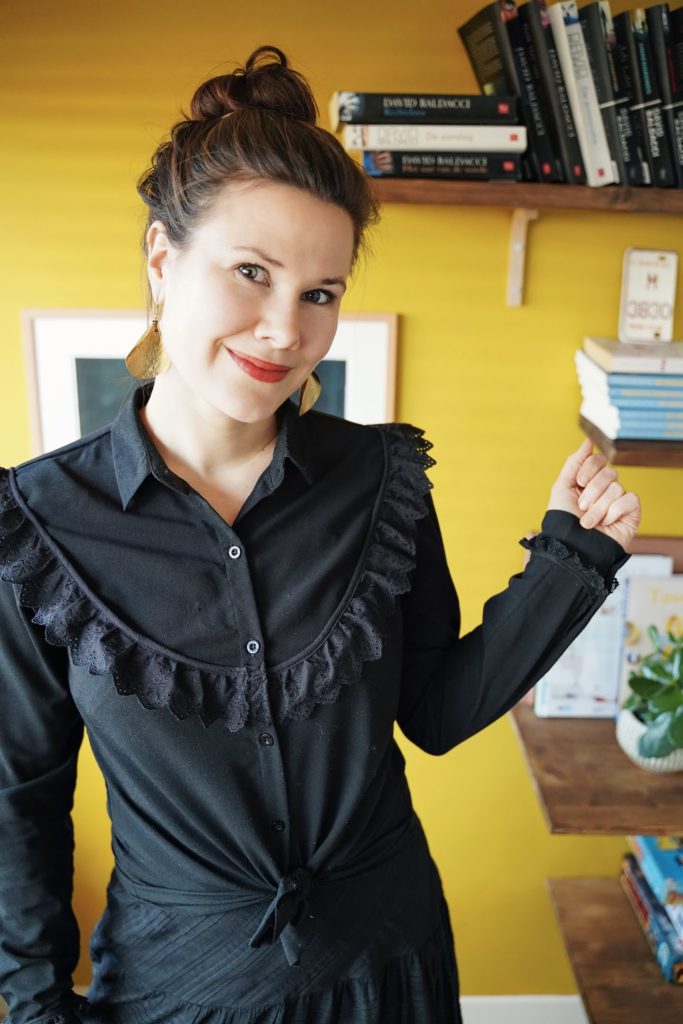
I tied a knot at the front, cropping the blouse slightly. Suddenly it had movement. Informality. A suggestion of irreverence. The flaw became a feature.
In design theory, constraints often spark creativity. When perfection collapses, invention begins.
Enter the Ruffles
If minimalism was the original sin of this blouse, maximalism would be its redemption.
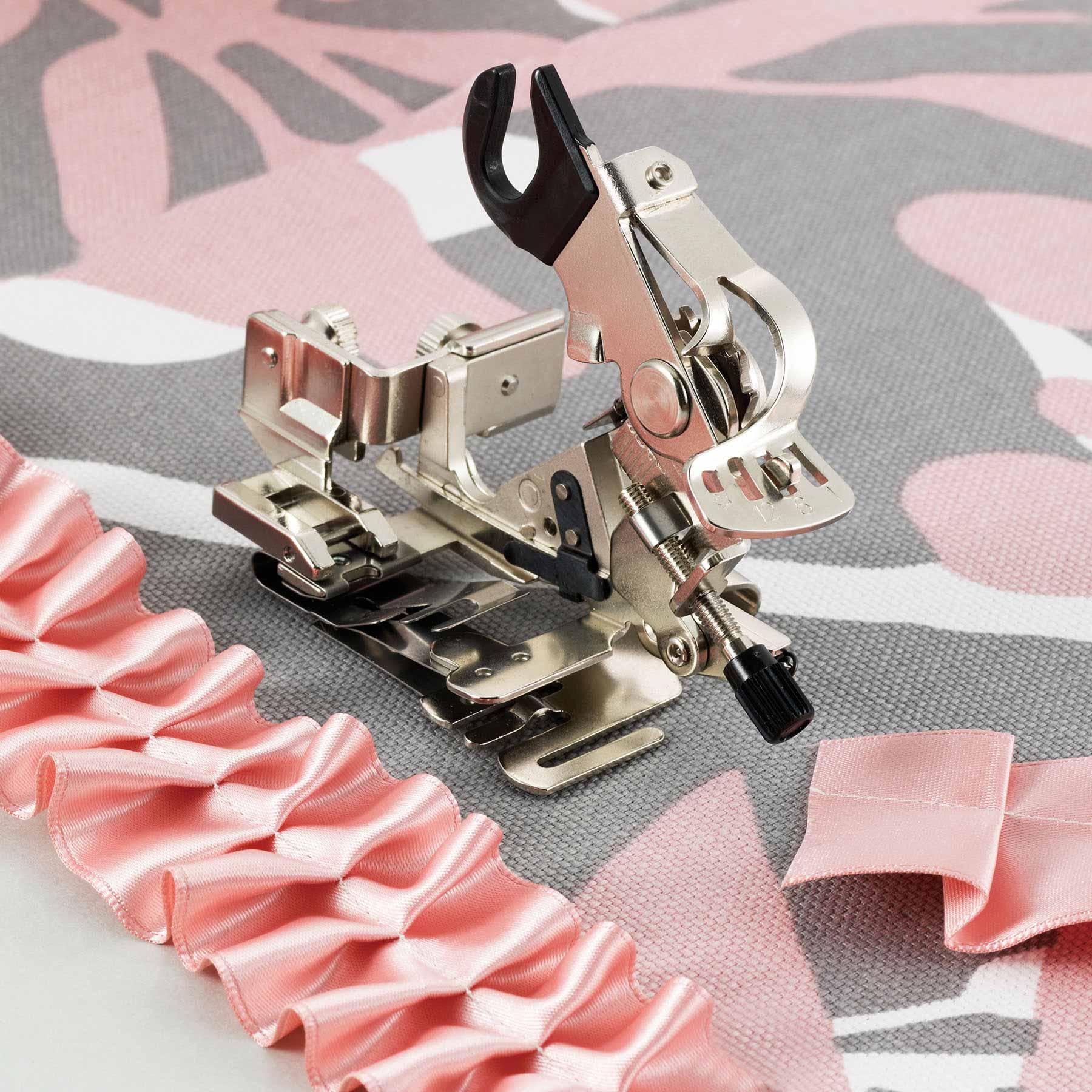
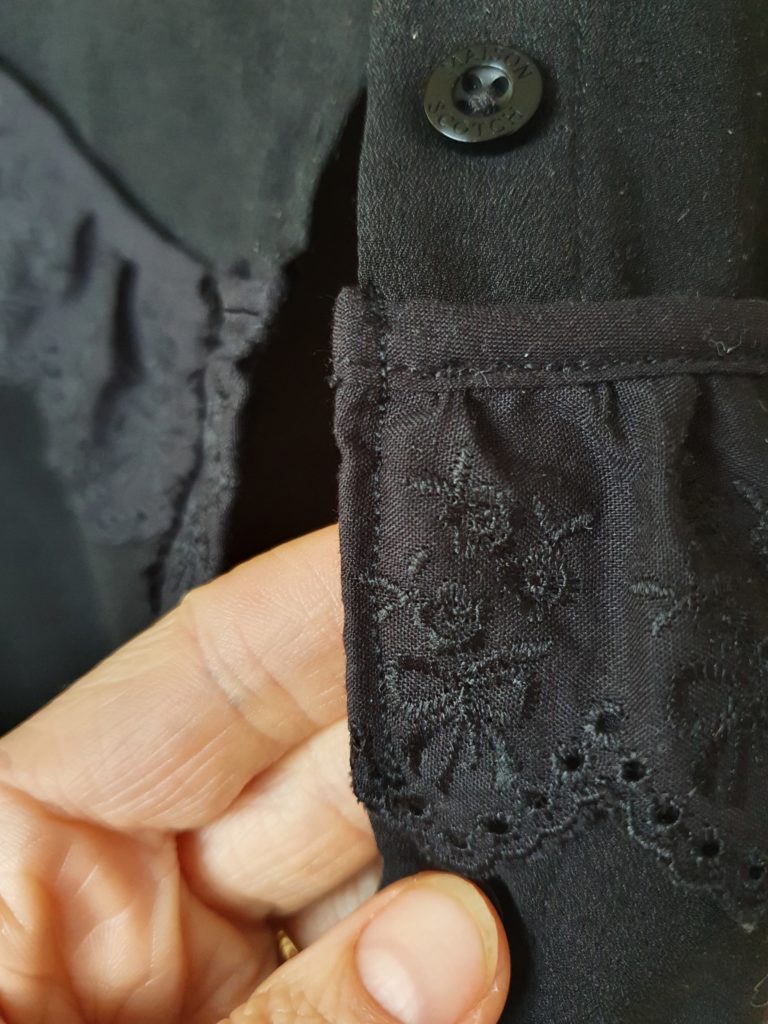
I chose a ruffled ribbon — dramatic, unapologetic, bordering on theatrical. The opposite of the blouse’s original personality.
Pinning the ribbon in a circular shape around the neckline felt like sketching a new identity directly onto the garment. Measurement mattered. Placement mattered. But intuition mattered more.
I used a needle suited for heavier fabric because the ribbon’s edge was thick. I learned — the hard way — not to cut the ribbon before finishing the stitching. Midway through, I noticed the fabric bunching. I straightened it. And suddenly I was short on ribbon.
Improvisation followed. Cutting. Matching. Attaching an extra piece. It was messy.
But so are most transformations.
There is something almost historical about adding ruffles. Flamenco dresses, Victorian blouses, romantic silhouettes — ruffles carry drama and movement. They reject austerity. They celebrate presence.
To attach them to a sober black blouse felt like staging a rebellion.
Stitching as Decision-Making
Sewing is a peculiar activity. Every stitch is a commitment. You anchor at the beginning. You anchor at the end. There is no “undo” button, only the slow unpicking of thread.
It forces you to be deliberate.
When I stitched the ribbon along the hemline, folding it carefully and securing it with vertical lines, I realized how rarely we approach our wardrobes with this kind of attention.
We buy impulsively. We discard casually. But we rarely alter.
Altering is intimate. It requires you to admit: this almost works, but not quite.
That humility is powerful.
Sleeves That Refuse to Whisper
The neckline alone was not enough.
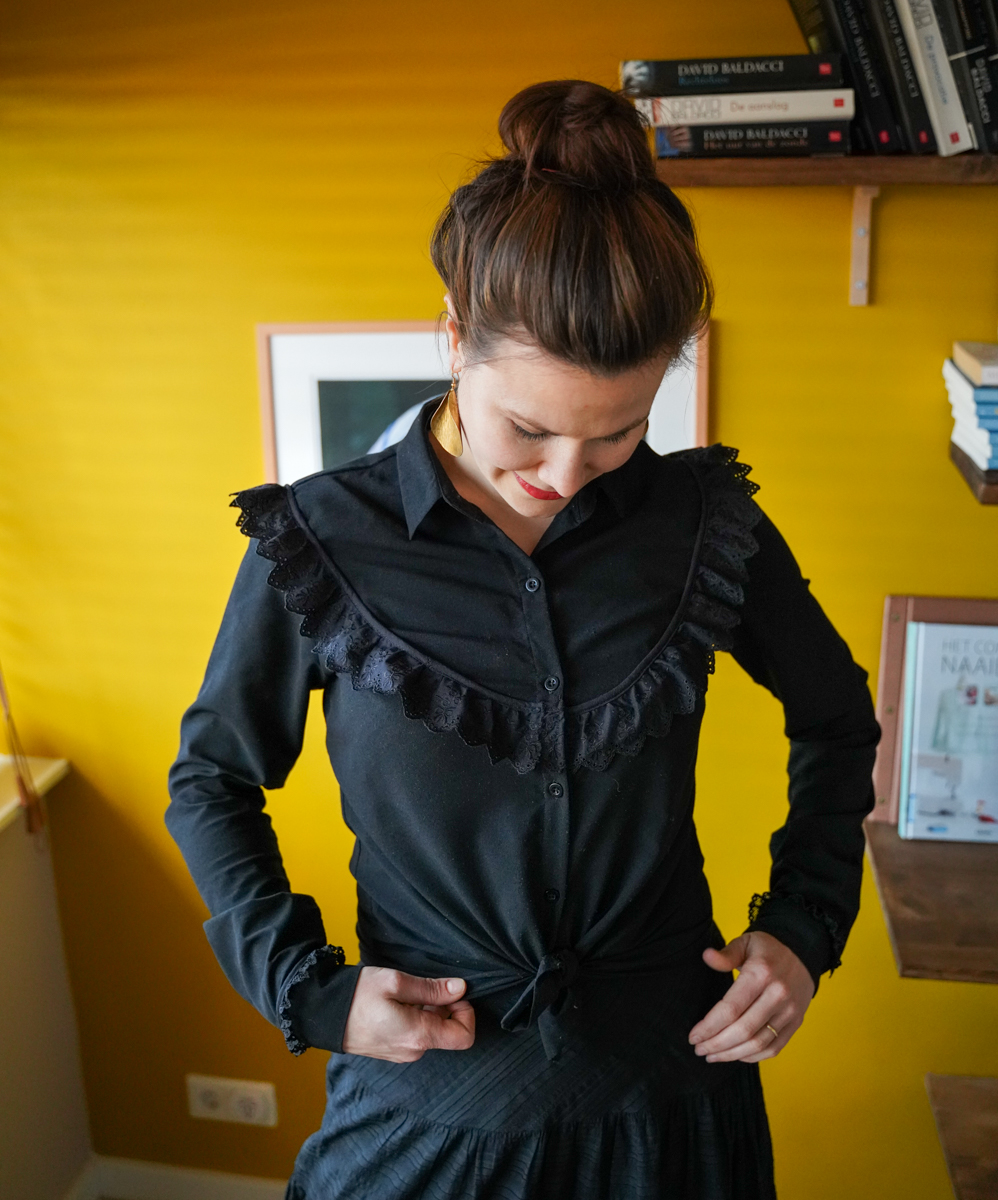
I added smaller ruffles to the sleeves — petite but assertive. Suddenly the blouse had rhythm. Movement at the wrists. A suggestion of flamenco flair.
It no longer whispered.
It moved.
There is cultural symbolism in sleeves, if you look closely. From Renaissance extravagance to Spanish dance costumes, sleeves have long been sites of drama. They frame gesture. They exaggerate motion.
By ruffling the sleeves, I wasn’t just decorating a garment. I was amplifying expression.
The blouse transformed from minimalist staple to something almost performative.
And for the first time, when I tried it on, I recognized myself.
The Psychology of Transformation
Why does altering a garment feel so satisfying?
Part of it is economic. You salvage sunk cost. You extend lifespan. You resist waste.
But psychologically, it’s more profound.
You assert agency.
Instead of accepting the garment as a fixed object — a finished product handed down by anonymous designers — you intervene. You rewrite.
In a consumer culture built on passive acquisition, that act feels radical.
There’s also vulnerability in showing something handmade. The stitching may not be perfectly straight. The proportions may be slightly off. But it carries your labor.
We are accustomed to polished surfaces. Factory precision. Digital perfection.
Handmade things disrupt that illusion.
From Guilt to Ownership
Before the flip, the blouse was guilt.
After the ruffles, it was possibility.
This shift matters. Because wardrobes are not neutral spaces. They are emotional landscapes. They hold our ambitions, insecurities, experiments.
A garment that doesn’t align with you can quietly drain confidence. A garment that feels expressive can do the opposite.
The thrift flip didn’t just change the blouse. It changed my relationship to it.
It moved from obligation to enthusiasm.
Mistakes as Method
I could pretend the process was smooth.
It wasn’t.
There were fabric tears. Burn marks. Crooked seams. A moment of existential doubt halfway through attaching the neckline ruffle when I thought: this might look ridiculous.
But here’s the thing: ridiculous is often just unfamiliarity.
Fashion history is full of silhouettes once considered absurd. Hoop skirts. Shoulder pads. Low-rise jeans. Each era believes its aesthetic is rational.
The willingness to risk absurdity is what keeps style alive.
My below-amateur-level sewing skills forced me into humility. I couldn’t rely on technical mastery. I had to rely on instinct.
And instinct, it turns out, is often enough.
Beyond the Blouse
The thrift flip is not about chasing trends on TikTok or replicating viral hacks.
It’s about interrogation.
Why doesn’t this work?
What would make it mine?
How can I intervene instead of replace?
We live in an era obsessed with optimization — the perfect fit, the perfect capsule, the perfect edit. But perfection is static. Style, on the other hand, is kinetic.
It evolves. It contradicts itself. It ruffles where it once restrained.
Now, when I reach for that once-sensible black blouse, I don’t see minimal aspiration. I see movement. I see drama. I see a small act of creative defiance stitched directly into the fabric.
It’s still black. Still technically versatile. But it no longer tries to behave.
And neither do I.